By Michael O’Brien
The recent Initial Public Offering (IPO) of Elon Musk’s SpaceX has made him the first trillionaire in history. That should really read ‘paper’ trillionaire. Behind the hype is the reality that SpaceX had $18.7 billion in revenue last year and incurred a $4.9 billion loss.
The status of trillionaire arises from the stock valuation increasing from $810 billion before the IPO to $1.1 trillion afterwards. This valuation is built on the promise of an as-yet-to-be-delivered profitable return on the investments sunk into the enterprise – in other words, it is a massive bet.
Massive overvaluation
Goldman Sachs was paid a fee of $500 million for facilitating the IPO. The valuation bears no relation to the actual assets and current earning potential of the enterprise. This is an extreme example of an overvaluation, but this is a general feature of the US economy today. It is a classic bubble in the mould of previous bubbles such as dot.com bubble in the late 90s, and the subprime mortgage bubble in the 00s.
The hype, coupled with the anaemic performance of other parts of the economy, has made SpaceX and AI in general a magnet for speculative investment. Without SpaceX and the AI sector, US stock markets would already be in decline. This also partly explains the support for SpaceX from the Trump regime, which is relying on these stock market increases to maintain an illusion of prosperity – at a time when hundreds of millions of ordinary people in the US are feeling an acute cost-of-living crisis. Most of them see through this charade.
A point will be reached – when exactly no one can say – when the promised return is not delivered, and like the old saying, “up like a rocket, down like a stick”.
Vanity projects
The only profitable component of SpaceX is the Starlink satellite company, which fulfils an actual function. Here Musk is striving to achieve a near monopoly – it currently accounts for approximately 60% of all active satellites orbiting Earth.
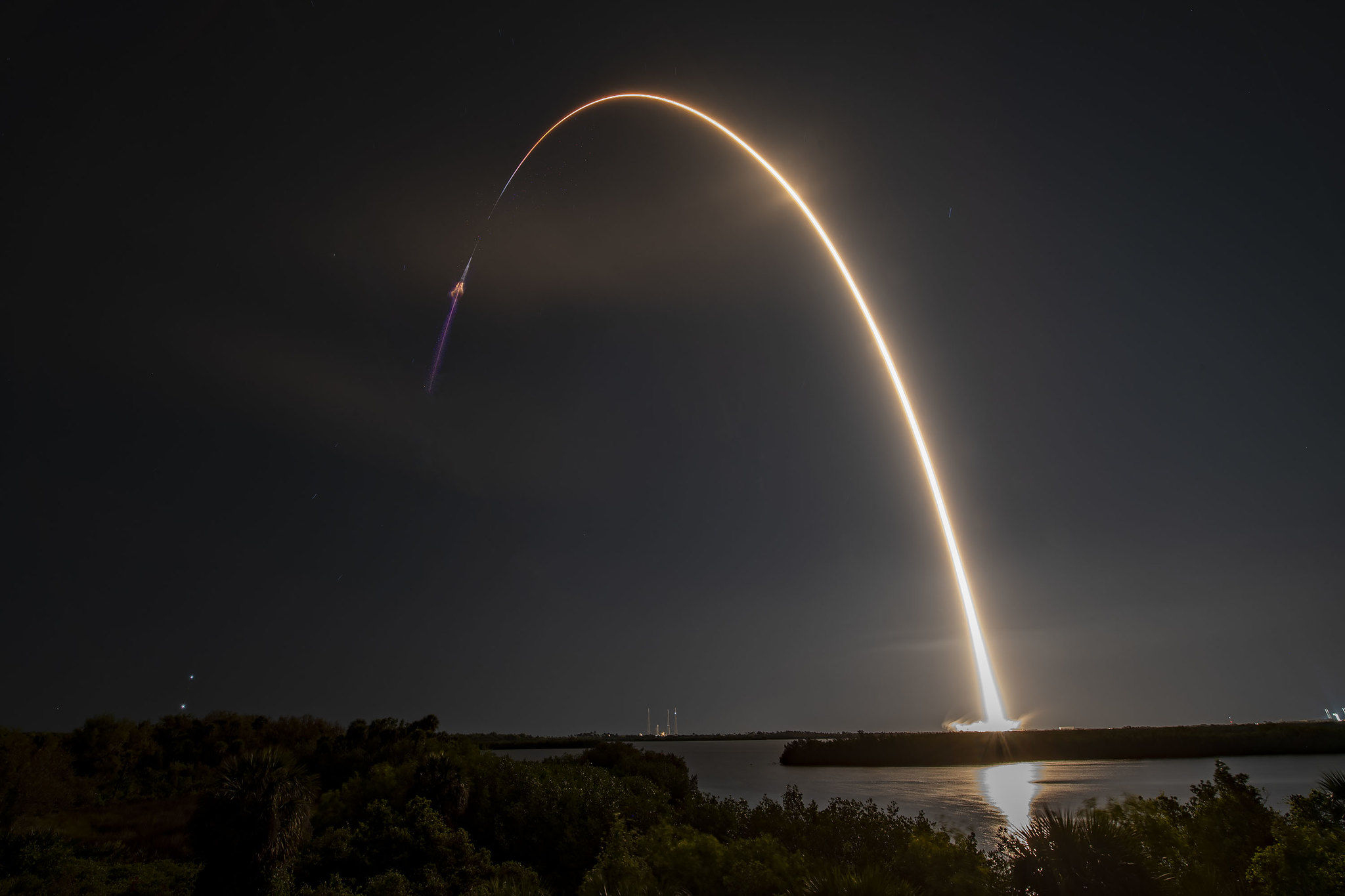
The big SpaceX vanity project of rockets colonising Mars is the product of Musk’s fantasies and will not bring a return. Multiples of current returns on the investments for these projects will be required for a break-even, let alone make a profit.
For both Musk’s profitable and unprofitable enterprises, he has the benefit of public largesse – the generous distribution of government funds and subsidies to corporations. Various forms of state aid, state contracts and tax benefits are estimated to have assisted Musk’s various enterprises to the tune of $38 billion.
Data centres
This, and the accompanying AI bubble, will leave the dot.com bust in the shade. There is a vast overcommitment to build data centres to power this boom with all of the attendant strains on the electricity grids and fresh water supplies. Something that will be felt acutely in Ireland.
Big business is banking on productivity gains arising from AI, laying the basis for massive layoffs in this and many other sectors, effectively paying for their investment in this technology. The reality is that AI has and will have a vastly uneven effect on the productivity of labour depending on the type of jobs people perform.
Job losses
Like the layoffs in the social media companies in the aftermath of Covid, the culling of jobs we are seeing in the sector is serving as an impetus for unionisation in the sector, which needs to be urgently built on. The CWU-led struggle in Covalen is one concrete expression of this trend in Ireland.
The biggest takeaway from the fascist Musk becoming the first notional trillionaire is the glimpse it gives of the vast resources that exist that could, if placed under democratic public ownership and control, address the most pressing problems facing humanity. Instead, they are being frittered away on vanity projects, wrecking countless livelihoods and the planet along the way.