By Niall Dooris
In the North of Ireland, the last three years has seen the vile racism and anger that has been bubbling under the surface come to a boiling point.
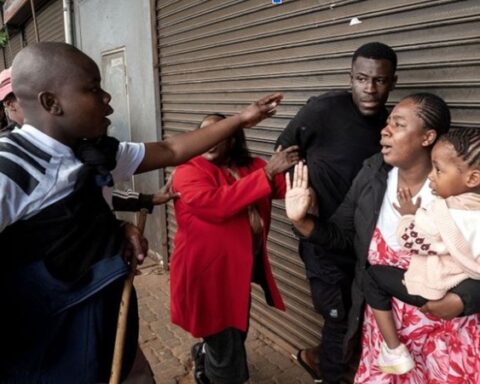
In August 2024, following the Southport knife attack, racist riots erupted across the UK. Since then, pogroms have occurred in the North every summer. In Ballymena in June 2025, six families were burned out of their homes, and this reportedly resulted in around 60% of the town’s Roma population fleeing the town permanently. Then in June we saw the most horrific violence yet, mainly in East Belfast where houses were burned and attacked on a different scale. Around 86 households have sought help from the Housing Executive, due to attacks on their, with 26 of those requiring emergency accommodation (Belfast Telegraph). Hundreds more fled in fear of their homes being attacked. These figures are a limited indication of the harm caused, as many have been too frightened to report their homes being attacked due to a fear of being attacked again or an understandable distrust in the authorities.
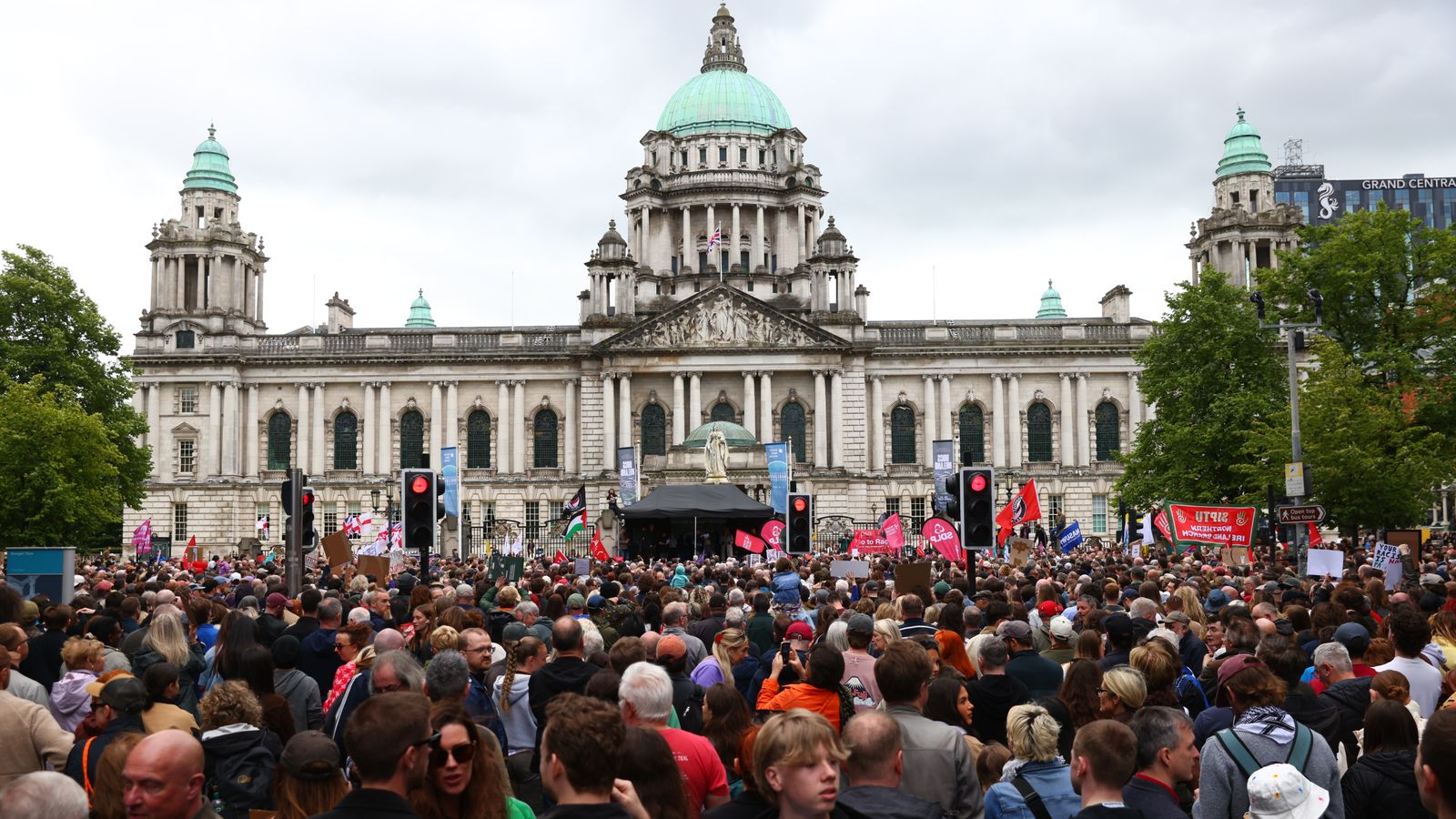
In response to the recent riots, there has been a heartening and significant display of anti-racism, including 20,000 showing up to United Against Racism’s rally days after the riots. In absence of any support from the State, CATU, PPR and Anaka Women’s Collective, along with other activists, have undertaken amazing work to provide safety and support to their neighbours and the wider community. Similarly, we saw people in workplaces instinctively organising lifts and walking people home in order to keep them safe. It’s this sentiment that has to be channelled into the broader anti-racist movement that we need.
There needs to be a reckoning with the rise in racism and far-right ideas, as well as the conditions which underpin their rise if we are to cut across the far-right forces’ ability to continue terrorising our communities. There is an urgent need to grapple with the question of how we build a proactive anti racist movement and what that movement should look like here in a society mired by division. This article is an attempt to do just that.
Capitalism’s far-right turn
Capitalism today is a system in crisis. Living standards have steadily plummeted for the last 40 years while wealth inequality has soared. The only way forward, from the point of view of the rich and powerful, is through attacks and hyper-exploitation of the majority of humanity or launching into imperialist wars. The political instability we see in the world today is a consequence of that. The prospects for most people, especially younger generations, are fairly dystopian.
The racism of the billionaire class is rooted in the need to drive society backwards and at the same time, given the massive discontent in society, to point the finger at oppressed people to deflect from the hyper hoarding of wealth epitomised by the likes of Elon Musk, now the world’s first trillionaire. For context, it would take a minimum wage worker 40 million years to earn Musk’s trillion dollar wealth. Society could wipe out absolute poverty globally with a fraction of that money.
Racism and White Supremacy have always been central pillars of capitalist rule, embedded in the history and institutions of imperialism. From Slavery to Colonial Subjugation, the system has always used racism to justify its brutality. All forms of oppression, whether racism, the oppression of women and queer people, serve to reinforce the inequality and exploitation at the heart of capitalism. Today it is still used to justify aspects of the modern world such as extreme poverty, the degradation of people and the land through things like sweatshops and mines in the Neo-Colonial world, and hyper exploitation of migrant labour.
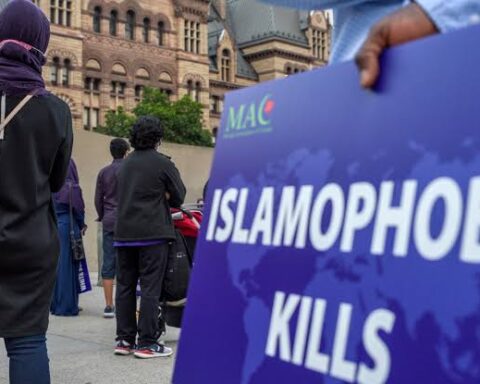
While presenting a liberal image, vile Islamophobia has been promoted by capitalist governments and the media since the “War on Terror” era, to justify imperialist interventions in West Asia, such as the wars in Iraq and Afghanistan, laying the basis for racist paranoia and conspiracy theories. Subsequently the global refugee crisis, as millions of people have been forced to flee imperialist war, ecological catastrophe, genocide and state repression, has been weaponised by those in power as a scapegoat for the social and economic problems generated by their decaying system. This same dehumanising racist logic has made atrocities such as the Genocide in Gaza possible. However, they were incapable of completely whitewashing the genocide given that millions have become politically activated by this issue, reflected by the global protest movement in recent years and even influencing election outcomes, such as with the election of Zohran Mamdani.
Contrary to the common narrative that racism is the product of “ignorant poor people”, the ultimate source of racism is the capitalist class itself. A section of this class is openly turning to far-right and authoritarian politics. The second Trump administration is the most stark example of this. US imperialism openly emboldens and supports far-right forces around the world, while implementing a racist war on migrants and people of colour in the US, and a policy of colonial expansion and plunder abroad.
In a 33-page National Security Strategy document released in late 2025, the Trump administration warned that Europe is facing “civilizational erasure”. The report cites mass immigration and declining birthrates, suggesting that if current trends hold, certain NATO members will become “majority non-European” – essentially an endorsement of the racist “Great Replacement Theory”.
Meanwhile, US tech oligarchs like Elon Musk and Peter Thiel openly embrace fascistic ideas. This wave of reaction, with its roots in the long-term decay of the capitalist system itself, has been building for years. Networks of far-right agitators and social media influencers have spread racist propaganda, feeding off the anger that exists in working-class communities at the decay wrought by decades of Neoliberal rule. Extreme isolation, fear, anxiety, and alienation were further fuel to confused and reactionary politicisation occurring largely online.
The propaganda of the ruling class and the far-right has had a massive impact on society. Extreme forms of racism and xenophobia permeate throughout society, growing organically in the soil of a rotten system. In the South of Ireland, one survey showed that 22% of voters believed a version of the far-right “Great Replacement” conspiracy theory, for example. The progressive social movements of the 2010s, in which millions of working-class people fought for abortion rights, queer liberation, and against racist state violence, have given way to a reactionary backlash led by politicians and media figures.
This has been possible due a certain demoralisation and disorientation of working-class people, stretching back to the significant undermining of working class power in the 1980s, and the inability of new left forces to emerge in a sustained way since then.
Attempts at an alternative, such as that offered by the likes Jeremy Corbyn and Bernie Sanders, failed to defeat establishment and right-wing opponents. Moreover, they did not have a political programme that sufficiently challenged capitalism. The limits of this approach were seen in Greece when Syriza were elected on the basis of an anti-austerity programme and then almost immediately agreed to an EU imposed austerity budget.
Hatred of the political establishment has grown substantially in recent years, but without a real working-class alternative, class anger can express itself in confused, contradictory, and extremely reactionary ways amongst a section of white working class people.
When describing the roots of the Fascist crisis in the 1930s across Europe, imprisoned Marxist activist Antonia Gramsci wrote:
“The crisis consists precisely in the fact that the old is dying and the new cannot be born; in this interregnum a great variety of morbid symptoms appear.”
Many of us are rightly terrified by the parallels between the current context in which we live and the era in which Gramsci was writing about. The root causes of the morbid symptoms which we are faced with today remain the same as before.
The Far-Right and Racism in the North
Far-right activity and racism in Northern Ireland, has not been limited to Pogroms, although they have been its most extreme expression. Both 2024 and 2025 broke records for the number of racist incidents and race hate crimes recorded by the PSNI, increasing from previous years by around 33% (BBC). Again, this is likely just the tip of the iceberg.
Since 1996 the PSNI have recorded 24,000 racist hate crimes, and Belfast was frequently described as the “race hate capital of Europe” during the 2000s. For decades, migrants and racialised people have been targets of paramilitary, overwhelmingly loyalist, violence. When the National Front was at its height in Britain in the 70s and 80s, it had a substantial support base in Belfast.
Despite this history, the North was a relative late-comer to the wave of new organised reactionary political forces that developed in the 2010s, personified by Trump, Bolsonaro, Farage etc. Anti-immigrant sentiment did not manifest into substantial mobilisations of people on the street until 2024, following similar developments in the South and across Britain.
The largest mobilisations have occurred in the aftermath of far-right actors exploiting acts of violence committed by migrants or racialised people. The riots this year were centered around a horrific knife attack in North Belfast by a Sudanese man. The rhetoric of far-right agitators has centred on conspiratorial fearmongering, usually framed in the deeply patriarchal terms of threats to “our women and children” or the outrageous claim that people from other countries are bringing an ‘alien’ level of violence to here.
The hypocrisy here is sickening, not only because the North of Ireland is somewhere with a history of brutal violence, including knife violence and gender violence, but also because it is the ideology these forces spew that creates the violent society we live in. One third of the Ballymena rioters had previously been reported for domestic abuse and many of the leaders of the far-right here are former/current paramilitaries who participated in sectarian violence (Belfast Telegraph).
Unsuprisingly, there was no similar outcry when Jeffrey Donaldson was convicted of 18 counts of Child Sexual Abuse. To be clear, rioting is never the solution or desired outcome to gender based violence or any form of interpersonal violence. But the double standards in response speaks volumes.
The Far-right and Unionism
The level of coordination in the violence shows a degree of organisation that is beyond the chronically online far-right trolls. It is clear that in the most significant cases Loyalist paramilitaries played a significant role.
Paramilitaries still exert significant control, particularly in the most impoverished communities. Until recently, the sectarian divide undoubtedly played a significant role in delaying the rise of organised far-right politics as an independent force. Sectarian organisations were, for a time, better placed to channel alienation and anger at the establishment that far-right forces typically seize on. This situation has now flipped. The far-right is developing with a particularly violent edge, the unique character of Northern Ireland, reflecting a legacy of the Troubles, with active paramilitaries lends the far-right an explosive potential absent in the south or in Britain.
While racism has spread across all of society, it has found a more developed expression in Protestant communities. So far, all of the large-scale violence has occurred in Protestant areas. Partly this reflects the ideological character of loyalism, with its historical connection to British imperialism and chauvinism, and the existence of far-right elements within loyalist paramilitaries which are playing a key role in the violence. Loyalism has always been premised on the fear and hatred of a racialised outgroup and has sought to stoke a mentality that Ulster Protestants are a people under siege. As a result, the anti-migrant racism, nativism, and “Great Replacement” conspiracy theories that are spreading in communities and on social media fit into the broader ideology of loyalism.
Discontent and anger at the political parties of Unionism, most significantly the DUP, has been brewing for years in the face of a perception that the Union is under threat. Demographic changes present a threat to unionism. In general, there is a sense of anxiety within Unionism that the future position of the Union is under threat. In this context, the DUP has been severely undermined. The ultra-sectarian TUV has grown significantly by taking a firm stance against the “Sea Border”, bitterly opposing the Irish language, and engaging in racist attacks on migrants and asylum seekers. The TUV’s Jim Allister has built a close relationship with Nigel Farage, seeking to draw a connection between his party and Reform UK. They have made opposition to immigration a central tenant of their platform, and are exerting a significant pressure on the DUP to become more openly racist and anti-migrant.
DUP and TUV politicians played a significant role in stoking the riots this June, immediately after the attack in North Belfast they jumped on the issue of immigration feeding into the hysteria. Paul Givan, Minister for Education, was even seen at one of the protests in Lisburn. Unionist spokespeople, including former First Minister Arlene Foster, cynically used the issue to demand an end to the ‘open border’ on the island of Ireland – ultimately calling for the reassertion of a patrolled hard border. It is likely that racism, combined with sectarianism in this way, will continue to be a central theme in Northern Irish politics going forward.
While the exact political dynamic within paramilitaries cannot be stated with complete certainty, recent indications point to a younger layer within loyalism that is increasingly willing to assert itself through sectarian intimidation and racist violence, using riots as a means to agitate and recruit young teenage boys into paramilitary violence. Although, many paramilitary leaders see the far right as a threat to their power and disrupts the money they make from criminality as well as from the state. There were many instances this June of local paramilitary leaders attempting to pull people back from rioting. In 2023, members of the South East Antrim UDA, a paramilitary organisation directly linked with the Ballymena Pogrom, was given one million pounds in public money via the “PEACEworks scheme” for “good behaviour”. It is likely that this nonsensical dynamic will continue with the state attempting to keep violent activity within “acceptable” limits by paying off groups and individuals perpetrating it.
The Far-right and Nationalism
The ability of the far-right to mobilise significant sections of the community reflects a deeper process by which racist ideas have spread throughout society. A poll carried out by the Irish Times showed that around two-thirds of people in the Unionist community have a negative view of immigration. In the Nationalist community, it is one third (Irish Times). While the far-right has found more organised expression within unionist communities the far-right is likely to continue to develop within nationalist communities, albeit in a different way. It is clear that the development of the far-right in the South has had an impact on a section of working-class Catholics in the North.
Racist protests have seen the flying of the Tricolour alongside the Union flag, numerous racist attacks have been carried out in nationalist areas of Derry, Strabane, Newry and Dungannon, and there have been attempts by Irish fascist groups to organise in the North, such as the National Party and Clann Éireann. The far-right in nationalist communities blends anti-migrant nativism with Irish nationalism and reactionary Catholic social views. Far-right protests and large meetings have taken place in Newry – which is strongly influenced by the development of the far-right in the South – and a far-right republican paramilitary group in the area has made threats against politicians. After the attack in North Belfast this June, for the first time in many cases, there were anti-migrant protests in majority Catholic towns and areas, although they were generally small.
Generally though, the far-right has been weaker, less confident, and less able to organise as openly in nationalist areas. This is partly because, unlike in Unionism,, within Nationalism there is a strong sense that there is “something to be won”. The idea that a border poll is inevitable in the short to medium term is widespread amongst Catholics. This acts as a glue that acts to hold together Nationalism despite significant class contradictions. Additionally, the presence of the Palestine solidarity movement as an active force in nationalist areas undoubtedly played a role in slowing the growth and prominence of the far-right in nationalist areas. This is a movement built on solidarity with the horrendous suffering Palestinians have endured and are enduring culminating in the ongoing genocide. It is also built on opposition to a blatantly racist, apartheid state of Israel and their racist imperialist enablers.
However, political organisations like Aontú are attempting to capitalise on racist anti-migrant ideas within the Nationalist community, alongside LGBTQ+phobia, misogyny and anti-choice politics. Throughout Ireland we have seen how Sinn Féin, despite their anti-racist rhetoric, can take reactionary, anti-migrant positions when under pressure from the far-right and racist ideas in communities, which is something that will likely develop further in the North.
The role of Stormont and the State
The far-right here has emerged out of the poverty, sectarian division and political dysfunction that exists in the wake of the Good Friday Agreement. The decades since have brought attacks on public services, the decline of key industries such as manufacturing, the loss of jobs in these industries and their replacement by a proliferation of low-paid and precarious jobs, and most recently a rampant cost of living crisis and a developing housing crisis bearing down on working-class people. The “peace dividend” that was promised to the people of Northern Ireland was never going to be delivered by the decaying capitalist system.
Today, 15% of the population live in absolute poverty after housing costs. 27% of the population live in food insecure housing, including 130,000 children (DFC, 2025). Poverty is particularly rife in the hard pressed working-class communities that experienced a disproportionately high rate of ‘Troubles’ related deaths. Nearly 50,000 people are on the waiting list for social housing (BBC). Despite being one of the lowest paid parts of the UK Belfast has had faster growing rent costs than London, since 2023.
All of the parties that have participated in the Stormont Executive are to blame for this situation, the particularly vile politics of the DUP and TUV does not let them off the hook. Despite their positioning as anti-racist parties, Sinn Féin, Alliance and the SDLP have also implemented policies which have created the conditions that allow the Far-Right and parasitic paramilitaries to flourish. For example, the Executive parties ultimately implemented the Austerity agenda handed down by the Tory Government. This included cuts to the NHS and the hated Welfare Reform that cut the benefits of the disabled and the unemployed.
During the riots, the State clearly failed to support migrants and racialised people. The PSNI stood and watched as homes were attacked. They were reportedly told to only intervene “if there was a serious threat to life” (something they clearly fell short of considering people’s homes were being burned). We shouldn’t have any illusions in the PSNI being a part of the solution to the violence or the underlying problems, not least because of the misogyny and racism rife within it. During the racist riots in Belfast in 2024, multiple PSNI officers were spotted wearing the insignia of far-right militias in the US. In a capitalist society, the main purpose of the police is to protect the property and interests of the wealthy, not to protect people. The police force is designed to be a violent and callous institution. Those who join the police generally reflect this outlook and many are racist, misogynistic and queerphobic themselves.
However, they should be made to answer for their refusal to intervene and protect people’s home and safety. Many people left homeless by the attacks have received no emergency support from Stormont – instead it fell on ordinary people and activists to look after people in this crisis.
What kind of anti-racist movement do we need?
Following from this, if the State is incapable of protecting our communities and tackling the rise of the far-right, then it’s up to working-class people to do so instead. The mass mobilisation at the UAR rally is an indication of the anti-racism that exists among a very large section of society. These protests are important in sending the message that racism won’t be accepted, but they are only the first step; for it to be meaningful and begin to tackle the scale of the issue outlined above, it must be channelled into the building of an active anti-racist movement capable of pushing back the tide of racism in all communities in the North.
Globally, due to capitalism’s far-right turn, there are inspiring examples of anti-racist struggle we can learn from. For example in the US, after weeks of ICE occupying Minneapolis and terrorising immigrants and POC and murdering two people live on camera, the city erupted in a wave of protests, boycotts and strikes eventually forcing Trump to pull back ICE forces massively from the City.
The pogroms have made very clear that community self-defence is essential. The role of community groups already has been heroic, but beyond this it’s necessary for all anti-racists to come together on a more consistent basis and defend their areas from racist mobs. For example, in 2024 in Belfast when a racist mob rampaged through the city it was only stopped when it came up against residents of the Lower Ormeau Road, mostly working class women, blocking the way.
Importantly, this also has to happen in Protestant areas but this must come from within the communities themselves. This is not an easy task due to the threat posed by paramilitaries and the complicated sectarian dynamics that exist. During the sectarian house burnings in the 1960s in the North, cross community Peace Committees were formed that prevented the violence from being even worse. They were made up of both Protestant and Catholic volunteers from the community. We will go into the issue of community self defence in more detail in another article (link here).
Workplace activism should be a significant part of this. The trade unions represent hundreds of thousands of workers, in the North, and can have a significant effect if they are mobilised. At the very least, they have to protect their members – Employers should be forced to ensure that migrant and racialised workers are kept safe; if not, the unions should step in and do so. Beyond this, the unions have to be an anti-racist force in society. Generally, the Union leadership has been slow to act and has been unwilling to challenge racism within their unions; this is unacceptable. There is space for unions to be pressured into a better position by their members if activists within the unions attempt to do so. It is positive that they backed the United Against Racism protest, but they should go further, including calling protests and generalised walkouts when racist attacks happen again. If the unions don’t act or have no presence in a workplace, anti-racist workers should do so independently.
The cynical exploitation of the very real epidemic of gender based violence for racist means has to be pushed back against. Fighting racism and fighting gender violence are not separate struggles – they are deeply interlinked. Gender-based violence has nothing to do with nationality, racial or ethnic background, or migration status. Connected with proximity and with sexist and other power differentials, it has everything to do with the misogyny and transphobia that is in fact embedded in far-right ideology. Far-right individuals and groups campaign to ban abortion, marriage equality and divorce, and would happily chain women in domestic servitude.
In fact, we have to spread the word that the far-right has decades-long form in seeking to weaponise violence against women to push their racist and misogynistic bile.
A proactive movement from below which takes up all forms of oppression and bigotry from their roots can cut across the Far-Right’s ability to weaponise the issue and expose them for what they are – Patriarchal Racists who do nothing to challenge gender violence, but in fact perpetrate it.
The need for a socialist alternative
Beyond an anti-racist movement, to really defeat the Far-Right we have to build a political alternative to the broken society that capitalism has produced in the North of Ireland. This means pointing the finger at the powerful and wealthy, who have created this situation, rather than scapegoating migrants.
Such an alternative has to tackle the poverty conditions and collapse of public services that allow the Far-Right to exist. This could include mass council house building, reversing all austerity measures and transforming the austerity-battered public services such as the NHS, bringing the major privatised utilities into public ownership and taxing the super-rich.
Crucially, it means fighting for an economy that prioritises the needs of the majority – this means breaking with the rule of the sectarian status quo and big business. In order to do this we have to break with capitalism and build a socialist alternative by taking the key sectors of the economy into public ownership and putting Working-Class people at the heart of running society.
Sources
BBC. Race hate is up again in Northern Ireland – what needs to change?, https://www.bbc.co.uk/news/articles/c89kdzk4le9o.
BBC. Housing waiting list in Northern Ireland passes 50,000, https://www.bbc.co.uk/news/articles/cj0pg05m990o.
Belfast Telegraph. 86 households contact Housing Executive after Northern Ireland riots, https://www.belfasttelegraph.co.uk/news/northern-ireland/86-households-contact-housing-executive-after-northern-ireland-riots/a/157240808.html.
Belfast Telegraph. “One in three arrested for Ballymena riots had been reported for domestic abuse.” 2025, https://www.belfasttelegraph.co.uk/news/northern-ireland/one-in-three-arrested-for-ballymena-riots-had-been-reported-for-domestic-abuse/a/112197489.html.
DFC. “Poverty Policy.” https://www.communities-ni.gov.uk/articles/poverty-policy.
The Irish Times. Sharp divides in attitudes to immigration within Northern Ireland, and either side of Border, https://www.irishtimes.com/politics/2025/02/15/sharp-divides-in-attitudes-to-immigration-within-northern-ireland-and-either-side-of-border/.
The Journal. Voters believing migration conspiracy theories ‘very concerning’ Minister says, 2024, https://www.thejournal.ie/social-media-dangerous-conspiracy-theories-6452799-Aug2024/. Accessed 30th June 2026.