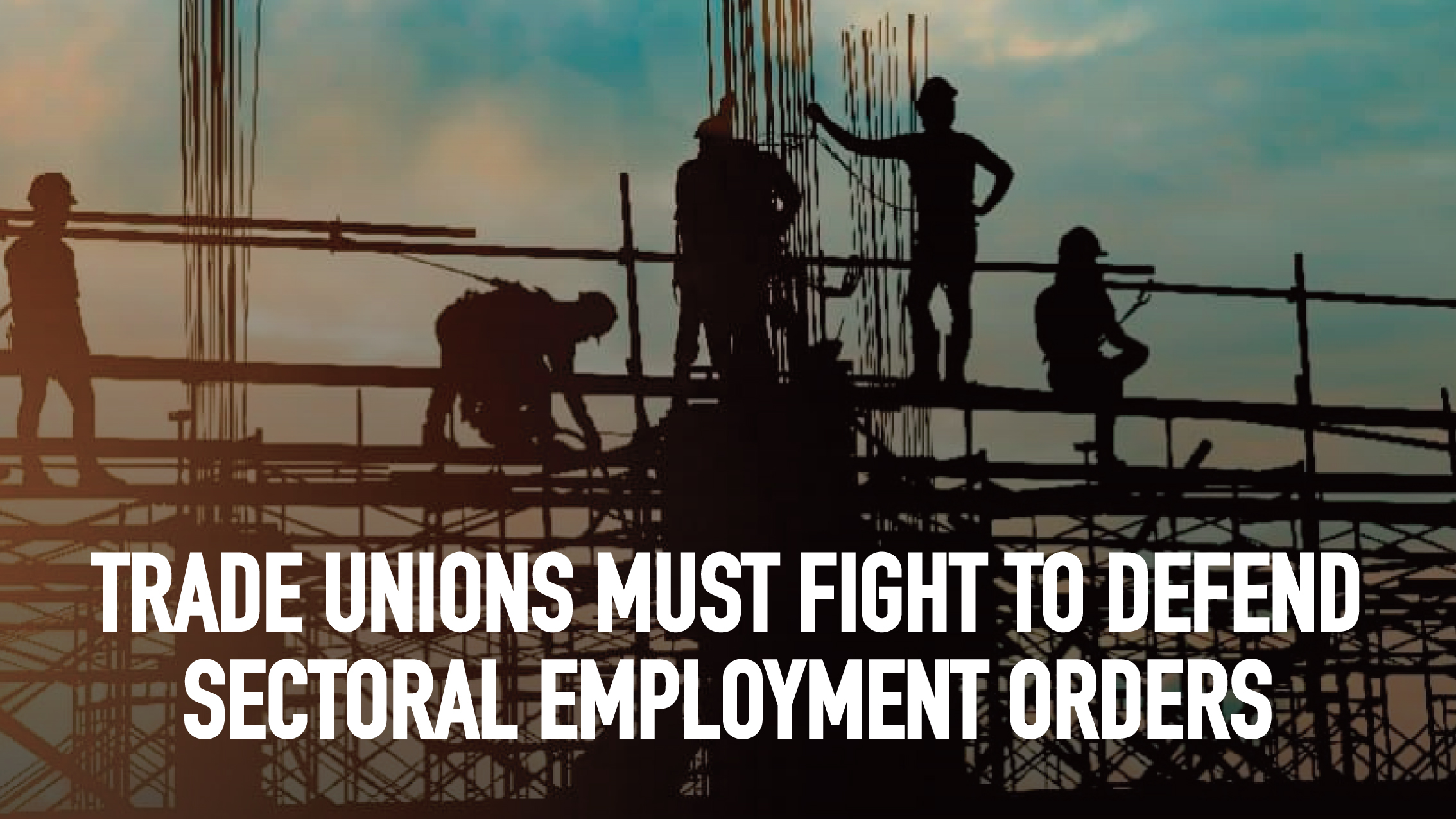
Trade Unions must fight to defend SEOs

In a case of history repeated itself a High Court Judge Garrett Simmons ruled in favour of a group of electrical employers in their efforts to strike Sectoral Employment Orders down as “unconstitutional”. These SEOs in construction and other sectors provide for basic pay standard higher than the statutory minimum wage. The introduction of SEOs came after the Supreme Court in 2016 similarly ruled that their predecessor arrangement Registered Employment Agreements were unconstitutional.


It is absolutely correct to cite these rulings as evidence of the inherent anti-working class bias in the judiciary. This ruling, particularly if the government doesn’t appeal it to the Supreme Court creates an opening for an employer offensive on pay and conditions. However if they go down that route likewise frees up the trade union movement to respond in kind. As Tommy Fitzgerald a Regional Officer for Unite the Union said:


“Crucially, the absence of Sectoral Employment Orders would also mean that, for the first time in over 50 years, in huge sections of the construction sector there would be no constraints, beyond existing industrial relations legislation, on workers taking industrial action to defend themselves. Such a situation would pose a considerable threat to many employers. In that scenario, Unite is confident in our ability to defend our members’ terms and conditions using all means at our disposal.”

Total
0
Shares
Previous Article

Covid-19: Capitalism Rushes to Re-Open as Pandemic Grows

Next Article

Debenhams’ dispute: Workers take aim at new government

Related Posts

No Compromises – SCRAP the pension levy

By Denis Keane, CPSU Executive member (personal capacity)

FOLLOWING ON from our demonstration of 4,000 people outside Dail Eireann on the 18 February, CPSU members took part in a one-day strike on 26 February. This protest and one day strike were in reaction to the pay cuts (pension levy) being imposed by the government.

The strike had the overwhelming support of other public servants. Even though they were threatened with disciplinary action, many public servants refused to pass the picket and in some cases joined our picket lines with their home made placards. On the day there was almost universal agreement amongst all grades that our unions needed to take co-ordinated and united action against the pension levy.

Read More

Bus workers’ strike should continue, for the sake of all workers

It really is an extraordinary situation. You have a national public transport company – Bus Eireann. It is in the ownership of the State. It provides a really essential service in linking up our cities, towns and rural villages and delivering thousands of children to schools every day. It ventures into parts of Ireland where no private bus company would go because it is not profitable. But now the Government declares that the company will crash unless it cannibalises €5 million from the wages of its drivers and ancillary staff.