By Finghín Kelly
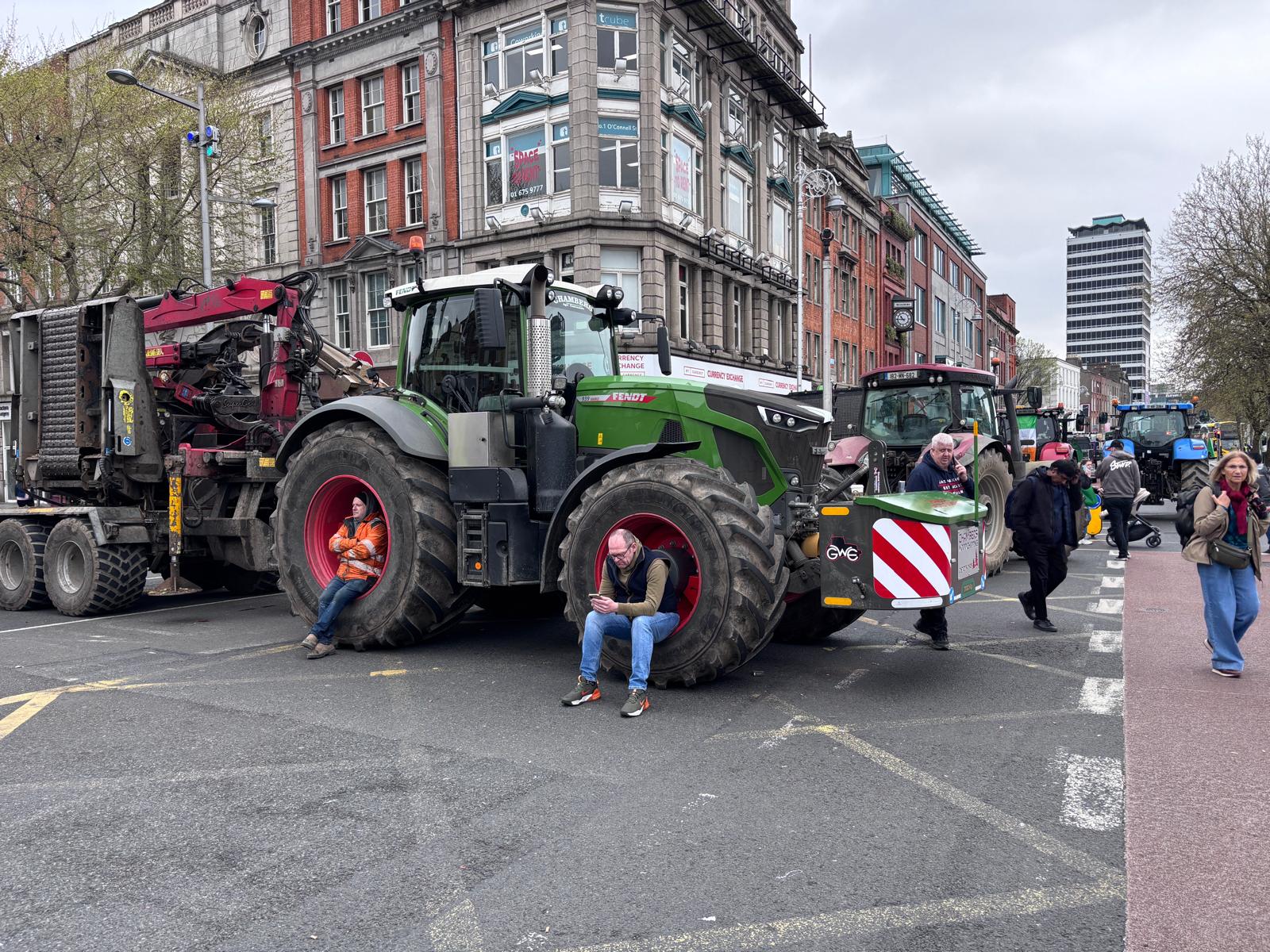
As the protest by hauliers, agricultural contractors, and some farmers against fuel price increases reaches its third day, the government has announced it will use the army to break up demonstrations. This is a massive escalation by the government, setting a precedent which threatens future protests. We cannot allow this to happen.
The protestors are operating outside of the official representative organisations, such as the Irish Farmers’ Association (IFA) and the Irish Road Haulage Association (IHRA), which are engaged with the government. The core of the dispute is the rising cost of fuel. The government tax cuts two weeks ago have been cancelled out with rises in prices in the international markets caused by the US/Israeli war on Iran.
Fuel prices have risen sharply. One protestor has been quoted as saying that he was paying 86c a litre for diesel, and is now paying €1.48, a 42% increase. Many small operators are in genuine difficulty as a result, and these rises are also affecting ordinary people across the country, who are already suffering from a cost-of-living and housing crisis.
Blame the government, not the protests
The protests have caused significant inconvenience for many people, particularly in places like Dublin, where public transport has been blocked, leading to massive delays for commuters and others. But we must be clear: this is the government’s fault. They have utterly failed to tackle the cost-of-living crisis in the run-up to these protests, nor the fuel crisis of recent weeks. Solidarity has called for caps on fuel prices for regular households; this can and should be extended to small companies and operators facing financial difficulties. This could be funded through a levy on profitable companies, and those such as data centres that are massive users of energy. It’s actions like these disruptions which are needed to force the government to act.
The government, two weeks ago, backdated their fuel tax cuts to the start of the year for hauliers and private bus companies. This was applied across the board, even to those who are making handsome profits. We need to see the opening of the books of all the operators in the haulage and logistics sector for democratic inspection by workers’ representatives. Any corporations or large operators that are profiteering or using this crisis to improve their position need to be identified. Such companies should not have access to supports.
Trade unions must intervene
There has been an active effort by the organised far-right to put their stamp on these protests. Those on these protests must make it clear that such agitators are not welcome. Protests have focused on government inaction; however, there has been a dangerous presence of anti-migrant sentiment from some. Some of the far right have been allowed to speak at protests, or on behalf of them. Some have disgracefully said that resources allocated to assist those fleeing war should go to cut fuel costs. There have also been incidents where far-right agitators on the protests have engaged in racist abuse and intimidation against those on the left. It is important that anger over the cost of living and fuel prices is not directed at immigrants, and the protestors must be unequivocal on this point.
The reason for cost-of-living pressures is the capitalist market, which is caused by profiteering from major corporations and government inaction. Meanwhile, those same far-right agitators support Trump and Israel, who caused this fuel shortage in the first place with their savage war on Iran. The far right have nothing to offer these protests and are seeking only to insert their own backward agenda.
If the trade union movement intervened, by calling their own demonstration and even industrial action, they could cut across the racist drivel of the far-right and put their own stamp on the movement instead, giving a real boost to protests but also raising the needs and demands of ordinary working-class people and bringing those into the mix as well. We need meaningful cost-of-living measures that include cuts to utility bills, price controls on groceries and other essentials and pay rises. A united struggle such as this would be extremely difficult for the government to resist.
No to repression of protests
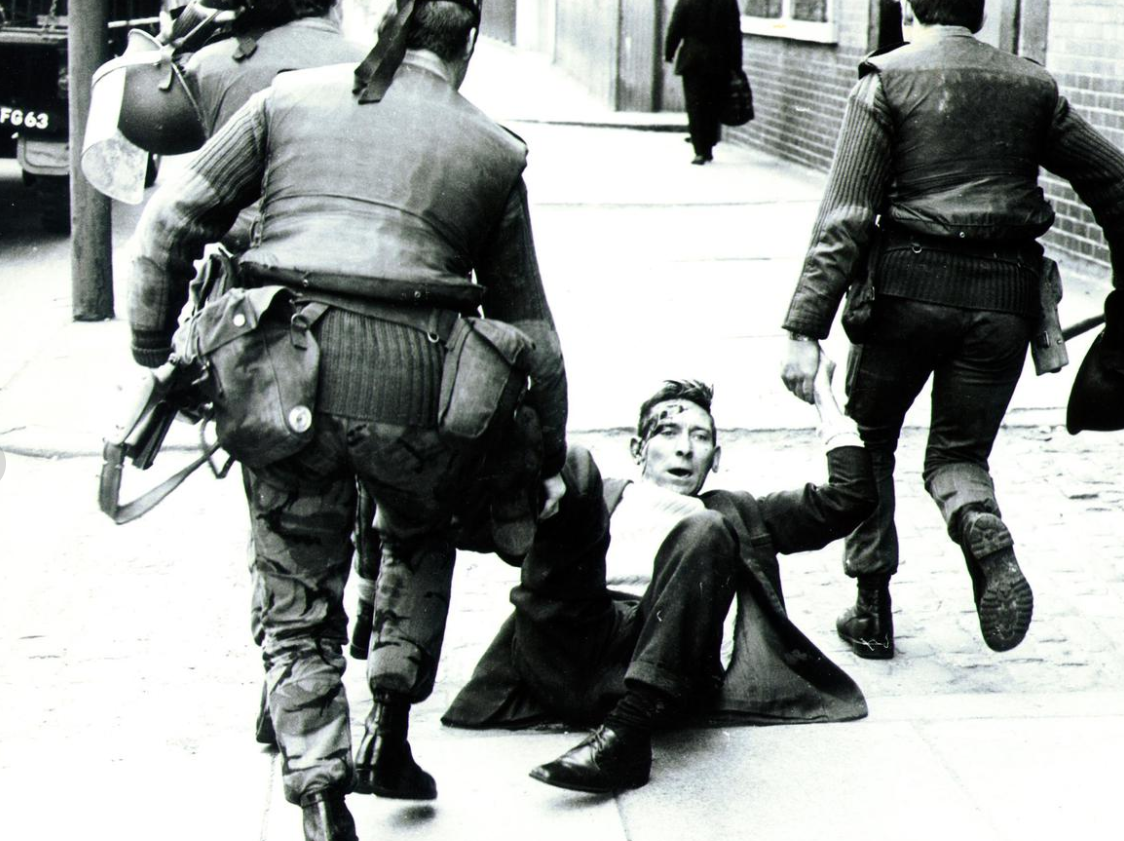
The protests are causing a big disruption, and after three days are being threatened with repression by the army. Should such methods of disruption be used by working-class people, or movements such as the Palestine solidarity movement, it would be met with much swifter repression by the state. We saw this when a pro-Palestine protest was viciously pepper-sprayed by Gardaí for holding a protest near the Dublin Port tunnel. Over the years, countless strikes have been met with injunctions and legal threats. There should be no state repression against the protesters. State repression would enforce the position that protests that cause disruption should be met with repression. This may provide some relief to commuters in the short term but would set a dangerous precedent and impinge on the right to protest.
One of the key demands of the protesters is to meet with the government. This morning, the government has doubled down on their position that it will only meet with approved representative bodies. This is undemocratic and sets another problematic precedent.
Solidarity calls for:
- We must firstly say: No to the imperialist war for power, oil and profit in Iran, which, alongside bringing death and destruction, is fueling this crisis globally. US military out of Shannon Airport
- No attacks on the right to protest—no sending in of the Gardaí and army. Protesters should be allowed to choose who their representatives are in discussions; it should not be for the government to decide.
- Trade unions must take a lead in this crisis and call a national protest against the cost-of-living crisis and link it to a plan for national industrial action.
- No to racism, division and the far-right. We need a united struggle against the cost-of-living crisis and the issues impacting the lives of all ordinary working people.
- Tax the rich and big business to fund emergency payments for all working-class people impacted by this crisis. This should also be used to assist small farmers and small businesses facing financial distress due to skyrocketing inflation.
- Run the state-owned ESB on a cost-even basis and free up its profits to reduce electricity and gas bills – the company made over €700 million in profits in 2024. Take the other energy companies into public ownership and reduce prices to 2020 levels. These companies must be run democratically by workers and communities.
- The legislative tools already exist to immediately stop profiteering – use the emergency clause in the Consumer Protection Act 2007 to immediately fix maximum prices to affordable levels.
- For real price controls that will reduce goods and services to affordable levels. Reduce rents to affordable levels and ban evictions. Building public homes on public land.
- Trade unions must fight for wage rises to meet the needs of workers impacted by the cost-of-living crisis. For a minimum wage of €18 an hour.
- End reliance on fossil fuels — for major investment in renewable energy and a reliable, free public transport system. We need a total moratorium on data centres.
- Open the books of price-gouging companies – show us where the profits are being squirrelled away. Take the major retail chains and agribusinesses into public ownership. Food production and retail should be geared towards our needs and those of our planet – not for profit.
- For a socialist alternative to the chaos and inequality of the capitalist market. Democratically plan and bring into public ownership the key sectors of economic activity.