By Kevin McLoughlin
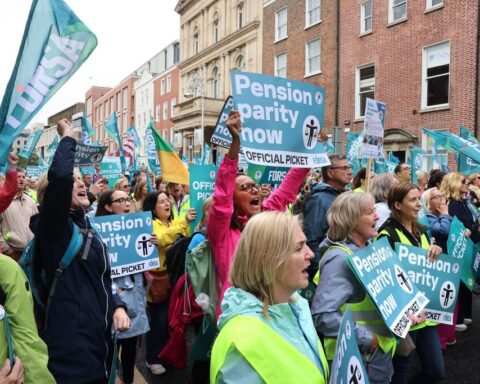
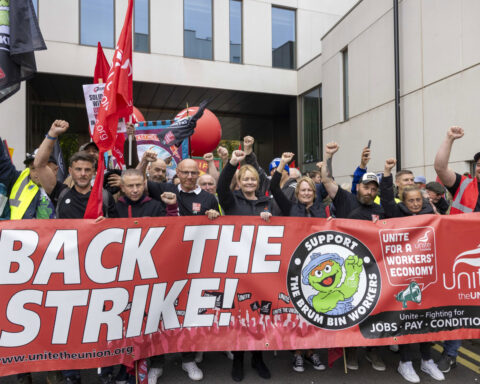
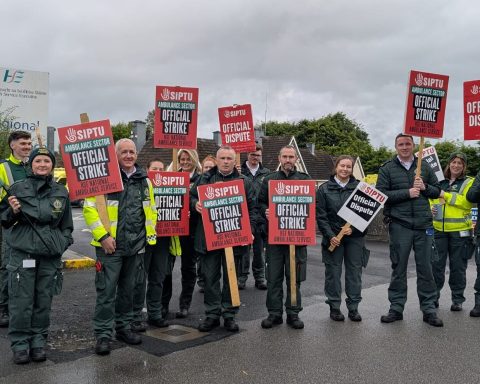
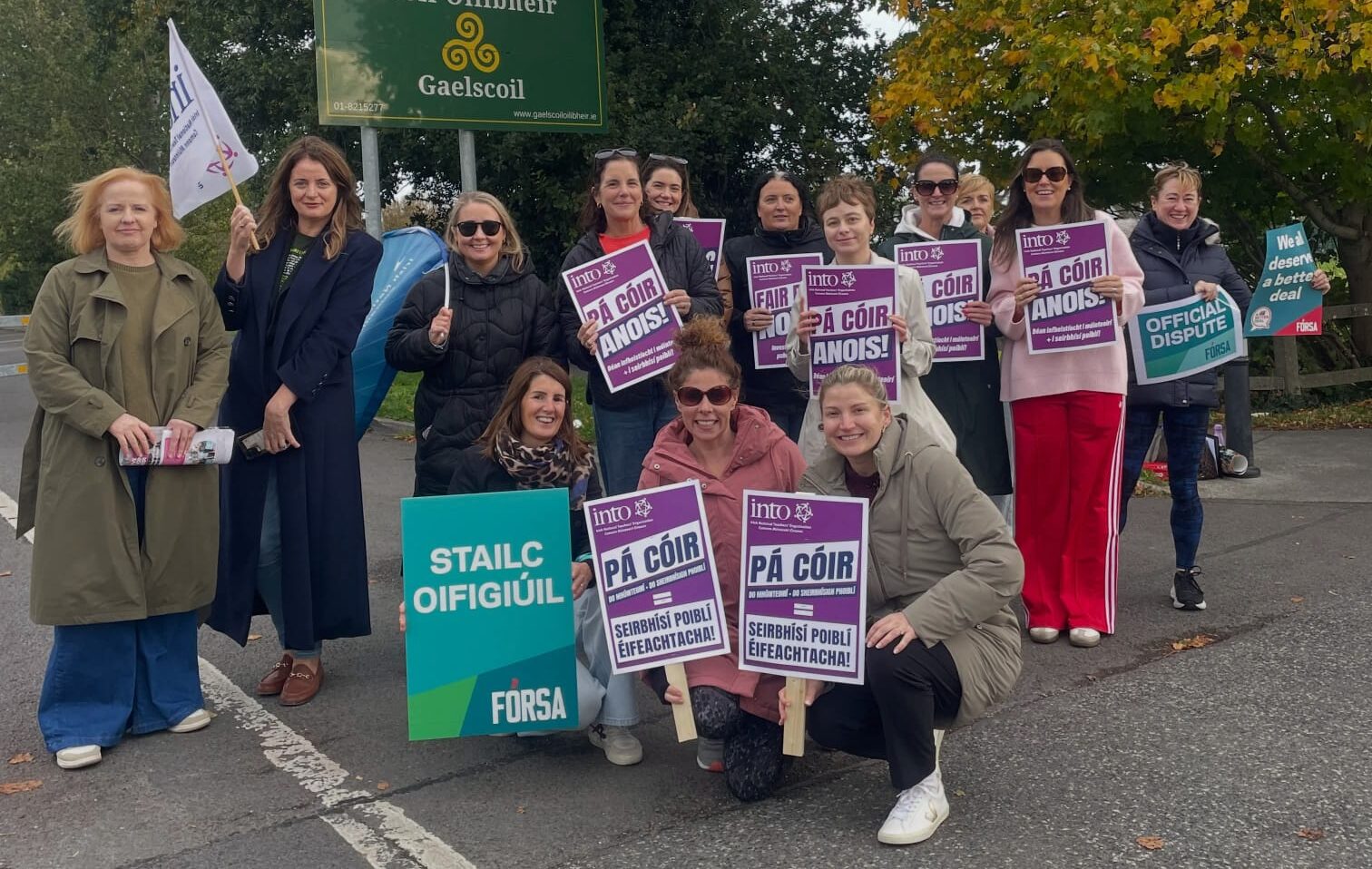
October 14 was a glorious day. It wasn’t because of the mild temperatures and frequent autumn sunshine, but because everywhere you went there were pickets – workers came together, often getting noisy support from passing traffic. This was long overdue. Ordinary people were exercising democratic rights and civic involvement, workers’ power in action, crucially striking on key issues. It lifted the morale of working-class people in the country. Then suddenly the action was suspended.
Some workers may not be angry that next week’s strike has been called off (the loss of another day’s pay being on strike is not a small thing). It is also possible that the negotiations about to start could break down and pickets remount at some point. However, the calling off of the planned strikes by ICTU is not only an unforced error that will inevitably limit the pay increase workers will get; crucially, it also illustrates a fundamental problem with the approach of the general trade union leadership in this country. This should make it clear to workers that they themselves need to get active and take the lead in their workplaces and in their unions – if the trade union movement is to be redeveloped as a vehicle to fight for real change and progress.
Union leaders’ mistake
Nineteen unions represent the workers in the public service, and all, with the exception of Unite, consented to calling off the strike after just one day for the promise of talks about talks! Unite argued that nothing of significance had changed to justify calling off the strike – it is consulting its public service members (it is one of the smaller unions in that sector) regarding their views on what has happened. It’s now been announced that the initial talks about talks have concluded and formal talks between the parties are on at the Workplace Relations Commission.
The key elements up to this point are that people are suffering significant hardship because of the serious loss in purchasing power due to rising prices, far beyond the official figures for inflation, and no end in sight. The Government, which continues to refuse to raise taxes on big business and profits to properly fund public services, is shifting to a more Thatcherite approach and wants to minimise any wage increase. The unions, whose inaction has in effect led to pay cuts for workers over many years, were exposed and embarrassed by the fuel protests earlier this year, as they showed that not only was militant action possible but yielded results.
It was completely correct for the unions to ballot for industrial action. The results coming in, with over 90% supporting strike action, were an indication of the potential. In doing this, the union leaders were recognising the reality of the class struggle – profiteering was a key element in the cost-of-living crisis and the Government (representing business interests) was also intent on squeezing as much out of workers as possible. Unfortunately, the unions didn’t build their mandate for action around a clear wage demand. And now it’s been clarified by events that in reality the strike was not about pay directly, but to win negotiations.
But the power that was demonstrated on Wednesday the 14th, with large parts of society brought to a standstill, including the Government being suspended in mid air (the Dáil couldn’t even function), was the perfect platform to continue the action, weaken the Government further and force it from its Thatcherite pedestal, breaking its spirit.
A new movement
There is a maxim in trade unionism: you do not win in negotiations what you have not already won in battle. The union leaders have let the Government off the hook, and the Government enters the talks somewhat weakened but, you’d have to say, basically intact. They may well give more than they would like, but by immediately embroiling themselves in negotiations and mechanisms which fundamentally suit the other side, any increases the unions get will be significantly less than what could have been forced from the Government if the action had continued and intensified. That is not to mention that the unions didn’t seek or try to get private sector workers involved, many of whom are really suffering too, in the campaign in any meaningful way. Nor did they demand additional measures from the Government – like giving energy credits or using the power the Dáil has to control the prices of some vital goods/services.
This is looking like it will be another major lost opportunity to deliver a real boost to the finances and morale of working-class people around the country.
In another way it illustrates an even greater lost opportunity. What if the trade union movement took this type of fighting approach on all the key issues, using the power it has in the public and the private sector, to fight on the myriad of issues that impact their 500,000 members, such as fight for complete public control and ownership of the energy sector, supplying energy at cost price; a state construction company to build social and affordable homes; a campaign against femicide and gender-based violence and attacks on the LGBTQ+ community; support the struggles of disabled people; unite all workers in struggle and fight against the racist anti-immigration rhetoric and policies of this Government (currently their Nationality and Citizenship Bill); decisively push back on the emerging far-right and fascist threat; and organise to make sure workers in Ireland don’t handle weapons or component or services that facilitate the genocide in Palestine?
Hold on to your placards
The trade union movement has a choice: continue with a narrow outlook and a compromising approach that suits the powers that be, or recognise the dramatic political, economic and social changes in the world and in Ireland, and instead help crystallise these burgeoning struggles into a powerful movement that can challenge the system and the elites. If that is to happen, the push won’t come from above, it will come from the members who are feeling the brunt of the attacks and havoc that an increasingly vicious capitalism is inflicting on people and the planet.
For now, workers should hold on to their placards and picketing boots in case the negotiations, which were prematurely entered into by the union leaders, don’t deliver the wage increases people need and action has to be reinstated. If that happens, workers and reps should insist that they have real input into and control over the conduct and nature of any actions and strikes. If any worker or section of workers would like advice regarding organising in their workplace or union, feel free to get in touch with Solidarity.