
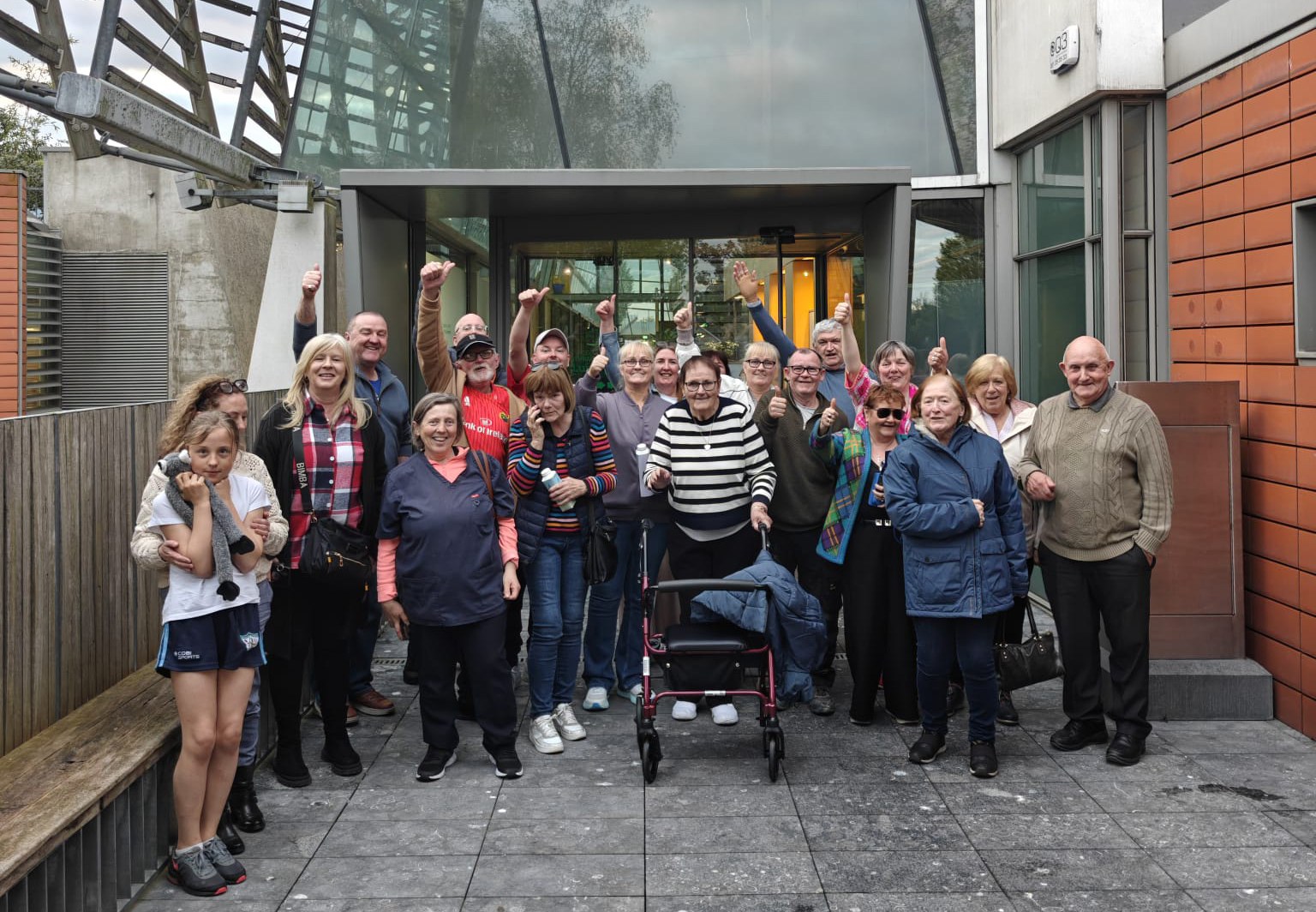
Janesboro and neighbouring communities are celebrating a historic victory after Limerick City and County Council voted unanimously to block Mayor John Moran’s attempts to build temporary modular housing on the community’s only park.
A capacity crowd in the Council gallery erupted in cheers as the decision was announced, while hundreds more watched the proceedings online. Double Olympic boxing champion Kellie Harrington reached out to congratulate the community, noting that her own inner-city Dublin community is currently campaigning to save their local pitch – all of which demonstrates the scale and impact of the grassroots effort to defend Boro Park.
The Mayor’s plan
Mayor Moran had attempted to portray his plan as him following through on already existing commitments made by the Council. However, the Council’s housing director confirmed during the meeting on Monday that Boro Park had not originally been proposed by the Council’s housing department as a potential site for ‘SMART’ modular housing.
Moran, in his role as chair of the Land Development Agency (LDA), had initiated the Colbert Quarter Plan which included the development of public-owned sites along the then disused (now to be reopened) Limerick-Foynes railway line. This is where the plans for developing on Boro Park originated. When speaking to the community at a public meeting in March, Moran had claimed that there were no designs or formal planning for the site. However, in the days running up to the Council meeting, he produced LDA drawings which had massive developments planned for what was then a field.
That field was always used by the community, especially by dog walkers, but in 2021 the Council invested considerable resources to transform it into a proper green space. These changes were clearly something that the Mayor struggled to accept, given his insistence – despite residents repeatedly correcting him – on referring to the park as the “Boro Field”. This combative and dismissive approach by the Mayor only made the community more determined to resist.
A controversial record
Indeed, Moran has played an inauspicious role in housing in Ireland. As head of the Department of Finance, Moran helped orchestrate the entry of vulture and cuckoo funds into the Irish housing market. This move has directly contributed to the current housing shortage facing buyers and renters today. His proposal for Boro Park followed this pattern, where he was open about seeking private investment for temporary for-profit housing. Residents argued that this would do nothing to reduce the social housing waiting list while permanently destroying their shared green space.
On the morning of the Council vote, the Mayor published two blog posts implying that a vote for the Janesboro community was a vote against housing. However, working-class communities don’t need a lecture on the housing crisis from a millionaire landlord, as they are the ones who have to live it. The solution is not to stack modular housing on an area’s only community park, but to implement a public housing scheme that removes profit from the equation and builds quality, truly affordable homes for all.
Community opposition
The Janesboro community established a ‘Save Our Park’ campaign which successfully lobbied councillors and organised community events to maintain pressure. A public meeting with the Mayor at Our Lady Queen of Peace National School was so well-attended that people had to be turned away at the door. Despite this so-called “listening exercise” which demonstrated the overwhelming opposition to his plan, the Mayor went ahead and hired a team at a cost of €16,575 (excluding VAT) to design the modular units he proposed to put in the park.
In response, councillors took the extraordinary step of using a Section 139 motion under the Local Government Act 2001. This rarely used tool allows councillors to pass a binding resolution directing that specific proposed works or projects by the local authority executive shall not proceed. This marked the first time the measure was ever used in Limerick.
Lessons learned
Notice of this Council meeting was the cue for a quite extraordinary campaign on the part of ordinary people. Activists in the community pulled together the contact details of all the councillors and there was a live tracker of who was voting with the community and who was still on the fence, which was updated daily. Those who were still to be convinced were followed up assiduously.
Councillors remarked how civil and respectful the correspondence of residents and supporters were. The community was determined, but it was also disciplined. The Mayor’s attempt to portray the community as having been “misled” by politicians backfired. He had evidently hoped to leverage people’s suspicion of the establishment parties. However, people had analysed the plans for themselves, and councillors were therefore responding to the demands put on them by the community not the other way around.
Janesboro has demonstrated the power of a united working-class community. Support for housing in the area was expressed at every event and conversation around the campaign, the community simply argued that the planning mistakes of the past be learned and that working-class areas needed both housing and amenities.
There are already too few parks and public spaces in Limerick city. Those we have should be defended. Every community should be encouraged by this campaign to do the same and fight for high quality public housing with green spaces and community resources. By standing firm, Janesboro has shown that working-class people can roll back pro-market policies and protect the essential amenities that make a city liveable.
