By Councillor Brian McCarthy
The Government’s Residential Tenancies Bill has passed the final stage in the Seanad, meaning that the new measures will come into force on 1 March. The key changes being introduced are the extension of RPZs (Rental Property Zones) to cover the entire country, the ability for landlords to increase rents to market value if a tenancy ends and the property becomes vacant, and a minimum six-year duration for new tenancies.
In addition, for new-build apartments and student-specific accommodation, the 2% cap on annual rent increases will not apply, while for existing tenancies, increases will be capped at the rate of inflation or 2%, whichever is lower. Small landlords (with three properties or fewer) can still evict tenants if they want to sell, carry out significant renovations, are in financial difficulties, or need it to accommodate a family member. Large landlords (with four or more) cannot evict tenants if they have kept up with their obligations.
Certainty for whom?
Taoiseach Micháel Martin has said that this bill will give renters and landlords certainty. He’s right: it gives renters in new tenancies the certainty of monthly rent hikes of €2,500 to €3,000, and landlords the certainty of massively increased profits. RPZs are far from perfect since rents have been increasing steadily since their introduction anyway, but even extending the scant benefit they do provide is a farce when new builds are being excluded, and rents for new tenancies are being brought up to market rate, which will make them increasingly meaningless for most people. The six-year tenancy is another fig leaf since the average is 3.5 years, and around 25% of tenancies a year are new. This is nothing more than a thinly disguised landlord’s bill designed to supercharge their profits.
The constant refrain from FF/FG is that we need to increase supply by making it more attractive for landlords to invest and stop them exiting the market, that it’s the only way to bring rents under control. Supply is definitely an issue, but it clearly isn’t due to a lack of landlords; the number of landlords has been going up every year. They hardly need any more financial incentive either; rents have been steadily increasing to the point where they are now 80% higher than they were 10 years ago.
Question of supply
In any case, if more landlords don’t increase supply, it just means more of the current supply gets bought up and rented out at extortionate rates. The only way to increase supply is to build more housing, but the government parties’ reliance on the private market has failed to deliver anything close to what’s needed. They clearly have no real plan for getting us out of this crisis, in November even the Department of Finance said that the Housing Crisis is going to last for another 15 years!
The solution to this crisis won’t come from relying on landlords, vulture funds and private developers—they are the cause of this decade-long crisis. We have the resources we need to really tackle this crisis. The state owns large land banks, there’s a record budget surplus and 163,000 vacant properties across the country, but what’s missing is political will. This flows from the fact that the government represents the interests of the capitalist market.
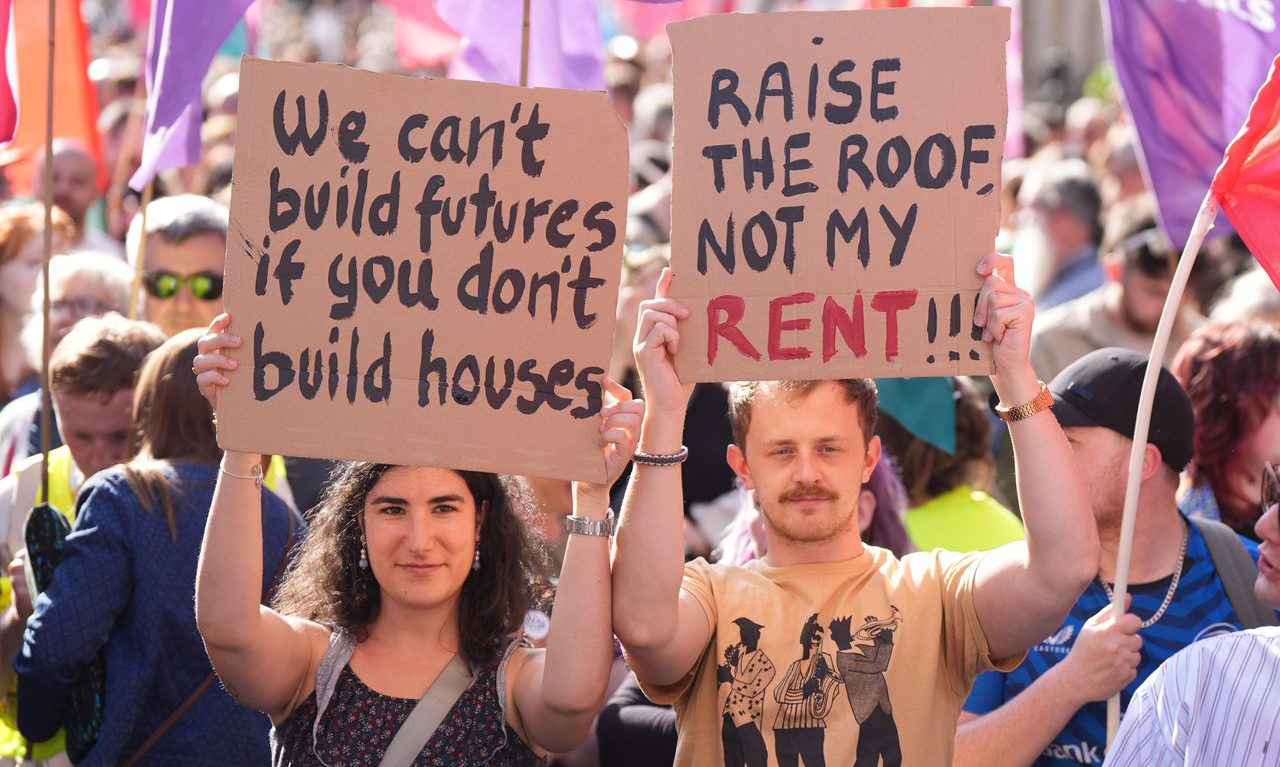
We need to demand real solutions like a ban on no-fault evictions and rent controls, for all land, houses and apartments that are being hoarded for profit to be taken into public ownership and an emergency programme to build social and affordable housing. This can’t be done by relying on the private market, so we need to take the big construction companies into public ownership too, forming a state construction company to build public homes on public land. Homes for need, not for greed.