By Eílís Gallagher
NAZA is an acronym used by the IDF, derived from the Hebrew phrase nezek agavi, meaning “collateral damage”. It refers to calculations made using Artificial Intelligence to discern the number of civilian casualties, i.e. Palestinian lives that will be eviscerated in planned airstrikes. Human lives, including children, are reduced to numbers: 10, 50, 100 NAZA. This title goes straight to the heart of what filmmakers Yuval Abraham and Rachel Szor (co-directors of No Other Land alongside Basel Adra and Hamdan Ballal) set out to explore: the automation of Israel’s genocide and the conscience of those behind these systems.
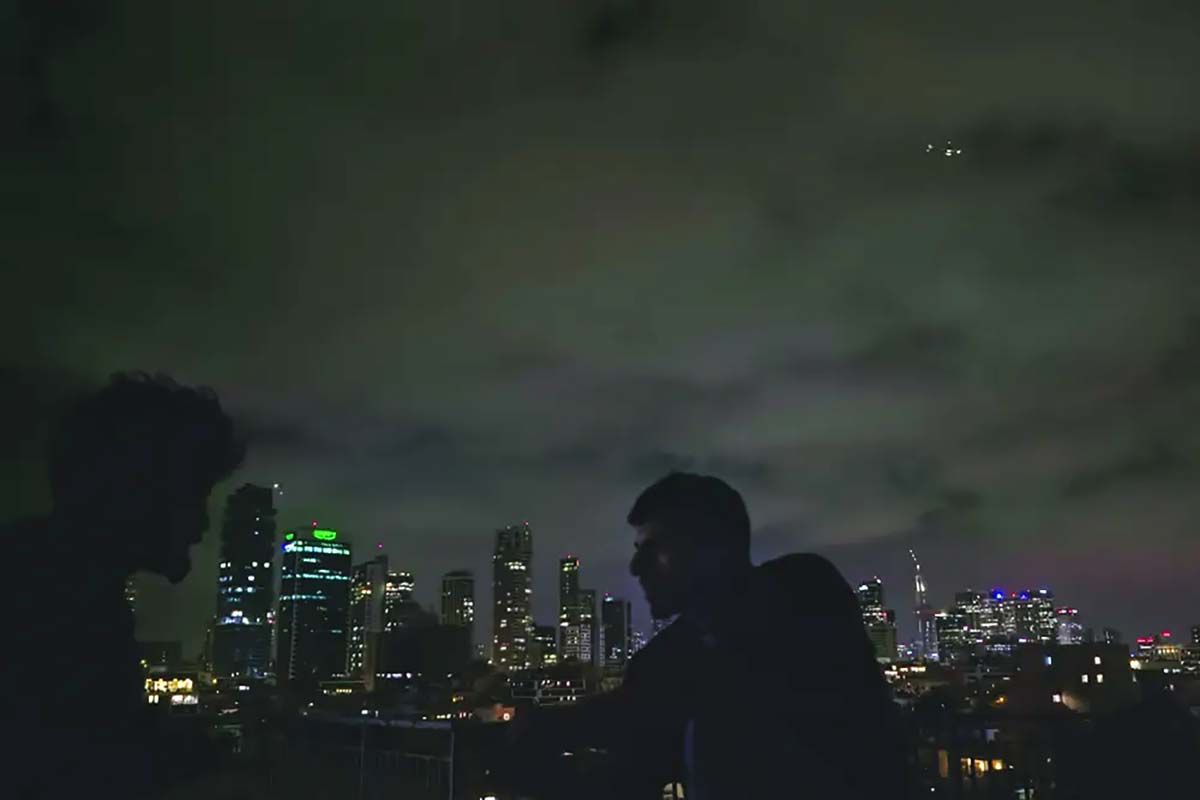
Abraham appears on screen to interview 24 IDF soldiers and intelligence personnel, anonymised by digital editing, obscuring their faces into darkness. On the rooftops of high-rise buildings in the centre of Tel Aviv, they explain matter-of-factly how AI is used to identify and carry out bombings of Palestinian homes in Gaza, including through the sadistic targeting system the IDF calls ‘Where’s Daddy?’, in which children’s phones are hacked, and messages read to identify when their fathers will return home. As one interviewee says, these operations are best carried out at night, when Palestinians and their families are asleep in their beds.
It is in the cloak of night that the interviews take place, offering a solitary setting for participants to admit to crimes of genocide perpetrated just 60km away. In Gaza, homes and places of community have been razed to the ground. In NAZA, the lens of the camera scans across the glistening skyscrapers and city apartments of Tel Aviv, accompanied by ominous, droning music. A woman wipes down the table after dinner. Another stretches into a yoga pose. A couple in formal dress returns from an event. Life resumes comfortably for those inside the ‘Iron Dome’, often with the background of TVs casting Netanyahu’s face and his genocidal propaganda into their living rooms.
All of this brings to mind the 2023 film The Zone of Interest by Jonathan Glazer, who also executive-produced NAZA, which eerily depicted the banal domesticity of concentration camp commandant Rudolf Höss’s family home at Auschwitz. Like that film, NAZA highlights the normalisation of genocidal violence and mass murder in Israeli society. While The Zone of Interest uses this contrast to explore the Nazi ideology that underpinned the Holocaust, this is not developed in NAZA with regard to the racist ideology of Zionism which forms the basis of the genocide. This is a limitation in Abraham and Szor’s approach, which for the most part isolates the crimes from their ideological drivers.
Disclosures made during the film contradict the position of many liberal institutions which maintain there is no genocide. Those interviewed say what they won’t. The participants admit that Israel’s actions – those Barack Obama recently termed “excessive” – are genocidal. One man boasts that he was in the most elite unit, recruited from what he considers the liberal echelons of Israeli society. It is this unit that has actually killed the most Palestinians, commanding from their technological fortress – far removed from the carnage and bloodshed they create on the ground. According to them, operations are technical, bureaucratic, gamified.
While mainstream media and governments focus on genocidaire Israeli Ministers, rabid settler violence in the West Bank, ‘rogue’ infantry units, they purposely leave out that the architects of genocide are also the Israeli educated, upper-class, ‘liberal’ elites. This way, states can weakly reprimand the most ostentatious far-right actors without any action taken against the structures of Zionism.
For their exposé, the filmmakers are on the receiving end of a wave of reaction from within Israeli society, labelled as traitors who are guilty of blood libel. The Israeli government has threatened to strip Abraham and Szor of their citizenship, charge them with treason, and has called for the identification and prosecution of all who appeared in the film for defamation. Meanwhile, NAZA has been met with acclaim from Western bourgeois institutions: receiving a record-breaking 25-minute-long standing ovation at the glamorous Venice Film Festival.
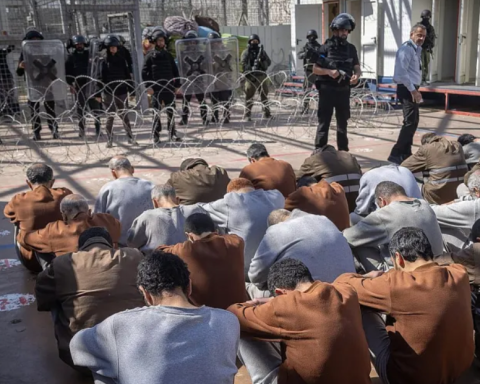
For anyone paying attention since 7 October 2023, many of the revelations dispassionately relayed by unidentified IDF personnel come as no surprise. The structural and systemic dehumanisation and destruction of Palestinian people, including the technologies they use to do so, have long been exposed by heroic Palestinian journalists – thousands silenced only through death or languishing in Israeli prisons. It’s evident from early on in the film’s runtime that Palestinian voices will remain absent. This is difficult to square when Palestinians appear only in as victims of apocalyptic violence.
However, the decision to centre only Israelis in the film, both as interviewer and respondent, no doubt a conscious choice of the filmmakers, focuses responsibility for the barbarism squarely on the perpetrators of genocide and, at some level, the society that has produced them. Palestinians are not culpable for this genocide. They have nothing to answer for. Abraham and Szor expose the voices of those who can no longer hide behind the sleek bureaucratisation of annihilation.