By Solidarity reporters
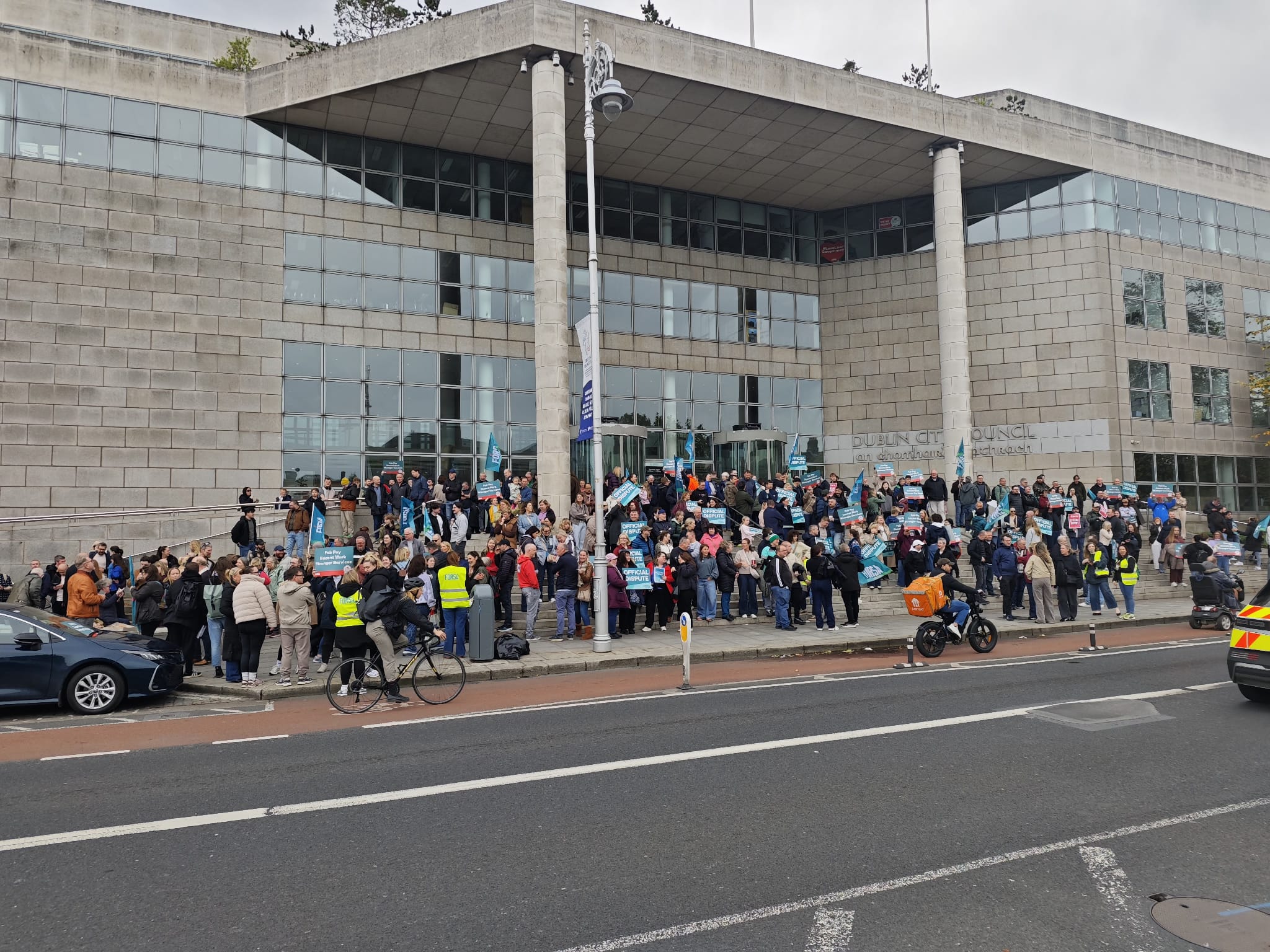
For the first time since December 2009, public sector workers statewide took unified strike action. Teachers, lecturers, library workers, civil servants, healthcare workers, council workers, firefighters and more took to the picket lines to oppose a cost-of-living crisis and wage restraint that are eroding workers’ living standards.
This is compounded by the ongoing and deepening housing crisis, with the government refusing to build affordable and social housing. When speaking with Solidarity activists, many young workers on the picket lines said they feel they have no future in Ireland because of this crisis and will be forced to emigrate to Australia or Canada in the near future. This is a burning question that unions must take up in this industrial action.
Determined picket lines
Schools, colleges, hospitals, libraries, councils, fire stations, and government departments were shut down, with well-attended, determined picket lines. Dublin City Centre, for example, was noticeably quieter and had less traffic, as the strike in education clearly hit the private sector.
However, this was matched by a sight not seen in years: every street was lined with workers on picket lines and, significantly, received huge support from the broader public. The sound of beeping horns was welcomingly deafening; clearly, the working class at large is happy to see a stance being taken in the face of rising food costs, heating bills and rents. This is particularly true at a time when the Government has a budget surplus of over €9 billion. The power we saw on picket lines, and the support it received, must remain mobilised in action.
Solidarity activists visited picket lines across the country and reported widespread support. Dublin Bus drivers refused to drive past the picket line on routes through Connolly Hospital. In Blanchardstown, recycling workers joined the pickets of striking teachers. In TUD, security workers refused to cross the picket line. At South Infirmary, Cork, reps told us that Fórsa membership in the hospital nearly doubled from 80 to 140 in the last three weeks. One Solidarity activist on strike reported that in their workplace 300 workers had already clocked in to the picket line between 8 am and noon. Another striking Solidarity activist reported that from their picket line “within a two-minute walk we have six unions: IFUT, SIPTU, UNITE, Fórsa, INTO, and the PNA.”
Wider action needed
All of this shows there is potential for a wider industrial movement that goes beyond today’s action and extends to the private sector, including unorganised workers. In order to defeat this right-wing, anti-worker government, such action will be necessary; they are determined to restrain wages at a time when the global capitalist economy is facing a deeply precarious situation.
This situation flows from Trump’s murderous war in Iran and the real potential for the AI bubble to burst. Essentially, we are once again being made to pay the price for a potential crisis that is not of our making.
Trade unions must build on today’s success; the next action on Wednesday, 21 October, must go ahead and be linked to a programme of wider strike action. Today’s action showed the wide and deep public support for workers fighting for what they deserve. It must be built on with more strike action, not a stepping back for negotiations for minimal pay increases. Workers must fight for double-digit pay increases to make up for the true cost of inflation and the cost-of-living crisis.
Today shouldn’t be seen as merely a warning strike to win negotiations: members should pressure their unions to organise more serious, coordinated action. Unions should also organise and encourage private sector workers, those in unions and those who are not, to also join the action to win their own concessions.
We say:
- Yes to double-digit, inflation-busting wage increases to really tackle the cost-of-living crisis
- Yes to escalation of industrial action, and broadening to private sector and unorganised workers
- Yes to a new fighting trade union movement that breaks with the pandering social partnership approach
- Yes to bringing together all the resistance on all the key issues into a new united radical left force that breaks with capitalism in Ireland, and extends solidarity to those fighting for change around the world