By Isidora Durán
Not a year goes by without climate scientists predicting record-breaking summer temperatures, and 2026 is no exception. Greenhouse gases are gradually warming the Earth towards catastrophic tipping points, but it is the sudden climate events intensified by this warming that are already having a devastating impact on some of the most vulnerable regions.
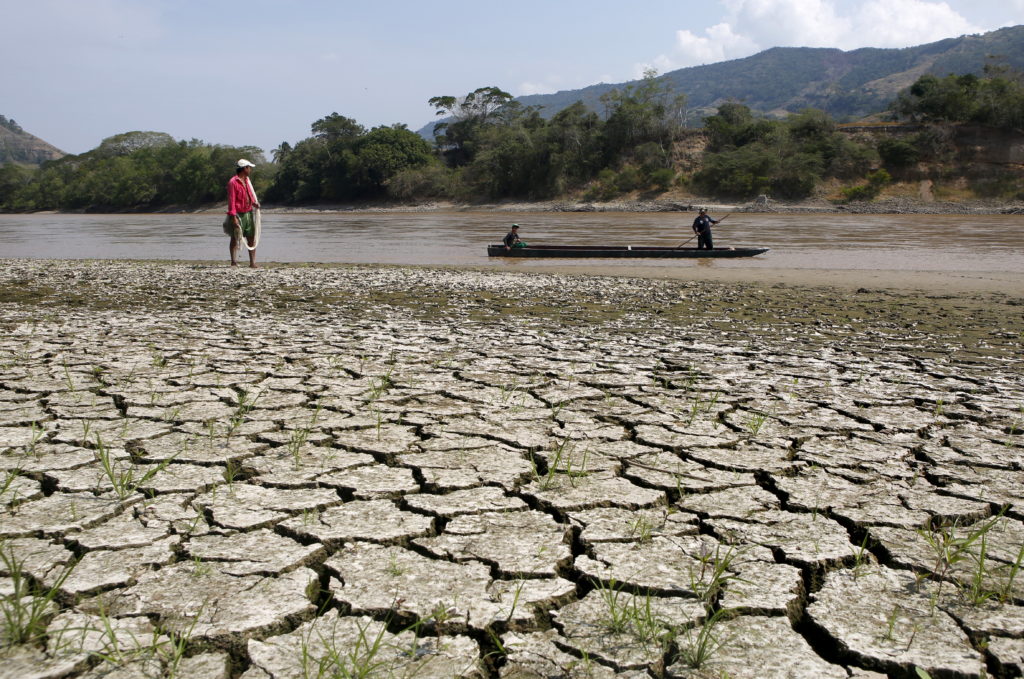
The World Meteorological Organisation is warning that a rare Super ‘El Niño’ is on its way – spelling floods, mudslides, droughts, crop failures, wildfires, skyrocketing temperatures and general climate volatility. There is an 80% chance for almost every part of the globe to reach above-average temperatures in June and July, and a 90% chance that the impacts of El Niño will be felt all the way into November, and potentially beyond.
Rising ocean temperatures
It was Peruvian fishermen who first identified El Niño in the 1600s. Every few years, the Pacific Ocean waters they sailed in became unusually warm, causing schools of fish to disappear. This phenomenon occurred at Christmas time, leading them to blame ‘El Niño’, or the son of Christ. Today, climate scientists understand El Niño to be caused by these warmer ocean temperatures paired with weaker winds that prevent cooler deep-sea water from reaching the surface.
The circulation of the air responds to this drastic change in ocean temperatures by switching direction from west to east, pumping vast amounts of hot, moist air across the globe, disrupting normal climate patterns. Why this change in direction occurs is still a mystery, but El Niño’s extreme effects are well documented, dubbing it the ‘master weather-maker’.
El Niño is a naturally occurring irregular climate pattern. However, it collides with the effects of global warming, adding fuel to the fire of an already burning world, and the capitalist system is incapable of preventing the human suffering and ecological destruction that it brings. The 2015/2016 El Niño affected more than 60 million people worldwide, with several African countries declaring a state of emergency. The 2023/2024 El Niño also disproportionally affected the African continent, with failed rains leading to massive crop losses and in other parts extreme rainfall, causing flooding and displacement.
Impact on Global South
This year, Peru and Ecuador will be most prone to severe flooding and mudslides, Indonesia, Australia and India to droughts, and Somalia, Ethiopia and South Africa to erratic rainfall that ruins crop yields and can lead to famine. Countries bordering the Pacific Ocean are most affected, although it was the conscious under-development of the global south by imperialism that has left these populations particularly vulnerable to humanitarian crises caused by extreme weather.
The Earth is around 1.4C warmer than in pre-industrial times. Almost all of this heat is driven by human-caused greenhouse gases from the burning of fossil fuels. To name a few of the effects we are already experiencing from rising temperatures: glacial retreat, increased ability for the spread of zoonotic diseases like Covid-19 and Hantavirus, animal habitat disruption, which can lead to extinction, and every iteration of extreme weather, including natural patterns such as El Niño transforming into catastrophic climate events.
While capitalist governments gaslight ordinary working class people into footing the bill through carbon taxes and initiatives like the Deposit Return Scheme, they let fossil fuel companies off the hook. Six of the biggest of which are projected to rake in profits of $94 billion in 2026, that’s $3000 per second.
Decoupling from profiteering
Minister for Climate, Energy and the Environment Darragh O’Brien admitted yesterday that the biggest obstacle to hitting climate targets was ‘decoupling economic growth from emissions.’ This comes after news that, in the best-case scenario, Ireland will fall 50% short of its climate targets by 2030. The truth is that the climate crisis is caused by the fossil fuel industry and its backing by the capitalist class – it cannot be partially undone or even have its worst effects mitigated without decoupling the energy sector from profiteering. We need a re-juvenated climate movement that learns the lessons of powerful campaigns like Fridays For Future, Just Stop Oil and Extinction Rebellion, one that does not separate the ecocide that the climate crisis is ushering in from the genocide and mass death that the same fossil fuel companies profit from in imperialist wars.
An immediate and just transition to renewable energy, free public transport, a moratorium on building data centres, reforestation and rewilding, and the retrofitting of homes and buildings are all necessary. This can’t come without seizing the wealth of gas and oil tycoons and the super-rich capitalist class they are part of to build a democratic socialist planned economy that exists in interdependence with the environment, instead of viewing it as an inexhaustible source of profit.