By Marie Claire Jennequin
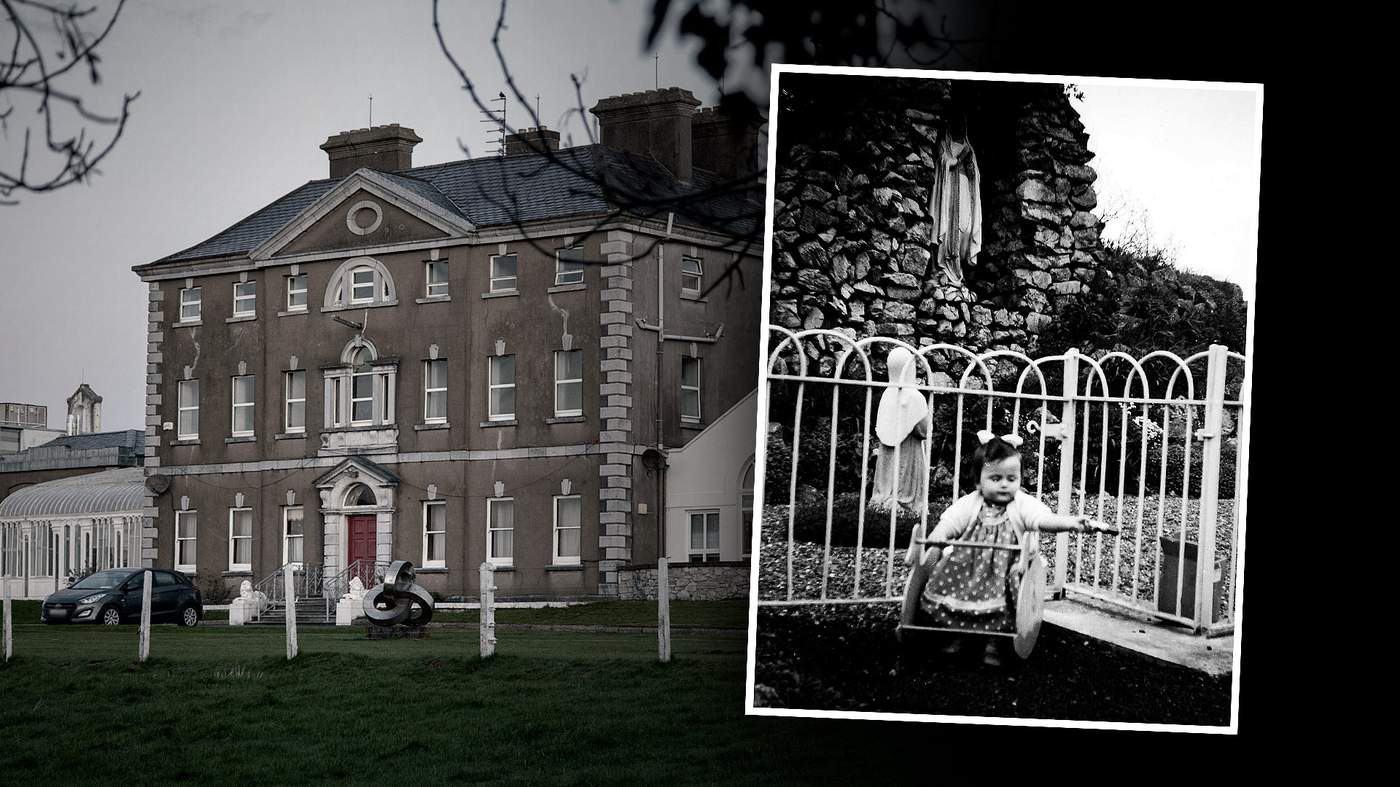
The decision to grant planning permission for a 140-unit apartment development on the grounds of the former Bessborough Mother and Baby Home in Cork represents a profound moral and political failure. It isn’t just a question of housing policy or land use—it is a grim illustration of how the Irish state is subordinating justice and memory, and dignity for survivors of abuse to the bidding of capital.
Bessborough was a site of systematic oppression, run under the authority of the Church and state, where 9,768 women and 8,938 children passed through its gates. At least 923 children died there. Fewer than 70 burial sites have been identified. The rest remain unaccounted for—lost in a system that treated vulnerable women and their children as disposable. This is not distant history. Survivors are still alive, families are still searching, and their trauma is ongoing.
Unmarked graves
Despite this, the developer Estuary View Enterprises has been approved to construct on land where survivors and relatives believe unmarked graves may lie. This decision has rightly provoked outrage. Survivor groups and campaigners have repeatedly warned that building over this site risks erasing both physical evidence and collective memory. Their protests are not symbolic—they are a necessary intervention against a state apparatus that has consistently failed to deliver truth and accountability.
Solidarity TD Ruth Coppinger has been among those to condemn the development, highlighting how the prioritisation of private development over survivor-led justice reflects a broader pattern in Irish political life. Her intervention highlights a critical point- this is not just an administrative decision, but a political one rooted in class power.
The same structures that once enforced the incarceration and exploitation of working-class women, through Church-run institutions backed by the state, have evolved but have not disappeared. Today, they are exhibited in the alliance between state bodies and private developers, where land is valued primarily as a commodity rather than a site of historical and human significance.
Profit over memory
The ruling class language of “progress” and “housing need” is utilised to justify this development, but it obscures a deeper contradiction. Ireland’s housing crisis is real, and working-class people desperately need homes. However, the solution can’t come at the expense of justice for survivors of institutional abuse. To pit these needs against each other is a false dichotomy—one that ultimately serves the interests of developers rather than communities. There is enough public land in the state to build public lands, and if the resources were taken out of the hands of the big developers and construction companies, they could be built by a state construction company.
Conditions attached to the planning permission, like ‘archaeological monitoring’, are presented as safeguards. In reality, they fall far short of what is required. Monitoring is not the same as a full, independent investigation. It doesn’t replace a comprehensive process for justice or involve meaningful consent from survivors and their families. It’s a technocratic substitute for real accountability.
The protests organised by survivor groups are hugely important. They represent a grassroots resistance that challenges both the erasure of history and the ongoing marginalisation of those most affected. These mobilisations connect the struggle for justice at Bessborough with broader working-class opposition to a system that consistently prioritises profit over people.
The treatment of survivors from mother and baby homes reflects a global pattern in which women’s suffering, particularly that of working-class women, is minimised, commodified, or outright ignored. In Bessborough, women were punished for pregnancy outside marriage, stripped of autonomy, and subjected to institutional control. Their children were reduced to records (if they were recorded at all) and many were buried anonymously.
Demand truth and justice
Today, when survivors demand truth, recognition and dignity they are once again abandoned. Patriarchal violence hasn’t disappeared. It has been reconfigured within a capitalist framework that places economic development above historical justice.
A socialist response unequivocally rejects this logic. Justice for Bessborough is not optional. It requires halting development until a full survivor-inclusive investigation is carried out. It demands the identification and proper memorialisation of those who died. It necessitates reparations and a genuine reckoning with the role of both Church and state.
It also requires building a broader working-class movement capable of challenging the dominance of profit-driven developments. Housing can and must be provided—but through public, democratically publicly owned and controlled means that respect communities and history.
The struggle over Bessborough is ultimately a struggle over whose interests shape our society. The interests of developers and state institutions cannot be allowed to be placed over those of survivors, workers, and the oppressed.