
By Finn McKenna
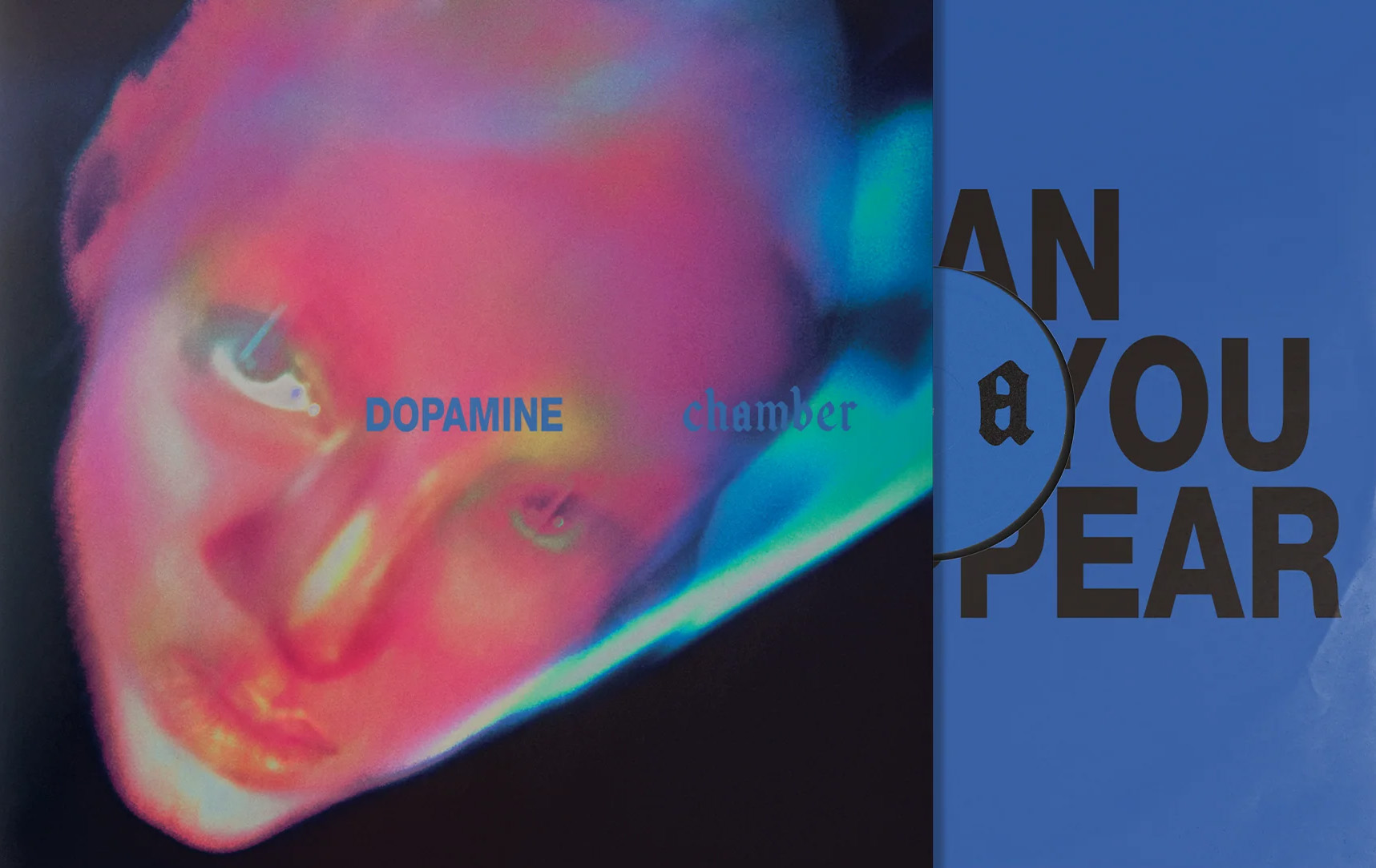
Fontaines DC released their fifth album Dopamine Chamber on Friday, 16 October. Like their previous releases, this album is receiving huge domestic and international acclaim. This is justified.
Those with the Fontaines DC algorithm will no doubt come across the claims about “the Biggest Band In the World Right Now”. Such claims are attractive to megafans, of which there are many, including the likes of Elton John, who made it clear he thinks Fontaines DC “are the best band out there”. Their status as a supergroup is certainly rising.
It’s hard to measure the metrics for what makes a musical group “the biggest band in the world”, so this review will stick to the music, and assess this album in terms of its social relevance, its aesthetics, and what it reveals about the world that we (and they) are enduring. Mayo may have won it big and broke the curse this year, much to the delight of Tom Coll and Deego, but the band also faces hardships, which impact the shape and content of Dopamine Chamber.
Human beings are narrative forming beings. Those who have followed the ascent of Fontaines DC from the beginning probably have their own subjective view of the path of their evolution. I think their musical catalogue can be split into three stages: the period where they resided in Ireland and rooted their music in their Irishness, which was reflected in the first two albums Dogrel and A Heroes Death; the period of Skinty Fia, which concerns itself with such themes as being Irish in diaspora; and their third and current stage, international stardom with the arrival of Romance and Dopamine Chamber.
The latter two albums comfortably move away from the band’s preoccupation with their Irish identity. Fontaines DC are self-described romantics. Hence, their fourth album was named in honor of Romance. The state of being romantic, however, comes with its own dangers and fears. Dopamine Chamber is the lair of romantics bombarded with fame, adoration, and the daily fears that plague all sensitive human beings in today’s era of capitalist polycrises.
Chatten’s place in the Irish literary canon
With the first three albums, begrudgery naturally accompanied the band’s success. Naysayers and cranks were quick to denigrate the artistic merits of the band. In fairness, music is a subjective experience, intimately experienced (a nod to the last song on Dopamine Chamber), which impacts listeners in a range of ways. However, for the Fontaines DC naysayers, their job became markedly harder with the fourth album, as the band finessed their sound and lyrical maturity.
Grian Chatten really is the straightforward contender for most renowned and prestigious Irish lyricist of his generation (so far). What gives his lyrics strength, it would seem, is his ability to articulate the identity of Irishness for many of his generation, as well as universalising the experience of simply existing as a human being in this ‘age of disorder’. Chatten’s humanistic universalism can be observed throughout Dopamine Chamber. The first track, Six Shot Morning, contains the following lyrics:
“Six shot morning, it’s a beautiful world
Sky’s gone crying on a beautiful world
Silicon Valley, took a photograph
Fork tongue kissing in a ten-foot bath
You and I living for a million years,
Always
Melancholy hearts in emotion filming
Melancholy hearts in a motion film”
Evoked here is Chatten’s appreciation of nature, and a depressed perspective of rainfall representing the sorry state of nature’s affairs. He jabs at Peter Thiel and the tech broligarch creeps who have transhumanistic desires to find ways to live forever (while they happily scorch the Earth). The first song on the record fades out with melancholy; the dopamine chamber that the listener is coddled into isn’t one that secures anyone permanently, but one that undulates melancholia. The human relationship with nature, resentments against Silicon Valley and the AI tech giants, and melancholia – all very relatable components of the human condition in our specific time.
Dreamscape preoccupied, Chatten continues the trend featured in A Heroes’ Death in such songs as “Sunny” and “A Lucid Dream” with “Marianne”’s lyric:
“Does anybody want a one-way sleep… my dreams are made from you”.
The unconscious mind is venerated with Chatten; also examined is forms of depression that plague many. Anyone familiar with the black dog will understand the sentiment prodded in the concept of a one-way sleep.
Continuing the dialogue with themes examined in A Heroes’ Death, Chatten arguably produces a sequel to “You Said” with “Mimesis” ; “Well, everybody’s depressed, we’re running on a wheel” – conjuring the image of the rat race pressures of late-stage capitalist society, and the malaise that it invariably produces. Grian is hyper-sensitive to the burnout that surrounds him, a sensitivity likely heightened from the band’s experiences as young travelling and overstretched musicians.
On the theme of Chatten’s sensitivity, one can’t help but wonder about the strain of being in the public eye. Implied in “Mimesis” – “Tired of living in a photograph” is a regular state of fatigue that accompanies being cast on a pedestal; a plight many counter-cultural musicians have had to struggle with upon being propelled into the limelight. A feeling famously shared by the authentic and alienated Kurt Cobain of Nirvana.
The Normal People (Sally Rooney, 2018) song of the album, “Happy For You”, imagines the dynamics of a flailing relationship defined by co-dependency and miscommunication, falling into the realm of pettiness;
“The centre of my world, you are
I’m coming up friendly with flowers and all
On leaving, I key your car”
Several songs on the album deal with toxic jealousy and male entitlement. The penultimate track “Japan” recounts the lack of appreciation of a deadbeat boyfriend towards his long-suffering girlfriend:
“When they fuck, she leaves her body for a while, and she pays for all his shit ‘til he says thanks without a smile”
Moving on, addressing the chaotic condition of being often experienced by neurodivergent people, Grian captures the combined zaniness and mania within “Tongue” – formed in part by high pitch synthesised vocals, vocally similar to the rushed and near-rapping heard in “Starburster”. Grian races “more abuse than an Adderall, shit I’m sorry didn’t realise I called” – a very relatable ordinary human failing to those who have sent late-night messages or dialled a late night call to a friend, acquaintance, lover or situationship.
Do you have a genuine need to be desired?
The question and theme of Desire has wracked (and wrecked) the heads of artists since primitive art came into existence. Bob Dylan had an album about it. Recurringly in Grian Chatten’s lyrics, the theme of desire is central to the human condition. He even wrote a song named “Desire” – a testament to his romantic spirit and preoccupation. In this way, the fifth album can be seen as the twin, or perhaps Doppelganger of their fourth.
Admittedly subjective to the view of the reviewer, the most philosophical song on the album is “One Man”, whose lyrics are the most existential and thought-provoking lyrics musing on the human condition in the 2020s.
In “One Man”, Chatten grapples with the trappings of his social and artistic elevation. Despite possessing great social influence, he clearly struggles with a sense of limited agency and emotional bandwidth. Human autonomy was previously toyed around with in A Heroes’ Death’s opening song “I Don’t Belong”. The sense of belonging and responsibility that plagues the spirit of the socially-responsible artist rests heavy on Chatten’s head once more – “I’m only one man!”
“‘One Man” also implies struggles with addiction, especially when dealing with hard recriminations against oneself and ruminating on one’s own conditioning and (sense of) entrenched personality. This is lucidly captured when Grian sings the album’s title: “Dopamine Chamber just tryna kill the pain, You can’t Escape the feeling once you’ve given it a name.”
Arguably, the most impressive poetic line in the album is found in the mesmerising duet “Where Is Gone?” featuring Rosalia. Chatten engages in some fun and ambiguous word play – lines like “I could care less, so careless (or care less)” carry within it a lack of clarity. Is the behaviour of the two singers careless and unserious, or is it an invitation for each other to actually care less? We, the listeners, can argue and decide on that one.
The sudden rush at the end
“You wanna go to sleep and never wake up
Hear the heaviness in your sigh (Ah) – (You Miss Me)”
From start to finish in Dopamine Chamber, Grian deals with depression in our era. The idea of escape through not waking up speaks to the living nightmare that so much of humanity suffers through today.
“Dying and Dying and dying and dead…
Floating city, there’s no ending to the decadence…
The type of step that takes you away from True Romance”
Of all the lines featured in the album, this is the one that points towards Dopamine Chamber functioning as Romance’s Doppelganger. The song “Intimate” finishes the album in a way that rushes and sonically reflects the tension of our age and the very basic human longing for love and protection, finishing with:
“Intimately on your side
Intimate all through the night”
Not a rallying call, but cathartic expression
Bertolt Brecht once observed that the role of art is to take the hammer against reality. The lyrics of Dopamine Chamber lash out against the Tech Broligarch power structure, it reflects on toxic relationships, it gives form to the malaise of depression. Shrouded around the album is the acute awareness that the band’s manager, Trevor Dietz, tragically recently died. Dopamine Chamber is dedicated to him. The inquest into Trevor’s death indicated the complete life-throttling effect that Israel’s genocide of the Palestinian people had on his life. It totally devastated him and is reminiscent of the effect that this genocide had on the likes of individuals such as Aaron Bushnell. Fontaines DC. are notable champions of the Palestinian cause. The loss of Trevor Dietz is bound up with the loss of tens of thousands, if not hundreds of thousands, of Palestinians in Gaza. Shared traces of lost and robbed humanity, every person stolen is a universe lost.
We all share this planet together, and we all meet the same leveller. We obviously don’t all meet death the same way; so much of the injustice in the world relates to this truth. What is profound about Dopamine Chamber is that one relates to the band as extremely human – especially at the height of their success.
The merit of a great humanistic standard can be found in Terence, the freed slave’s insight; “I am human, nothing that is human is alien to me.” Grian and his bandmates are part of the great Irish artistic canon; that’s a fait accompli. More importantly, they are part of the tapestry of human culture and are increasingly recognised as such. So long as they find ways to reach millions of people through their art, the deeply humanistic quality within their art will persist. This requires staying relatively ordinary, meaning that they continue to be able to connect with and relate to myriad experiences within the human condition. Long may they continue their human path forward.

