
By Solidarity reporter
The working class in the Spanish state have been engaging in protests against rising rental costs, vulture funds and overtourism for the past few years.
The recent protests that preceded the general strike on 11th November were triggered by the high-profile eviction of an 87-year-old woman, Maricarmen Abascal, in Madrid.
In spite of harsh repression from state police, protesters attempted to forcibly stop the eviction. Encampments were established in Madrid, with protesters demanding eviction bans and improved tenancy rights. This did not remain isolated, and other cities soon mobilised, setting up their own encampments and taking to the streets to demand affordable housing, eviction bans and to oppose vulture funds, including in the Valencian city of Alicante.
Alicante is a renowned tourist destination but, for locals, this means ever-increasing rental costs. In this small city, wages stay stagnant while the wealthy come to party, relax and buy ‘holiday homes’.
As the years pass, the rich have become richer and so-called ‘mega landlords’ continue to accumulate more homes while public housing is neglected. Moreover, in 2026 it came to light that the scarce public housing that did exist had been allocated to friends and family members of Alicante public officials.
It is against this backdrop that Alicante’s workers joined in Spain’s historic Huego General (General Strike) in shutting down the country, demanding action from the government.
While the Alicante encampment was removed a few weeks prior, posters urging people to join the strike appeared in its place. It would have been hard to find an area of the city that did not have a poster in view.
From the moment the clock struck midnight, workers blocked trucks at the Amazon distribution plant. Later that morning, a group blocked traffic near the university, with both incidents resulting in arrests. From the outset, this was already evidently going to be a true, impactful day of action.
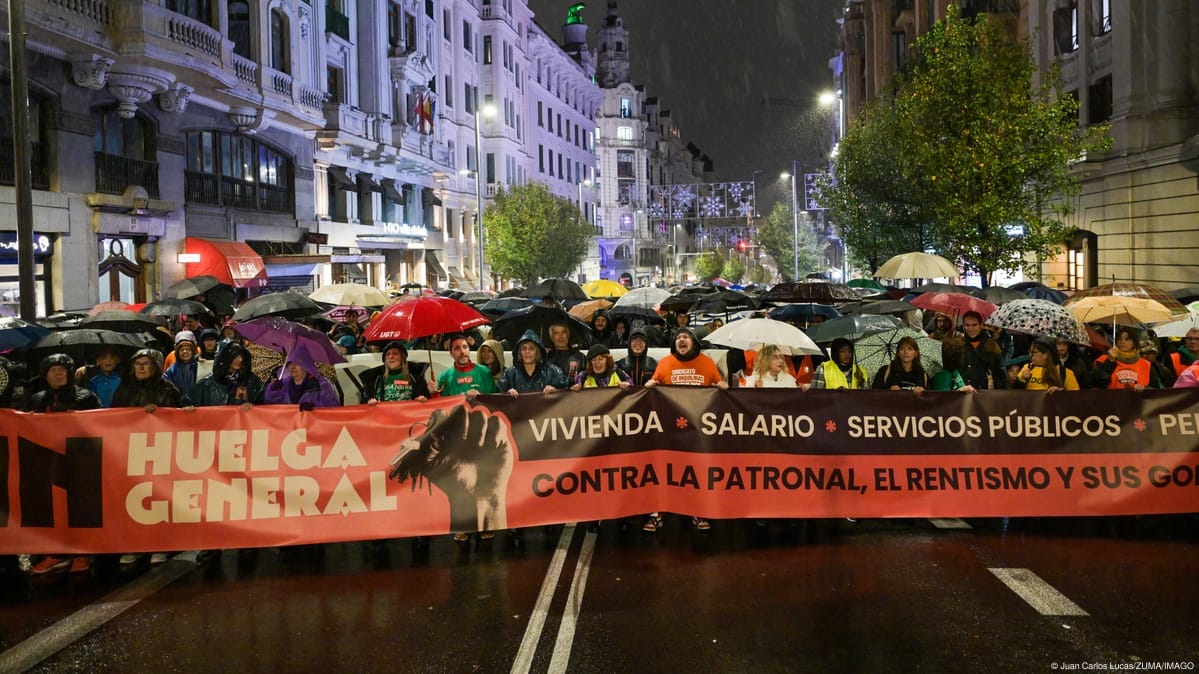
Throughout the day, smaller rallies took place, but 6pm was when all were called to meet. Even with a storm warning and rain, thousands of people gathered to march in their respective neighbourhoods.
Unions and political parties held their banners, and both men and women, young and old, were in attendance. Palestine flags, keffiyehs and Valencian flags were prominent, as well as hammer and sickles and antifa symbols. The messages on the handmade placards were clear: housing is a human right.
As the march took off, each neighbourhood converged into a mass rally of thousands. The high level of class consciousness of these protesters was evidenced through in their chants, their music and their posters. Their frustration was not directed at minorities or immigrants but, instead, against capitalism.
Airbnb and Vulture Funds were routinely referenced. An ode to the Republican and anti-fascist history of Alicante, the last city to fall to Franco, anti-fascist chants such as ‘No Pasaran’ and ‘¡Aquí están los antifascistas!’ rang out during the walk to the famous Esplanade. There, the union organisers spoke of the historic times we live in. They referred to the wave of organising across Europe, for instance in France. They spoke about the importance of workers’ solidarity and organising, and how an injustice to one is an injustice to all; Palestinian flags soared in the background.
This unequivocally anti-capitalist speech was met with enthusiasm from the crowd of thousands, which at this point stretched so far back it was not visible anymore. The atmosphere cannot be put into words, but it felt, as those at the rallies said, that it was the start of something important, not just in the Spanish State but across Europe and the world. With the upcoming general election in two weeks and a real threat of Vox, the far-right party, making gains, this day signals some hope.


