By Donal Devlin
It is not possible to chronicle the litany of crimes perpetuated against the Palestinian people that have culminated in the ongoing genocide in Gaza, in such a short space. Suffice it to say that all of these criminal and murderous actions are the logical outcome of Zionism and its historic aim to build a Jewish State on the stolen land of Palestine.
Zionism as an organised political movement emerged in the latter part of the 19th Century with the aim of creating a Jewish nation-state in Palestine, although some of its leaders toyed with the idea of doing so in Argentina, Cyprus or Uganda. The movement willfully overlooked the fact of the existence of a Palestinian Arab population that had resided there for centuries, composed of Muslims, Christians and a small Jewish population.
Brute force and violence
A Jewish State in historic Palestine, that is, a state where Jews are in the majority, could only be built by ethnically cleansing its indigenous population. One of the early pioneers of the Zionist movement, Ze’ev Jabotinsky (himself an admirer of Benito Mussolini), understood this and called for “an iron wall, which the native population cannot breach.”
Alongside this brute force came the need for the backing and protection of a major colonial power. The Zionist movement looked to various actors on this score: the Ottoman Empire, Tsarist Russia, and Germany, before gaining the backing of British imperialism in 1917 via the infamous Balfour Declaration. Western imperialists had long had their sights on West Asia and North Africa (the colonial name “Middle East”). They sought to violently expand their control and extract its wealth and resources, with horrific consequences for its peoples. Before issuing this declaration, Britain, alongside French and Russian imperialism, had secretly carved up the region’s spoils from the ruins of the Ottoman Empire in the equally notorious Sykes-Picot Treaty signed in May 1916.
The myths of Zionism
Like the United States, Canada, South Africa, Australia, New Zealand and Algeria under French rule, Zionism was a settler-colonial project that sought to colonise a land through the settlement of an outside people on it. Like all of these projects, it was justified with racist myths and lies – notably that the land was either empty or inhabited by people incapable of utilising or cultivating it. In carefully crafted propaganda newsreels in the 1950s and 1960s, the Israeli State claimed that it “made the desert bloom” through agricultural development, from which orange groves and other produce blossomed.
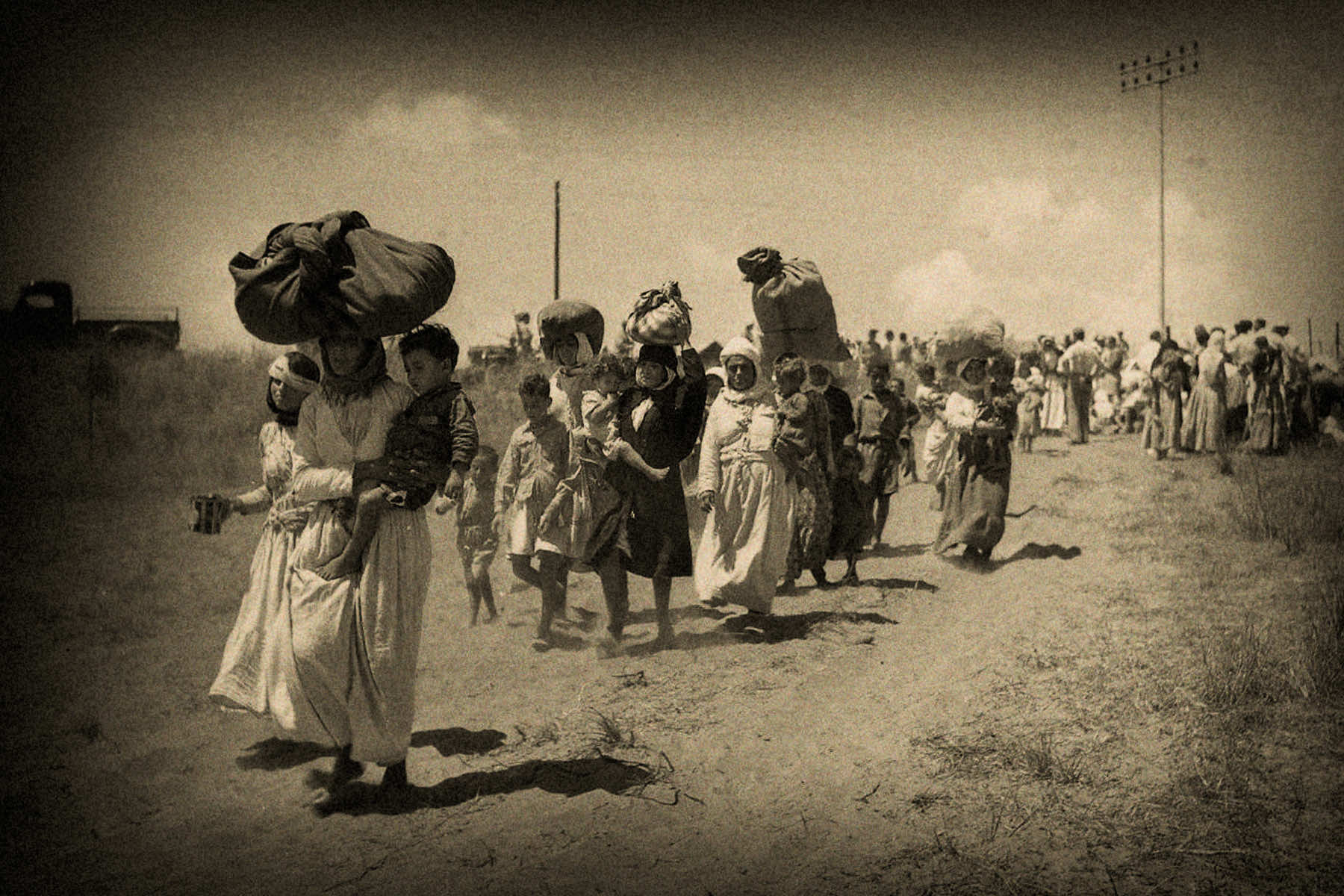
This lie overlooked that the orange groves were stolen from Palestinians during the Nakba in 1948, when 750,000 Palestinians were expelled from their homeland. It also ignored the fact that Palestinians had finely cultivated the land that Israel was founded upon in a manner that was much more sustainable. Like other forms of capitalist colonialism, Zionism has little regard for Palestine’s biodiversity and local ecosystem, with destructive results. It uprooted native trees such as oaks, carobs, and hawthorns, and traditional crops like olives, figs, and almonds, replacing them with invasive species such as pine trees. As with Gaza today, ecocide and the destruction of Palestinian society went hand in hand.
Socialism or Zionism
At the founding of the World Zionist Congress in 1897, the movement had little international support among Jews. Indeed, most working-class and lower-middle-class Jews were an important part of the socialist movement in Europe and the United States. They aspired to fight for a society free from antisemitism, oppression and exploitation, as part of the broader working-class movement for socialist change.
The main socialist Jewish organisation in Tsarist Russia, the Bund, had a mass base of support amongst the Jewish working class and was emphatically opposed to Zionism. It was founded the same year as the World Zionist Congress in 1897. Their outlook was based on the slogan and concept of “hereness”, ie Jews should remain and fight for their liberation, and that of the working class and oppressed as a whole, in those places where they called their home. They rejected the idea, supported by antisemites themselves, that they should leave Europe and depart for Palestine in order to colonise the land of another people.
Capitalism and antisemitism
Antisemitism in Europe only accelerated in the late 19th century. Not only were Jewish people the victims of antisemitic persecution under the Tsarist regime and the Russian Empire, but increasingly, a racialised antisemitism was gaining traction. The promise of equality and assimilation offered by the capitalist democratic revolutions, such as the French Revolution, was giving way to hatred and division in this system’s epoch of imperialism – and the militarism and toxic chauvinism that went with it.
As the capitalist system was increasingly plunged into crisis, antisemitic conspiracy theories blamed Jewish people for the ills of society, perceived or otherwise – defeat in war, economic crisis and revolutionary upheaval. Following the First World War, the barbarity of fascism and Nazism was unleashed by this decaying system, which culminated in the murder of six million Jews. The horrors of Nazi persecution and genocide, and the failure of organisations of the working class to seize the potential for socialist revolution (notably following the Russian Revolution), spurred support for Zionism among increasingly isolated and desperate Jewish people.
Tragically, Palestinians were to pay the price for a crime they had no hand, act or part in. The common thread that binds the genocide in Gaza, ethnic cleansing in the West Bank, and the systemic discrimination of Palestinians within the Israeli State is the Zionist drive for “more land and fewer Arabs”. It has carried out this criminal project with the backing of imperialism. This whole system must go. The struggle for a free Palestine is urgent, and bound up with the equally urgent need for revolutionary socialist change.