
Global inequality is not some natural phenomenon. In the year 1500, there was no difference in living standards and incomes between Europe and the rest of the world. The ten biggest urban areas were all outside of Europe and North America.* Over hundreds of years of conquest and colonialism, Europe and North America developed at the expense of other regions of the world. Leon Trotsky’s theory of permanent revolution has been used by anti-colonial resistance movements to understand global inequality and to fight to end it. James McCabe examines the relevance of this theory to the fight against growing global inequality today.
Capitalism has always promoted the idea that it brings progress. The argument goes that, despite the market’s perpetual boom-and-bust cycles, “things will get better” in the long run.
In the first two decades of the 21st century, there was a steady annual reduction in the number of people living in extreme poverty. In 2023, Bill Gates said he’s “incredibly optimistic” that anyone born in the next few decades will be better off than people born at any previous point in history.1 However, since 2022, the World Bank has reported that progress in reducing extreme poverty has stalled. Gates’s New Year’s address was more muted in 2026 as he acknowledged that, tragically, deaths of children under the age of five had risen for the first time this century – from 4.6 million in 2024 to 4.8 million in 2025.2
A UN report found that in 2025, “808 million people are living in extreme poverty – up from the previous estimate of 677 million – representing 9.9% of the world’s population, or one in ten people.” In 2024, an estimated 28% of the global population – nearly 2.3 billion people – were moderately or severely food insecure.
Even before the US and Israel’s attack on Iran, the average person in the Global South already spent between 40-50% of their income on food. Now, even more devastation is spreading across the Global South due to dramatic spikes in the cost of fuel, fertilisers and food staples on the back of this imperialist war.
The theory of permanent revolution
In contrast to the vague ideology of perpetual and linear capitalist progress, Marxists unmask the contradictions of capitalism – an economic and social system built on the exploitation of nature and human labour. Within the Marxist tradition, Leon Trotsky’s theoretical concept of permanent revolution is particularly relevant to achieving economic and social progress in underdeveloped neo-colonial countries. As a Marxist revolutionary based in Russia in the early 20th century, Trotsky analysed the development of Russian society within the framework of the global capitalist economy. Put simply, because the world economy developed unevenly and is dominated by the imperialist countries of the Global North, the (neo)colonial countries will remain underdeveloped unless capitalism is overthrown.
The core aspects of this theory are as relevant today as they were in the early 20th century. The capitalist classes of underdeveloped countries remain beholden to the imperialist powers because they are unable to compete with these states in the world market. Therefore, their only strategy for development is to act as vassal states in anticipation of foreign direct investment from the major powers. They facilitate the imperialist plunder of the natural resources in their regions, opposing any real fight to end imperialist domination. But breaking the shackles of imperialist domination is the only way to develop their economies. It therefore falls to the working class and poor masses in the underdeveloped world to oppose both their local ruling classes, as well as the imperialist powers that dominate them through military might, financial institutions, and global corporations.
Trotsky argued that this can only happen if the working class takes political and economic power through the revolutionary overthrow of capitalism internationally.
The myth of the developing world
During the Cold War period, imperialists described the formerly colonised regions of the Global South as the ‘Third World’. This description was an attempt to disconnect the poverty of these places from the exploitation they suffered at the hands of the ruling classes of the Global North; the so-called ‘First World’.
The term “developing world” is often used to describe the Global South today. The narrative is pushed that countries in the underdeveloped world are on a path to achieving the living standards of advanced capitalist countries. In reality, the material development of the Global North is a product of the forcible underdevelopment of the Global South. In other words, the wealth accrued by the imperialist states was and is generated at the expense of regions of the Global South.
The “development” sector told us that the per capita income gap between rich and poor countries would narrow over time, but the reality has been the exact opposite. In truth, the gap between the United States (the world’s dominant power) and Latin America, Africa, South Asia and the developing countries of West Asia has roughly tripled between 1960 and 2018.3
There are very few examples of a state changing from poor to rich without developing a solid domestic industrial base. In fact, 95% of economies that have achieved high-income status passed through a period of high manufacturing concentration. One study noted that, “achieving a manufacturing employment share of 18-20% has been almost sufficient and absolutely necessary… for achieving high-income status.”4 From a capitalist point of view, manufacturing lends itself to constantly rising productivity and the creation of surplus value.
The vast bulk of poverty reduction over the last 40+ years has been concentrated in East Asia, where rapid industrialisation has occurred. For example, a full 70% of people whose incomes have risen beyond $10 a day since 1981 are based in China.5 Despite the intermittent hype around “rising India” and “rising Africa”, the regions of Latin America, Africa, and most of Asia have seen both rapid urbanisation and deindustrialisation since the 1980s. Mike Davis coined the term “planet of slums” to describe the results of this process.
The deindustrialisation of middle-income and poor countries has created conditions in which too many workers compete for far too few good jobs. In 2015, the state of Uttar Pradesh in India advertised 368 clerical jobs and received 2.3 million applications.6 Ninety per cent of the jobs created in India since 1991 have been in the “informal sector”, not in the much-vaunted IT industry.7 In most of the world, the line between unemployment and underemployment is very thin. Many people just about get by as unlicensed taxi drivers, roadside fruit or bottled-water sellers, freelance porters, domestic servants, clothing resellers, and so on.
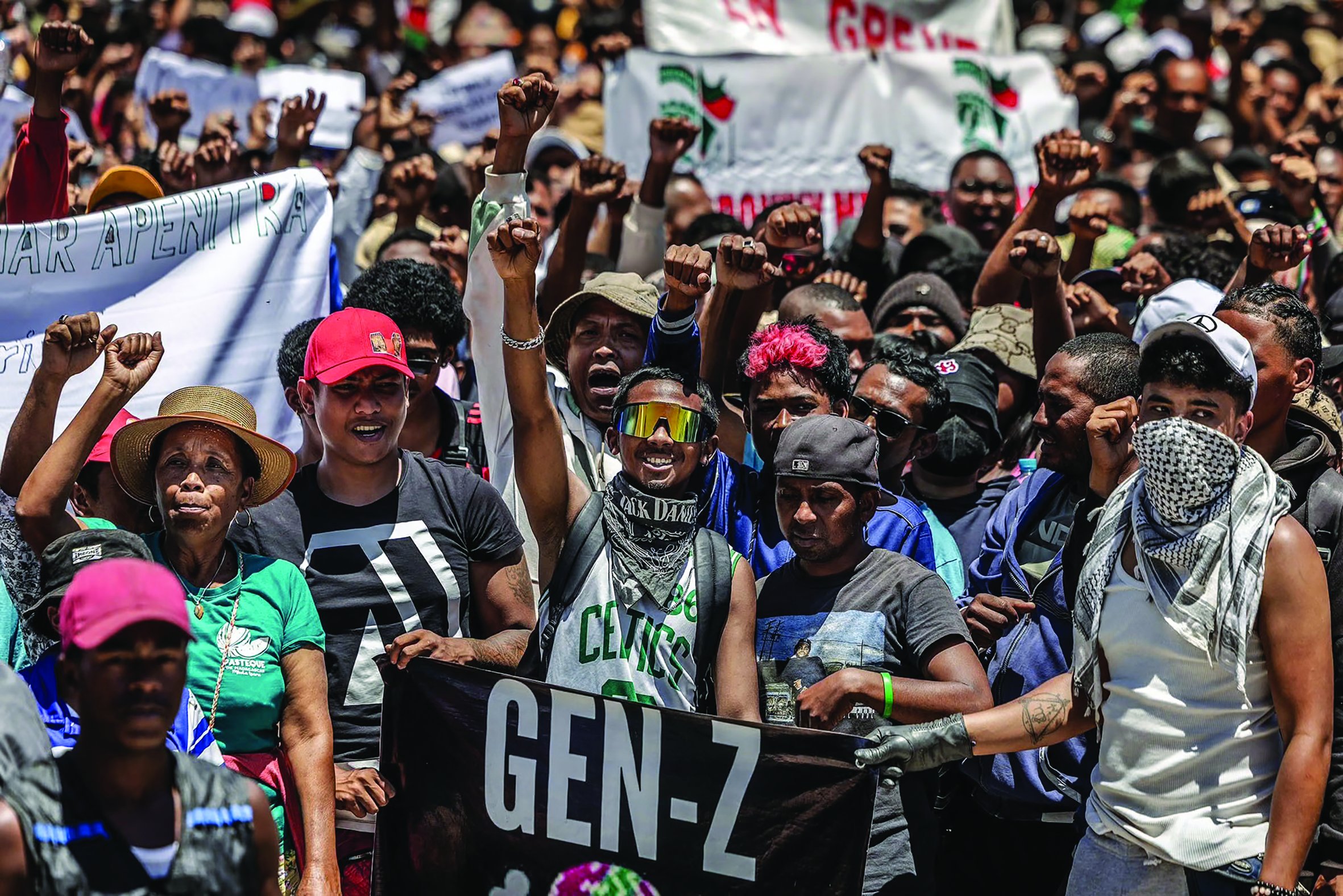
Imperialist financial institutions such as the IMF are bleeding these regions dry. A study of 91 of the poorest countries found that their external debt repayments averaged 16% of government revenues in 2023, up from 6.6% in 2011.8 Between 1980 and 2018, Global South countries forked over $4.2 trillion in interest payments – much more than they had received in aid during the same period.9 Inevitably, widespread poverty and explosive political instability are set to increase in these regions over the coming years. Countries with high youth unemployment often see outbreaks of social and political upheaval, as in North Africa and West Asia between 2010 and 2012, or in the Gen Z revolts in 2025.
Why the fight against imperialism and authoritarianism must be socialist
The history of the last 150+ years shows that, on the whole, economic development and civil liberties in the neo-colonial world are inherently stunted within the framework of the capitalist world economy. Socialists support all struggles of the working class, poor and oppressed that deliver a blow to imperial rule. However, since the onset of the age of imperialism (from the late 19th century up to the present), we must clearly understand that any attempts by poor or middle-income states to achieve independence from the dominance of imperialism will be operating in the realm of fantasy, if they hope to gain genuine independence within the bounds of the global capitalist world order. The first prime minister of the Democratic Republic of Congo, Patrice Lumumba put it best: “Political independence has no meaning if it is not accompanied by rapid economic and social development.”
Real progress can only come from a revolutionary movement of the working class and the poor masses aimed at socialist change.
Many anti-imperialists in the neo-colonial world today aim to replicate the republican achievements of the 18th- and 19th-century bourgeois revolutions. Hugo Chávez famously harkened back to the 19th-century struggles of Simón Bolívar against Spanish colonialism. Sinn Féin and other Irish republican groups hold annual commemorations to honour the leaders of the 1798 Rebellion, an attempted but failed bourgeois revolution in Ireland.
A key tenet of the Islamic Republic of Iran’s ideology is anti-monarchism. A CIA and British intelligence operation overthrew Iran’s democratically elected government in 1953 and installed Shah Pahlavi’s monarchical dictatorship. The current regime in Iran has its roots in the aftermath of the movement from below of ordinary workers and oppressed people that overthrew the monarchy in 1979. The Iranian government’s hostility to the Pahlavi monarchy and the monarchical regimes in the Persian Gulf states dovetails with its aspirational republican identity; however, as a theocratic regime, it has yet to fulfil the republican aim of separating state institutions from religious institutions.
Unlike the widespread tendency in society today to view republican rule as the pinnacle of human political organisation, the theory of permanent revolution situates the emergence of republicanism and the bourgeois revolutions in their historical contexts. In contrast to the era of bourgeois revolutions, the rise of imperialism ushered in a new era in which the capitalist classes internationally could no longer play any progressive role.
Bourgeois revolutions
Karl Marx and Friedrich Engels grew up in the shadow of the French Revolution of the late 18th century. In The Communist Manifesto, they outline how the capitalist system played a progressive role in history by ending feudal relations and other pre-capitalist social formations, thereby spurring technological development and economic productivity. But they also pointed to the development of an exploited working class that produces society’s wealth and, if organised and politically conscious, has the potential to overthrow and replace capitalism with a socialist, planned economy.
In the classic bourgeois revolutions, such as the, the English Civil War (1642-1651), the Dutch Revolt (1568-1648), the French Revolution (1789-1799), the US American Civil War (1860-1865), the Unification of Italy (1861-1871), the Unification of Germany (1866-1871), and so on, the rising capitalist classes were obliged to present their interests as in line with those of other social strata, such as small farmers, small traders, and labourers. A coalition of various classes against the old, monarchical order drove these revolutions. Still, they were led by bourgeois forces armed with vague slogans of “freedom” or “liberty, equality, fraternity”. During these revolutions, the oppressed classes other than the bourgeoisie shared an interest in eliminating the monarchical order. However, once the capitalist class consolidated its rule, its interests diverged entirely from those of workers, small farmers, and disadvantaged people.
Tasks of the bourgeois-democratic revolution
These bourgeois revolutions shared some historically progressive features that can be grouped under what Trotsky termed ‘the tasks of the bourgeois-democratic revolution’. These tasks include reforms such as:
a) Major land redistribution from big landowners to small farmers
b) The achievement of national independence and unification
c) The separation of church and state
d) The replacement of absolutist, monarchical rule with parliamentary, liberal democracy
e) Industrialisation and modernisation of the economy.
Eric Hobsbawm described the initial populist gains of the French Revolution: “The Jacobins abolished all remaining feudal rights without indemnity, improved the small buyer’s chance to purchase the forfeited land of emigrés, and – some months later – abolished slavery in the French colonies… these measures had the most far-reaching results. In America, they helped to create the first independent revolutionary leader of stature in Toussaint-Louverture (leader of the Haitian Revolution).” 10
On the eve of the US Civil War, Karl Marx underlined the importance of the role of enslaved people in that developing bourgeois revolution, “In my view, the most momentous thing happening in the world today is the slave movement – on the one hand, in America, started by the death of Brown. . . I have just seen in the Tribune that there’s been another slave revolt in Missouri, which was put down, needless to say. But the signal has now been given.” 11
Marx characterised that civil war as a war between two social systems, “The present struggle… is… nothing but a struggle between two social systems, the system of slavery and the system of free labour. The struggle has broken out because the systems can no longer live side by side peacefully on the North American continent. It can be ended by the victory of one system or the other.”12 In a letter to Abraham Lincoln in 1864, he tied Lincoln’s re-election victory to the cause of uprooting slavery by the US army, which involved 188,000 African American soldiers: “the triumphant war cry of your re-election is Death to Slavery.”13 Unfortunately, after the northern US ruling class consolidated its rule over the southern states, it later allowed the former enslavers to regain political power and introduce racist, apartheid-style segregation.
The rise of imperialism
So, to one degree or another, the radical and liberal bourgeoisie had completed many of the tasks of the bourgeois-democratic revolution in the advanced capitalist countries of Europe and North America by the late 19th century. In the era before the First World War, these advanced states became imperialist states that carved up the rest of the world under military occupation. They supplemented the wealth created by their local working classes with the super-exploitation of the colonised masses, alongside the forcible extraction of natural resources in colonised regions. Cheap consumer goods flooded the colonised world, crushing any local manufacturing industry.
Jason Hickel notes the devastation wrought by European colonialism: “The plunder of Latin America left 70 million indigenous people dead in its wake. In India, 30 million died of famine under British rule. Average living standards in India and China, which had been on a par with Britain before the colonial period, collapsed. So too did their share of world GDP, falling from 65% to 10%, while Europe’s share tripled.”14
At every step, there was resistance from colonised people. For example, the Atlantic trade of enslaved people saw many revolts and acts of defiance. One in every ten European enslaver ships that docked in West Africa faced either a shipboard revolt or an attack from the land. In fact, organised guerrilla groups that often formed to attack enslaver ships prevented a million fewer people from being brought to the plantations of the Americas in the first place.15 Enslaved people with military experience often posed particular problems for plantation owners in the “New World”. Some rebellions by enslaved people were led by former military commanders and resulted in the formation of permanent free settlements such as Palmares in Brazil or the Cimarron “maroon” settlements in Panama.16
Rivalry between the imperialist powers intensified in the late 19th century, as corporate takeovers and protectionist policies gained momentum. As corporate monopolies concentrated more wealth in their hands, the social, economic and political functions of the state expanded – not least with the creation of professional armies. The roots of mass production, including the mass production and consumption of consumer goods, sank deeper into society.
In early 20th-century Europe, in countries such as France, Hungary, Germany, Italy, Belgium, Spain and Russia, Marxist and socialist ideas gained a significant following among the working class. In trade unions and socialist parties, a well-paid, full-time bureaucracy mushroomed. As this bureaucracy became more wedded to the status quo, Marxist revisionists such as Eduard Bernstein argued that capitalism was becoming less prone to economic crises because of the increased speed of communication, the growth of monopolies and the expansion of the credit system, which had supposedly weakened the anarchic tendencies of the market.17
Two-stage theory
In this early-20th-century revision of Marxism, a mechanical theory known as “two-stage theory” or “stagism” emerged within the movement. The reformists contended that change must be achieved gradually through parliamentary means, by electing a left-majority government that could introduce social reforms benefiting the working class. This depended on a working-class majority within a given country’s population. Therefore, they argued that in the colonised world, where the working class was in a minority, the tasks of the bourgeois-democratic revolution had yet to be achieved. They contended that the working class would have to sit and wait for the elusive “progressive” bourgeoisie to come to power there and rule for a period of capitalist development before the conditions would be ready for socialist change.
Franz Fanon warned in Wretched of the Earth about the phenomenon of false decolonisation, in which a weak local comprador-capitalist class merely replaces direct colonial rule, leaving the structurally uneven economic power relations with the imperialist states intact. Fanon described this social layer in a scathing manner: “In underdeveloped countries, we have seen that no true bourgeoisie exists; there is only a sort of greedy little caste, avid and voracious, with the mind of a huckster, only too glad to accept the dividends that the former colonial power hands out to it. This get-rich-quick middle class shows itself incapable of great ideas or inventiveness.”18
Ireland provides an illustrative example. While Ireland has achieved relative economic development compared with many other formerly colonised countries, the legacy of British imperialism’s deliberate strategy of underdeveloping the Irish economy is readily apparent today. Throughout the 19th century, the policies of the British ruling class deindustrialised the southern Irish economy to suppress any competition to British manufacturing. Also, they morphed the Irish economy into an agricultural appendage to Britain’s, pushing millions of poor farmers and rural labourers off the land – particularly during the Great Irish Famine – to make room for cattle ranchers who produced mainly live cattle for export.
Today, the Irish ruling class grovel at the feet of US big business and multinationals from other countries. Due to its history of underdevelopment, the Irish capitalist class lacks the capital to compete with imperialist states; as a result, like other neo-colonial societies, the ruling class is craven in its pursuit of foreign direct investment. The non-farming domestic capitalist class is mainly composed of property developers, landlords, and legal and accountancy firms that leech off the economic activity of the multinationals.
Compared with most of mainland Europe, the south of Ireland falls behind in providing access to housing, healthcare services, and basic infrastructure. The dearth of services is a product of its historic underdevelopment. Despite rapid population growth, the Republic of Ireland has Europe’s second fewest homes per person and 41% fewer roads, trains, and transport infrastructure per capita compared to high-income European countries.19
Former Stalinist, Eoghan Harris, published a book, The Irish Industrial Revolution in the 1970s, on behalf of Sinn Féin – The Workers’ Party. This book promoted support for EU membership and the Irish state’s attempts to attract multi-national corporations.20 This classic Stalinist two-stage position argued that socialists should champion extended capitalist development in the south of Ireland, which would expand the size of the working class but relegate socialist change to an aspiration for the dim and distant future.
The Nepalese Maoist leader Prachanda argued that since imperialist domination was inevitable, his party’s goal was to turn Nepal into the “Switzerland of Asia”.21 In 2023, the Communist Party of India (Marxist-Leninist) outlined its core aims in a clear two-stage framework: “The primary aim of this democratic revolution will be to sweep away all feudal remnants, abolish imperialist domination, restrain and control big capital by effective taxation… Victorious democratic revolution will therefore also mark a bold step towards socialism.”22
In contrast to the Stalinist / Maoist two-stage theory, Trotskyism sees the struggle to break with capitalism as the primary aim today, rather than aimlessly promoting capitalist development into the future. Frantz Fanon underlined the importance of fighting the domestic ruling class in the Global South as an essential part of the battle against imperialism, “The struggle against the bourgeoisie of underdeveloped countries is far from being a theoretical one… [this class] must be stoutly opposed because, literally, it is good for nothing… in fact, the bourgeois phase in the history of underdeveloped countries is a completely useless phase… since that caste has done nothing more than take over unchanged the legacy of the economy, the thought and the institutions left by the colonialists.”23
Uneven and combined development
Against the mechanical view that sees the development of different global regions along parallel lines, Trotsky argued that the underdeveloped world could not mimic the past trajectory of the advanced capitalist countries. To illuminate the mechanical nature of the two-stage theory, Trotsky developed the theory of uneven and combined development, which undergirded the theory of permanent revolution.
Marxists divide the major forms of social organisation that have existed into modes of production. So, societies such as hunter-gatherer groups or societies based on the labour of enslaved people represent particular modes of production. Capitalism is the absolutely dominant mode of production today. While approximately 150,000 people continue to live a hunter-gatherer or forager lifestyle, few are unaffected or uninfluenced by the dominance of the capitalist states in which they reside.
The various modes of production are understandably associated with certain stages or eras of history. However, it would be simplistic to imagine that each region of the world follows a linear progression from forager to slave society to feudalism to capitalism. Trotsky described unevenness as “the most general law of the historic process.”24 All societies and the world economy develop unevenly. And because societies develop unevenly, they are imbued with all sorts of combinations of features from various historical eras that come together in the here and now.
There are countless examples of features that are associated with one stage of social evolution merging with those of another, higher stage. The Pope is the head of a characteristically feudal institution. Yet the Pope has an Instagram account and uses this 21st-century invention to disseminate Catholic doctrines. Evangelical preachers in Latin America use TikTok to spread the gospel amongst their growing congregations. Not to mention the rise of online influencers peddling archaic and dangerous male-supremacist ideas or romanticising the notion of “trad wives”.
Combined social formations
The Republic of Ireland, although a republic in name, has still failed to separate church and state, with Catholic Church control over schools and hospitals continuing, despite the historic injustices of Magdalene Laundries, Mother and Baby Homes and industrial schools. To save spending on state-funded social programmes, the Irish ruling class was happy to hand over the responsibility for managing key public services to an archaic religious institution. For ruling classes to maintain social control, especially when presiding over impoverished social conditions, a highly repressive state apparatus is necessary. In the south of Ireland, Britain’s brutal occupation was replaced by a church/state nexus that acted as a force for social control after independence: “By 1924, there were more children in industrial schools in the Irish Free State than there were in all of the industrial schools in England, Scotland, Wales, and Northern Ireland combined. The system was abolished in England in 1933, but in Ireland… the reformatory system continued for decades.”25
In fact, Sarah-Anne Buckley has documented that “Ireland holds the title for having institutionalised more of its population than any other country in the world in the 20th century.”26 Due to this historic domination by the Catholic Church over state institutions, Ireland lagged behind many advanced capitalist countries in terms of access to divorce and reproductive rights.
The monarchies of Saudi Arabia, the United Arab Emirates (UAE), and other Persian Gulf states consolidated their rule through the introduction of oil production by Western fossil fuel corporations between the 1930s and 1950s. Before the introduction of oil production, there was greater egalitarianism and less hierarchy in these formerly tribal, nomadic pastoralist, and agricultural societies. Capitalist economic wealth and profiteering did not encourage greater social and democratic freedoms in the Kingdom of Saudi Arabia. Instead, it entrenched religious interference in legal practices that have seen many men beheaded by the state for engaging in queer sexual acts, even in recent years. The deeply reactionary nature of Saudi monarchist rule hasn’t stopped the US state and US big business from investing billions into the Saudi economy over the past 90 years. Not to mention the US and Israel’s mutually close relationship with the United Arab Emirates.
The Saudi people have acted as a check on the Saudi monarchy’s full public embrace of Israel. Because the Arab Emirati population constitutes only 11% of the UAE’s population, the Emirati monarchy has therefore had more leeway to promote Israeli and US interests in the region. The UAE signed the Abraham Accords, which endorsed the Israeli occupation of Palestine, for example. Despite rhetoric about democracy, Western imperialism has a long history of backing dictators and monarchists for its own interests. It’s also worth noting that the Persian Gulf monarchies are major investors in US tech companies and artificial intelligence.
Combined social formations are by no means limited to formerly colonised countries. When wielded by rulers as a tool of social control, they always carry the risk of “overreach”, sparking resistance from below by oppressed people and workers. The British royal family’s role in the Epstein scandal cover-up, as well as the Trump regime’s misogynistic and transphobic Christian Nationalism, are laying the basis for a fightback by women and queer workers. We saw how the “Woman, Life, Freedom” movement rocked the Iranian republic’s theocratic ruling class after “morality police” killed Mahsa Amini in 2022.
Permanent revolution in Russia
Trotsky used the law of uneven and combined development to show how the introduction of technology and ideas from the advanced capitalist countries nourished and prolonged the existence of monarchism and serfdom in Russia for a long period:
“The introduction of certain elements of Western technique and training, above all military and industrial… led to a strengthening of serfdom as the fundamental form of labour organisation. European armament and European loans – both indubitable products of a higher culture – led to a strengthening of Tsarism, which delayed in its turn the development of the country.”27
In 1905, Russia’s ruling class was rocked by a revolutionary movement of workers’ strikes, occupations, and protests in the cities, and by small farmers’ land seizures in the countryside. The experience of this revolutionary struggle confirmed for Trotsky that the domestic capitalist class was becoming more conservative and wedded to the status quo despite the growth of industrial production. The revolution revealed that the liberal bourgeoisie’s fear of growing working-class militancy superseded its frustration with the Tsarist regime and its reliance on foreign direct investment:
“The bourgeoisie became economically more powerful, but… its power rested on a higher concentration of industry and an increased predominance of foreign capital. Impressed by the lessons of 1905, the bourgeoisie had become more conservative and suspicious… In these circumstances, only the youthful banner of the proletariat could give the peasantry a programme, a banner, and a leadership.”28
A revolutionary movement erupted in Russia in February 1917, which forced the Tsar to abdicate. The masses craved an end to Russia’s involvement in the First World War, as well as major land redistribution from the big landlords to the small farmers and landless labourers, who constituted the majority of the country’s population. However, the weak “provisional government” that replaced the Tsar, led by liberal capitalist forces, had no intention of ending the war, introducing large-scale land reform, or challenging the role of foreign capital in the Russian economy, and had no plan for real economic development.
Parallel to the formation of the provisional government, democratically elected working-class political committees, known as “soviets,” arose. Throughout 1917, the Bolshevik Party, a relatively small revolutionary party, grew significantly, both numerically and in political influence, by combining the slogans of “peace, bread and land” with “all power to the soviets”. The soviets took power in October 1917 as small farmers redistributed land, the war was brought to an end, and they formed the world’s first workers’ state. George Novack summarised how in Russia, “the peasant revolt against medievalism, a movement which in Western Europe had been characteristic of the dawn of the bourgeois-democratic revolutions, intermeshed with the proletarian revolution against capitalism.”29
Socialist struggle is an internationalist struggle
The instability resulting from the tense interplay of social forces in the underdeveloped world means that underdeveloped regions are often more ripe for social revolution than the advanced capitalist states. But outbreaks of revolution in underdeveloped countries can give an incredible impetus to revolutionary situations emerging in advanced countries, and vice versa. Trotsky underscored how the organisational format of revolutionary workers’ committees that arose initially in Russia was then reproduced in the German Revolution: “That the soviets are not a mere child of the historic backwardness of Russia, but a product of her combined development is indicated by the fact that the proletariat of the most industrial country, Germany, at the time of its revolutionary high point – 1918 to 1919 – could find no other form of organisation.”30
Another critical element of permanent revolution – or uninterrupted revolution as it is sometimes known – is that a workers’ state can last only for a temporary period unless it is connected to an international struggle for world revolution. Imperialism will attempt to strangle isolated revolutions militarily and/or economically.
The isolation of the Russian Revolution resulted in the growth of a Stalinist bureaucratic apparatus that ran the economy in defence of its own privileged position. The democratic workers’ committees were eliminated during the heat of the Russian civil war. As well as hostility from imperialist states, the Stalinist bureaucracy feared a revolutionary movement from below within its own borders, and indeed the influence of potential revolutions in other countries. Therefore, in many instances throughout the 20th century, the Soviet bureaucracy used its influence within the Communist International to promote the two-stage theory, arguing against the working class taking power in revolutions such as China in 1926, Spain in 1936-37, France in 1968, Chile in 1972, and so on. In these examples and many more, the Stalinists played a conservative role, defending capitalism to gain favour or “breathing space” from the hostility of Western Imperialism.
Real gains of a planned economy
Despite the inherent inefficiencies of top-down planning in the former Soviet Union – curtailed as it was by the Stalinist bureaucracy – the Soviet Union and its mirror images in China and Cuba demonstrated the potential role of public ownership and planning in economic development. But does the example of China provide a model of development for other neo-colonial countries to attempt to replicate within the framework of capitalism today? In short, given the specific historical circumstances of China’s development, the answer is no; other states can’t replicate its trajectory in today’s context.
In 1949, a revolutionary guerrilla army in China seized power, broke with capitalism and developed a workers’ state on the degenerated model of Stalinist Russia, i.e. what can be termed a ‘deformed workers’ state’. Genuine socialist planning means a democratically planned economy from below. Economic planning in China was top-down from its inception, yet the benefits of a planned economy in improving the health and education of the Chinese population are indisputable. Minqi Li notes that “between 1960 and 1980, China’s life expectancy had risen to 67 years, fully 13 years ahead of India and better than the middle-income average.” 31
In terms of educational improvements, “Between 1970 and 1980, China accomplished a larger fall in the adult illiteracy rate than the averages of the low- and middle-income countries. During the same period, China achieved the second largest increase in primary and secondary school enrollment rates… better than the East Asian average, the low-income average and the world average.”32
The Chinese state has long shed most vestiges of its former status as a deformed workers’ state. It is now an imperialist state wracked by sharpening class tensions and contradictions, and is fully integrated into the capitalist world market. Despite the state’s authoritarian character, Western imperialism and its multinationals have had no qualms about investing heavily in China’s economy since the 1980s and 1990s, making enormous profits from a super-exploited low-wage labour force with no trade union rights.
It might seem counterintuitive that the Chinese Revolution laid the groundwork for China to become a capitalist powerhouse. Still, it was the expulsion of imperialism and the creation of a planned economy that produced an initial domestic industrial base, which expanded with the reintroduction of capitalist relations and foreign direct investment. China, therefore, served as a shot of steroids for the world economy during the long decline in global growth since the end of the postwar boom in the 1970s. In terms of new infrastructure, China has far outpaced the West. It’s the global frontrunner in terms of advanced manufacturing technology. It’s leading the world in electric vehicles, solar, and wind power. China now has a longer high-speed rail network than the rest of the world combined. Fifty-one cities in China have underground rail networks, eleven of which are longer than New York’s.33
In China, capitalist property relations were gradually reintroduced, while the Maoist bureaucracy enriched itself and maintained state control over some economic levers. Russia, by contrast, rapidly reintroduced capitalism, enriching a cohort of billionaire oligarchs through mass privatisation of state-owned industries, but immiserating millions of ordinary people in the process. Naomi Klein, in her book about neo-liberal economic “shock therapy”, noted,
“In 1989, before shock therapy, 2 million people in the Russian Federation were living in poverty, on less than $4 a day. By the time the shock therapists had administered their ‘bitter medicine’ in the mid-nineties, 74 million Russians were living below the poverty line, according to the World Bank… in 2006, the government admitted that there were 715,000 homeless kids in Russia, and UNICEF had put the number as high as 3.5 million children.”34
On the surface, China’s transformation seems to provide an example for other neo-colonial countries to follow. But situating its development in the context of the Cold War, where the Soviet Union served as a model and counterweight to imperialism, is essential. In today’s context, if the working class came to power and broke with capitalism in a given country, it would face economic sanctions and possibly military intervention from imperialist states – with no possibility of support from a non-capitalist power. As such, the necessity of allied working-class movements coming to power in other countries would be obvious.
It’s also worth considering that, despite the expansion of infrastructure and advanced manufacturing techniques in China, as a capitalist economy, it is still subject to the boom and bust cycles and other contradictions of capitalist relations, and there is practically no social safety net for ordinary people in comparison to states in the West. Therefore, if the economy slows or enters recession, mass unemployment will create deep resentment among China’s working class and volatility for the state and ruling class there.
Deindustrialisation outside the imperial core
Today’s much-vaunted idea of the inexorably rising BRICS (Brazil, Russia, India, China, South Africa) has stalled, as China has far outpaced the others due to a specific trajectory that can’t be repeated or replicated within the framework of the global capitalist economy.
Brazil reached its peak of manufacturing employment in 1986, Mexico in 1980, Nigeria in 1982, and India in 2002.35 Oks and Williams note the impact of deindustrialisation on Brazil:
“Brazil is… illustrative: as the country deindustrialised, higher-end products like vehicle parts, machinery, and electronics took diminished roles in the country’s export portfolio, and were gradually replaced by a surging trade in iron and oil. While in 1995 iron ore constituted 3.8% of Brazilian exports and petroleum crude just 0.1%, by 2020 they constituted 10.8% and 8.1%, respectively; industrial machinery exports declined from 7.1% to 3%… This resulted in a speedy decomplexification of the Brazilian economy, with extractive rentierism becoming increasingly central. In the year 2000, Brazil was assessed as the twenty-sixth most economically complex nation in the world, near Poland and Mexico; twenty years later, it had fallen to sixtieth, lower than Kyrgyzstan and North Macedonia.”36
The deindustrialisation in many South American countries is tied to the industrialisation of China’s economy, as the increase in exports of raw commodities replaced manufacturing growth in South America. An economic model based more heavily on raw commodities exports puts these countries at a greater risk of economic volatility, as their overdependence on that economic sector means they are disproportionately impacted by price fluctuations of those commodities on the global market:
“In boom periods, like the 2000–15 commodities cycle, this extractive model could prove hugely lucrative. Because of Chinese growth, resource exporters in Latin America, like Ecuador, Bolivia, or Brazil, were able to support “Pink Tide” governments marrying resource extraction and economic redistribution, significantly reducing poverty and building out basic infrastructure… But when the commodity cycle turned—as it did in 2014–15, with Chinese growth slowing and oil prices tumbling as (US)American fracking surged—the extractive model proved its fragility, with economic crises leading to a wave of global political instability. The Pink Tide era in Latin America came to a chaotic end, with extractive-redistributive regimes being replaced in Argentina, Brazil, and Ecuador while being deeply challenged in Venezuela.”37
The dead-end of stagism
Unfortunately, stagist ideas are often used today to dampen down hopes for change, including by political forces that rose to power on the back of social movements of the working class and poor. From the so-called “Andean-Amazonian capitalism” promoted by the MAS (Movement Towards Socialism) government in Bolivia, to the left-leaning Colombian president, Gustavo Petro, who explicitly stated in his maiden speech that: “we will develop capitalism in Colombia… because we must first overcome premodernity in Colombia, feudalism in Colombia.”38 As elsewhere in the neo-colonial world, these governments have operated to compromise with big business and big landowners rather than end their control of the economy. The Chávismo government in Venezuela failed to break with capitalism and take the economy completely out of the hands of the capitalist class. The super-rich sabotaged the economy through investment strikes, and US imperialism imposed economic sanctions, which strangled growth. The Maduro regime suppressed opposition from the left of the government, and the regime eventually capitulated to the Trump regime’s demands that they open oil and other resources up for profiteering by US big business.
The concentration of land in Latin America in the hands of a few is even worse now than it was in the 1960s. Oxfam International reports that “1% of ‘super farms’ in Latin America now control more productive land than the other 99%.”39 Between 2000 and 2018 alone, foreign investors, corporations, and states grabbed 162 million acres of land (more than five times the size of England) in Global South countries.40
The need for large-scale land reform, the nationalisation of natural resources and major industries under democratic workers’ control has never been more relevant than it is today. And socialist planning is most obviously needed to end capitalism’s destruction of the natural world. It’s worth underlining that while a manufacturing base has been necessary to develop most advanced capitalist economies, it has come at the cost of intensifying the destruction of the natural world and indigenous communities’ way of life. Democratic socialist planning would enable improvements in living standards and the restoration of ecosystems by eliminating production conditions driven solely by profitability and capital expansion.
“Where there is oppression, there is resistance” – Assata Shakur
The powerful working-class movements that overthrew authoritarian regimes across North Africa and West Asia in 2011 have all seen a return to dictatorial rule. But this fight is not over; the working class and poor masses have both the strongest interest in fighting for democratic rights and the greatest power to defeat these regimes.
In the decade between 2010 and 2020, globally, more people took part in street demonstrations than at any point in human history.41 Brazil, Sudan, Lebanon, India, and Hong Kong all saw sustained mass struggle in those years, as the worsening conditions of global capitalism affected every continent. Also, more people migrate to live and work in other countries than ever before, and they will bring the lessons of struggle from their home countries to the workplaces and movements that arise in the countries they move to. The general strike in Italy in October 2025 against the Israeli occupation of Palestine provides a good example of this. Millions of workers stopped work and blocked railways, roads, and ports. It was no accident that logistics workers from Morocco and Egypt make up the backbone of the Si Cobas union that led many aspects of this struggle.42 These workers had formative experiences of struggle during the so-called Arab Spring and drew on those lessons to lead militant actions to improve their working conditions and those of their Italian colleagues, before subsequently taking action in solidarity with Palestinians. In sharp contrast, the ruling classes of Morocco and Egypt’s record is one of complicity in the Israeli occupation of Palestine.
The value of permanent revolution
In summary, the core aspects of the theory of permanent revolution include:
1) Analysing national particularities within an internationalist framework
2) Accounting for uneven economic and social development and combined social formations to understand society today
3) Recognising that the struggle for democratic rights and economic development in the underdeveloped world must be oriented to working-class struggle and armed with a programme for socialist revolution
4) Understanding that the working class and poor masses of the neo-colonial world must build necessary connections with working-class movements in imperialist states and vice versa, as part of a struggle to overthrow capitalism on a global scale.
The general formula of permanent revolution must be applied to specific conditions in a given time and place with a degree of flexibility; however, it must always act as a guide to action. The multifaceted crises of capitalism will continue to discredit its delusional narratives of linear progress. Workers and young people should arm themselves with the theory of permanent revolution, not only to understand the world but to fight to change it.
* Before Columbus arrived in the Caribbean in 1492, the top ten most populous cities in the world were all outside of Western Europe. These cities were located in what are now modern China, India, Iran, Mali, Turkey, Egypt, Mexico and Peru. Beijing was the biggest city at the time and the kernel of the world’s most developed society. Hence, there was absolutely no basis at this point for the arrogant notions of European supremacy that developed in tandem with the technological gap that later arose between Europe and the rest of the world.
Notes
1. Tom Huddleston Jr, 24 Jan 2023, “Bill Gates is ‘very optimistic’ about future of Earth, humanity”, CNBC.com
2. Bill Gates, 9 Jan 2026, “The Year Ahead: Optimism with footnotes” Gatesnotes.com
3. Jason Hickel, 2018, The Divide: Global Inequality from Conquest to Free Markets, Penguin Random House, p 16
4. Jesus Felipe, Aashish Mehta and Changyong Rhee, 2014, Manufacturing Matters… But It’s The Jobs That Count” Asian Development Bank, p 13
5. David Oks and Henry Williams, (2022) “The Long Slow Death of Global Development”, American Affairs, americanaffairsjournal.org
6. Sharat Pradam, 18 Sept 2025, “Desperate 2.3 Million Indians Apply for 368 Low-Level Government Jobs”, www.reuters.com
7. Prachi Salve, 10 May 2019, “90% of Jobs Created in India after Liberalisation were in the Informal Sector”, scroll.in
8. Kaamil Ahmed, 11 April 2023, “World’s Poorest Nations Spend 16% of Revenue on Debt, the Highest in 25 Years”, theGuardian.com
9. Jason Hickel, 2018, The Divide: Global Inequality from Conquest to Free Markets, Penguin Random House, p 25
10. Eric Hobsbawm, (1977), The Age of Revolution: 1789-1848, Little, Brown Book Group, p 91
11. Kevin B. Anderson (2017) “Slavery, War, Revolution” Jacobin.com
12. August H. Nimtz and Kyle A. Edwards, (2025), The Communist and the Revolutionary Liberal in the Second American Revolution: Comparing Karl Marx and Frederick Douglass in Real-Time, Brill, (2025), p 133
13. Karl Marx (1865) “Address of the International Working Men’s Association to Abraham Lincoln, President of the United States of America”, www.marxists.org
14. Jason Hickel, 2018, The Divide: Global Inequality from Conquest to Free Markets, Penguin Random House, p 19
15. Akala, (2018) Natives: Race and Class in the Ruins of Empire, Hodder & Stoughton, p 140
16. Ibid, pages 436-435
17. John Rees, (1998) The Algebra of Revolution, Routledge, p 129
18. Frantz Fanon, (2001 edition), The Wretched of the Earth, Penguin, page 141
19. John Collison, 25 Oct 2025, “Ireland is going backwards: Here’s how to get it moving” IrishTimes.com
20. Brian Hanley and Scott Miller, (2009) The Lost Revolution: The Story of the Official IRA and The Workers’ Party, Penguin, p 338
21. Tithi Bhattacharya, (2012) “Maoism in the Global South”, isreview.org
22. Vinod Mishra Nagar, (2023) “General Programme of CPI (ML)”, https://cpiml.org/
23. Frantz Fanon, Ibid, p 142
24. Leon Trotsky, (2008 edition), The History of the Russian Revolution, Haymarket Books, p 5
25. Sarah-Anne Buckley, (2016) “The Catholic Cure for Poverty” Jacobin.com
26. Interview with Sarah-Anne Buckley (2021) “The Making of Ireland’s Carceral State”, Jacobin.com
27. Leon Trotsky (2008 edition), The History of the Russian Revolution, Haymarket Books, p 5
28. Ibid, p 10
29. George Novack “Uneven and Combined Development in World History” from Understanding History: Marxist Essays (2018 edition), pages 152-153
30. Leon Trotsky (2008 edition), The History of the Russian Revolution, Haymarket Books, p 11
31. Minqi Li, (2008) The Rise of China and the Demise of the Capitalist World-Economy, Pluto Press, p 33
32. Ibid, p 35
33. Dan Wang (2025) Breakneck: China’s Engineering State and the Race for Global Power, W.W. Norton & Company, p 38
34. Naomi Klein (2008) The Shock Doctrine: The Rise of Disaster Capitalism, Penguin, p 286
35. David Oks and Henry Williams, (2022) “The Long Slow Death of Global Development”, American Affairs, americanaffairsjournal.org
36. Ibid
37. Ibid
38. Christian Robles-Baez, 29 June 2022, “After Gustavo Petro’s Historic Victory, the Battle to Change Colombia is Just Beginning” Jacobin.com
39. “Land Inequality in Latin America Worse Today than in Decades”, 30 Nov 2016, Oxfam International, Oxfam.org
40. Jason Hickel, Jason Hickel, 2018, The Divide: Global Inequality from Conquest to Free Markets, Penguin Random House, p 29
41. Vincent Bevins, 10 Oct 2023, “The Mass Protest Decade: Why did the Street Movements of the 2010s Fail? TheGuardian.com
42. Lucia Pradella (5 Jan 2026) “Italy’s general strike for Palestine”, www.isj.org.uk
43. Charles C Mann 1493: Uncovering the New World Columbus Created (2011) Vintage, p 46

