By Jonathan Diebold
In the middle-part of the 20th century, as the post-war economic boom took hold, for some, the economic and technological progress of capitalism seemed unstoppable. This idealistic outlook was reflected in what has been described by critics as the “golden-age” of science fiction: utopian narratives prevailed, with endless technological progress under capitalism shown to overcome all obstacles. It was the era of the space race and nuclear fission.
Then, the 70s came. The boom-times ended. The spectres of inflation and unemployment loomed large over the Western world. Capitalism responded with the implementation of neoliberalism – savage cuts and attacks on workers’ rights. The future no longer held the promise it once did and disillusionment was widespread. Sci-fi media reflected these developments too: media began to depict the future under capitalism not as a utopia of the conquest of technology, but a dystopia where technological advancement went hand-in-hand with oppression, inequality, and alienation.
Cyberpunk
A new, neon-bathed genre was born, it came to be known as “Cyberpunk”. In Hollywood, it would be reflected in works like Ridley Scott’s Blade Runner. But it’s in Japan where Cyberpunk really left its mark, with movies like Ghost in the Shell, Jin-Roh: The Wolf Brigade, and its very apex: Akira.
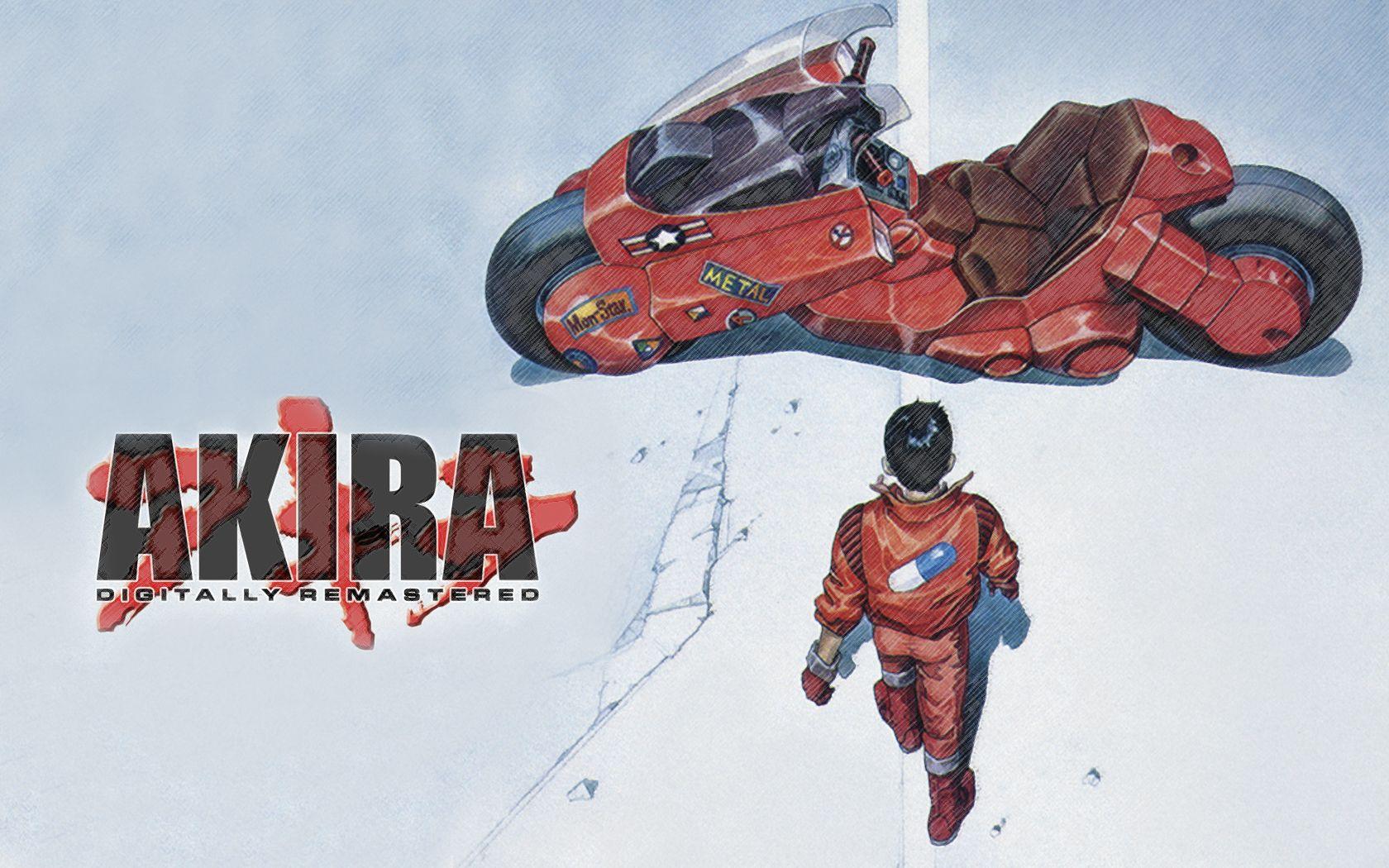
Akira is set 30 years after World War 3, during which Tokyo was decimated by some sort of weapon of mass destruction, biker gangs battle it out through the streets of Neo-Tokyo, a dense megatropolis of towering skyscrapers and vast inequality. Society is beset by religious cults, terror attacks, and protest movements. In the midst of this, while revolutionaries struggle against a tyrannical and conspiratorial government, the protagonist, Kaneda, a disaffected and apolitical youth, leads one biker gang in a turf war with a rival group.
When a plot by a revolutionary cell to rescue a strange child from a government lab goes awry, Kaneda’s gang becomes entangled in the mess. The military swoops in, and during the clean-up job they kidnap Kaneda’s fellow gang member and childhood friend Testuo. He is thus thrust into a world of secret military experiments which may threaten once again to unleash mass destruction upon the city.
Atomic anxiety
It’s perhaps not surprising that this film was made in Japan. The economy had zig-zagged from post-war collapse, to the “Japanese Economic Miracle”. The rate at which society was changing – and Westernising – was dizzying. The country became a leader in consumer electronics, from cameras to TVs to videogames. But huge wealth also brought huge inequality. Economic advancement meant growing alienation.
Perhaps the event which most impacted the plot and themes of Akira, however, was the collective psychological trauma of the atom bomb. Japan remains to this day the only country struck by one, let alone by two, killing hundreds of thousands of civilians and destroying two cities in two fell swoops.
Four decades after the bombs fell, Akira was released. The film itself takes place 30 years after a similar, fictional explosion in Tokyo. It’s that legacy, the idea that such a thing could happen once again, and the cyclical nature of war, violence, and mass destruction under capitalism, which permeates the film. In the 20th century, when Akira was released, the anxiety of nuclear war was not uncalled for. Today, in the 2020s, as Akira is released into cinemas once more, the threat of militarisation and war – if not, just yet, nuclear war – seems to be growing everywhere. We can also add the existential threat of runaway climate change.
Groundbreaking
To conclude this review, it’s impossible to talk about Akira without commenting on the genuine technical accomplishments and artistry on display. It is visceral, intricate, and reaches heights of mastery which has seldom been repeated on the silver screen. It’s hard to overstate its influence on Japanese cinema or cinema globally. The iconic bike slide scene has inspired hundreds of homages. Seeing it in the cinema once again is a rare opportunity which shouldn’t be passed up.