By Donal Devlin
“All roads lead to higher prices and slower growth.”
This was the stark warning by the IMF this week. Not only has the US and Israel’s war on Iran brought further death and destruction to the people of West Asia, it is also exacerbating the global cost-of-living crisis for billions of people, with inflation expected to soar.
Faultlines for the world economy
This comes at a time when there are already major faultlines in the world economy. There is a major bubble in AI, fuelled by $2 trillion in private credit funds, but investors are increasingly pulling their money out amid higher interest rates. It is now believed that just 10 tech companies account for more than a third of the “value” of the US stock markets. This is on top of other geopolitical flashpoints between the major capitalist powers and the mounting debt problems faced by different capitalist states.
A variety of factors have led to inflation spikes during the 2020s: the Covid crisis, the war in Ukraine, and Trump’s tariffs. But rather than being “black swans”, as some economists have called them, that are imposed on the global economy from outside forces, these all stem from the multifaceted crises – political, economic, ecological – of the capitalist system itself. They are symptoms of a rotten order.
They reflect an anaemic system, which is incapable of utilising the productive, technological and human resources in society for the betterment of society, and instead is focused on enriching a tiny, parasitic billionaire class, while its most destructive features l– climate breakdown, militarism and authoritarianism – let rip. The war on Iran is yet another manifestation of a sick system. With Trump at the helm, US imperialism is lashing out in all directions, seeking to assert its waning power globally through force.
Oil shocks
In the face of the bombardment, the Iranian State has played its trump card (no pun intended) and blocked the Strait of Hormuz. Ships that transport 20% of the world’s oil and liquefied natural gas have been blocked from leaving the Persian Gulf. This now threatens to be the worst energy crisis in history, with oil prices up 45% already. The OECD has predicted that inflation rates will rise to 4% globally this year.
This is not the first time energy sources have been choked off from this region. The “oil shocks” of the 1970s had a hugely detrimental impact on global capitalism. The 1973 Israel-Arab war and the subsequent oil embargo imposed by the Arab states were a catalyst in ending the post-war boom. It ushered in the period of “stagflation”, when low economic growth combined with double-digit inflation. The 1979 Iranian Revolution plunged capitalism into another crisis, likewise with the First Gulf War in 1991.
Today, the closure of the Strait of Hormuz will have a much greater impact on the world economy, because it is about more than oil and gas. The Gulf states’ economies have diversified and do not simply deal in the raw extraction of fossil fuels. As left-wing economist and historian Adam Hanieh has pointed out:
“That structural transformation has woven the Gulf much more deeply into the global economy than was the case half a century ago. Because Gulf-produced chemicals now sustain everything from factories in China to farms in South America, disruption in the region ripples outward through industries and food systems across continents. The possible consequences of the current war are in this respect more extensive than those of the 1973 embargo, and far more catastrophic than can be gleaned from the gyrations of oil prices alone – especially for those living in the Global South.”
An example of a new bottleneck that could open for the global economy is helium. One-third of global supplies pass through this narrow trading route. This primary commodity is critical to semiconductor manufacturing.
Soaring food prices
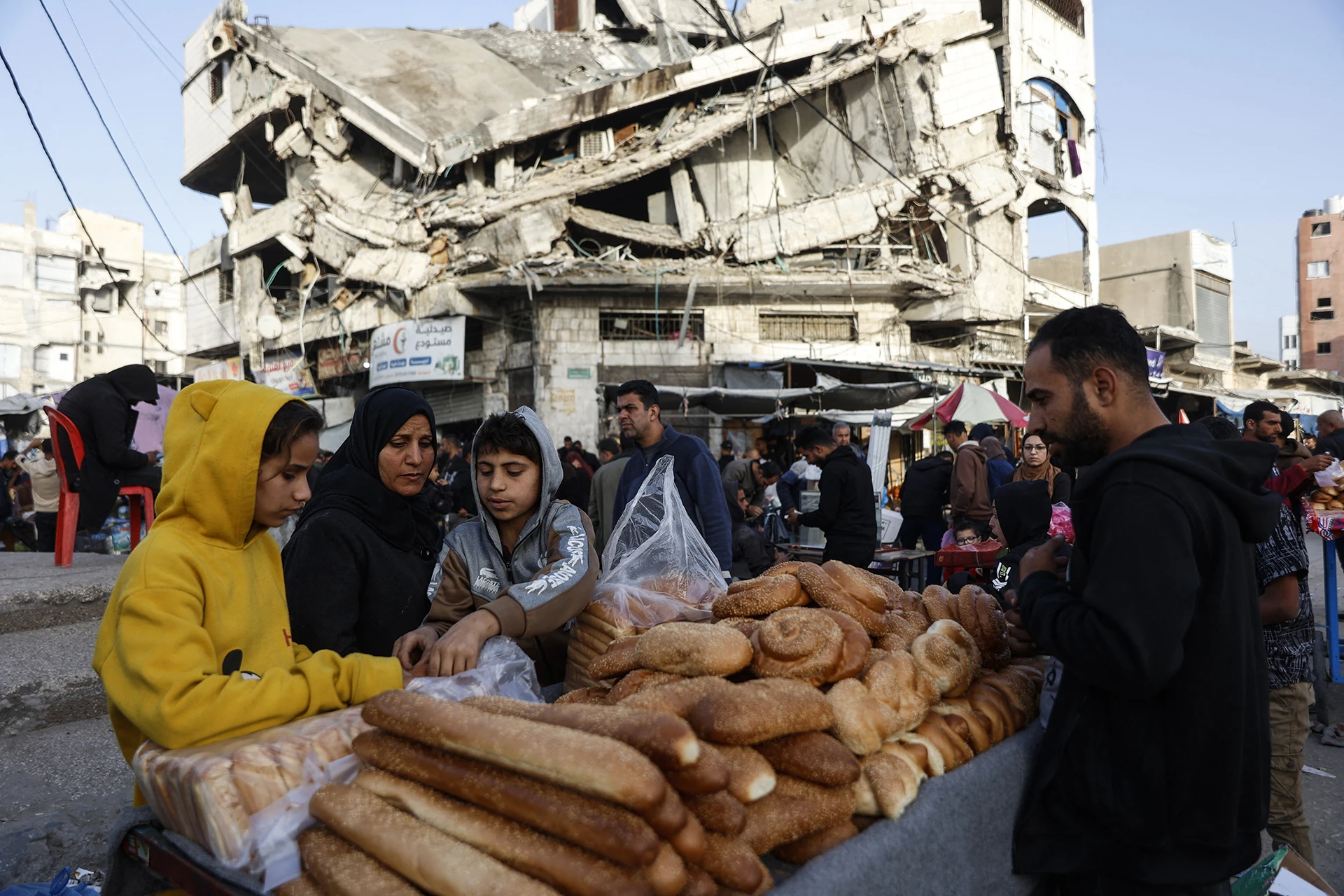
It is estimated that food prices could rise anywhere between 15-20% in the first half of this year. Once again, it will be the working-class and poor globally who will suffer most. It is estimated that the poorest section of the globe spends 65% of its income on food, compared to 20% for the richest. This comes after a decade of skyrocketing prices in the aftermath of Covid. As one commentator said, this is like “Covid without the vaccine”.
A third of global trade in raw fertiliser passes through the choke point that is the Strait of Hormuz, and the consequences of its impediment, brought about by US imperialism and the Zionist State’s war on Iran, will be devastating. The head of the International Rescue Committee, David Miliband (himself a Blairite war criminal), has said it poses the real threat of a “food insecurity timebomb”, as hundreds of millions will face acute hunger as long as this bloodbath is allowed to continue.
Already, workers in countries like Pakistan, which imports 80% of its oil from the Gulf, are being put on a four-day work week. This promises to be the music of the future in both the neo-colonial world and advanced capitalist countries. With higher interest rates, countries in the Global South will be forced to pay even more punitive payments on the odious debt imposed on them by the world’s largest capitalist powers.
Revolts from below
This outcome of the war will be intolerable to those suffering under the bombs and bullets of the US and Israel, but it will also be devastating to the living standards of the masses of ordinary people. This can spark revolts in parts of the Global South and deepen opposition to the status quo.
In 2022, the brutal Rajapaksa regime in Sri Lanka was overthrown following the economic crisis that engulfed the island, driven by higher debt repayments and rising costs. At this time, we also saw a wave of strikes in Britain and the North. Unfortunately, zero leadership was given by the trade union leaders in the South; however, important protests that mobilised thousands on the streets did force the Irish government to make concessions in the form of one-off payments to cover rising costs.
In the last year, ‘Gen Z’ revolts have swept countries as diverse as Togo, Kenya, Nepal, Madagascar and Morocco, as a new generation rises against economic malaise and corruption. This is combined with deep opposition to the war in Iran itself, with record numbers opposing Trump’s imperialist adventure in the US.
It is crucial that the working class, young and the oppressed people are organised in opposition to this depraved capitalist system and its impact on our lives. We need to organise from below and build a fightback, linked to the urgent necessity for radical socialist change.
What we need to fight for:
– No to this imperialist war for power and profit being waged by US and Israeli imperialism. US troops out of Shannon!
– We need real price controls to slash prices to affordable levels. Open the books of major companies to democratic inspection by workers, and stop all price-gouging.
– Mobilise the power of workers. Trade unions must fight for inflation-busting pay rises. Tax the super-rich and big business to fund emergency payments.
– The only guarantee to prevent profiteering from this crisis is to take the major energy, retail and agribusiness sectors into public ownership with the working class at the heart of control and management.
– Repudiate the debt of the Global South enforced by the institutions of global capitalism, such as the IMF and the World Bank.
– End the reliance on fossil fuels. For major investment in renewable energy, free public transport, and the retrofitting of homes and buildings. For an immediate moratorium on data centres.
– The capitalist system is only delivering a future of war, genocide, climate change and growing exploitation and oppression. Fight for a socialist alternative, which means taking the key sectors of the economy out of private hands and into public ownership. Democratically plan the economy to meet the needs of humanity and safeguard our planet from climate catastrophe.