By Bob S.
We are on day 11 of Trump’s and Netanyahu’s war on Iran, and already the human and environmental toll of this colonial adventure is piling up with devastating consequences.
What are the aims and justifications for the attack? For the US, they have changed almost on a daily basis. In one sense, a lack of clarity benefits Trump particularly, as it frees him to declare victory whenever it is most expedient. The most coherent explanation was the one offered by Secretary of State Marco Rubio, who explained that the US attacked Iran ‘pre-emptively’ to protect US forces from retaliation after learning that Israel was going to strike.
He told reporters:
“We knew that there was going to be an Israeli action. We knew that this was going to precipitate an attack on American forces, and we knew that if we didn’t preemptively go after them before they launched those attacks, we would suffer higher casualties…”
Lies, hubris and misinformation
Such twisted logic is indicative of the extent to which US policy is now at least partly determined by Netanyahu and the Israeli ruling class. But the opportunity to deliver a blow to Iran’s military capability was undoubtedly the most significant underlying rationale for the attacks, even if much of it was based on lies and misinformation.
Netanyahu has, for 30 years, repeated the falsehood that Iran was on the verge of acquiring a workable nuclear weapon. In fact, US intelligence had assessed that Iran was ten years away from such a step. Ironically, the danger from nuclear material (including the 440 kg of highly enriched uranium that Iran has acquired) is much greater if the regime disintegrates into chaos in the manner of post-imperialist intervention in Libya or Iraq.
But Netanyahu and Trump saw an opportunity to strike given the weakness and unpopularity of the Iranian regime internally, with the protests and massacres of January, alongside the undermining of the so-called ‘Axis of Resistance’ over the past two years, with Hamas and the Houthis in Yemen, as well as Hezbollah in Lebanon, all having had their military capacity severely reduced.
What is the long-term plan? In the words of Alan Eyre, former Iran policymaker at the state department, ”It’s becoming increasingly clear that not only does the United States have no plan B – they don’t even have a plan A.”
Regime change, even if it were possible for US imperialism and the Israeli State to achieve through such an assault, is fraught with problems. If it were viable, the US and opposition to the regime would consolidate around Reza Pahlavi – but even Trump doubts the extent of his support, telling journalists last week that he “seems very nice but I don’t know how he’d play within his own country.” The prospects of continued war and chaos loom large with echoes of the aftermath of the Gulf War of 2003 and NATO’s Libya intervention in 2011 – both quickly achieved military victories then followed by year upon year of instability and fighting.
Raining death down on civilians
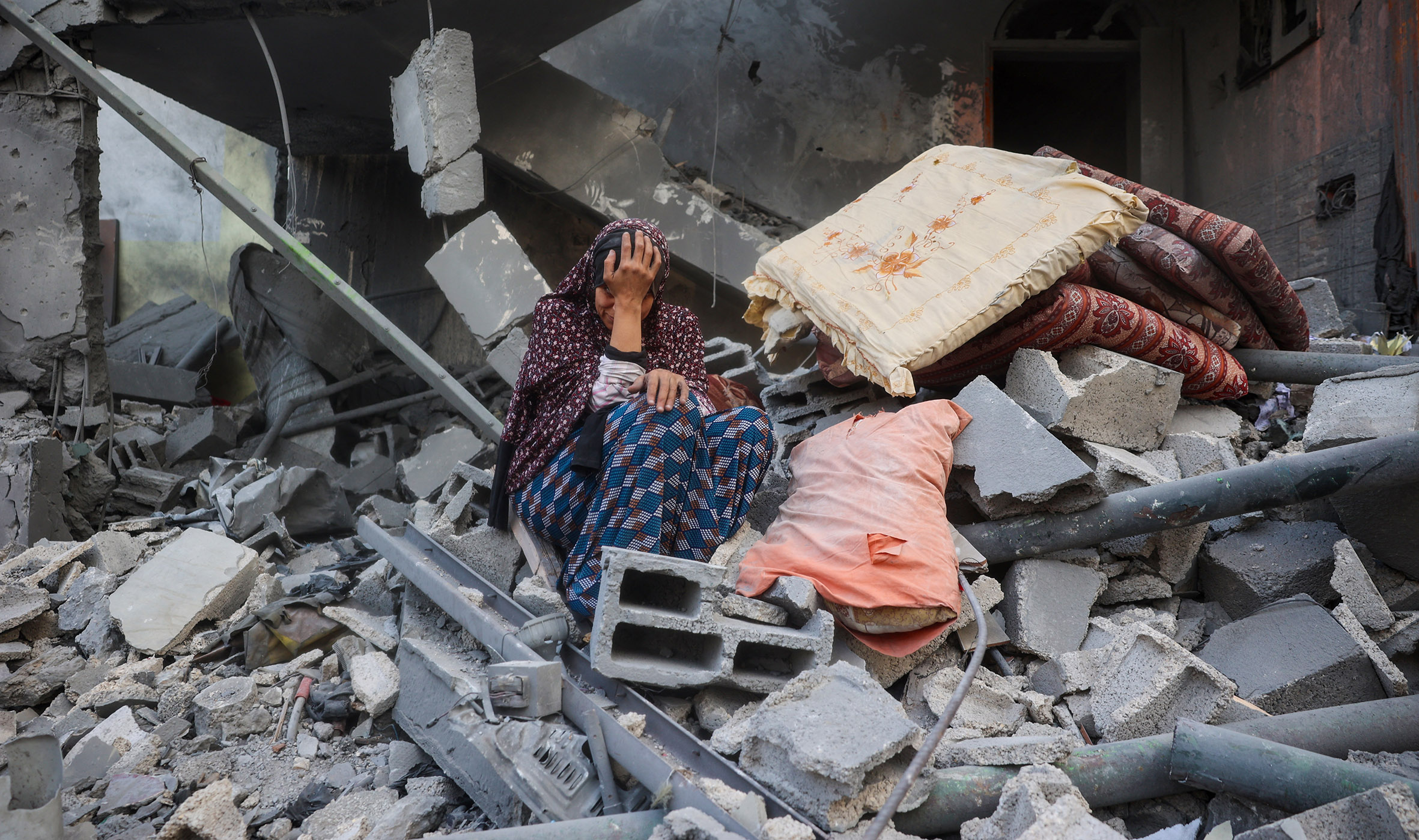
War is an inadequate word to describe a conflict that is a massive aerial bombardment inflicted on an innocent civilian population by two of the most lethally and expensively armed forces on the planet. It is now clear, for example, that it was a US Tomahawk missile that was responsible for the 165 lives extinguished in the bombing of Shajareh Tayybeth girls’ school in Minab. Apologists for the war, such as the aspiring Shah Reza Pahlevi, fail to mention this, or the 13 Iranian hospitals and health facilities already bombed according to the World Health Organisation. Civilian casualties are bound to increase for every day the bombardments continue, given that military facilities and police stations are located in residential areas.
It is widely reported that fundamentalist Christian nationalists have played key roles across the US armed forces. The Guardian cited a commander telling soldiers under his command that “President Trump has been anointed by Jesus to light the signal fire in Iran to cause Armageddon and mark his return to Earth”.
The toxic extremism and bigotry at the top of the US military is most clearly illustrated by US Defence Secretary Pete Hegseth – a figure who glorifies death and destruction and fetishises bombs and weapons in his pronouncements. Speaking after Day Five of the attacks, he said “They are toast and they know it and we have only just begun to hunt.” He had previously boasted of instructing “soldiers under his command in Iraq to ignore legal advice about when they were allowed to kill enemy combatants.”
Murderous assault on Beirut
Meanwhile, in Lebanon, 500,000 inhabitants of south Beirut are told to evacuate while their neighbourhoods are to be razed to the ground. The fascistic Israeli finance minister Smotrich boasts of turning Dahiya (the southern suburb of Beirut) into Khan Younis, the devastated city of southern Gaza.
Trump now insists on Iran’s “unconditional surrender” but there has been no indication of such a prospect, despite the ongoing depletion of Iran’s military strength. However, it is also the case that the hugely superior Israeli and US military capacity has its limits, and the Iranian regime will calculate that if it can withstand the initial period of intense bombardment, its chances of survival will improve rapidly.
Within the Iranian ruling elite, there are clearly splits and serious divisions, especially between the hardliners around the IRGC (Revolutionary Guards) and so-called moderates such as President Pezeshkian, who announced an end to missile attacks on Gulf states, only for that to be followed immediately by new attacks the next day, demonstrating the President’s limited influence very starkly. At the moment, the hardliners hold sway, as evidenced by the selection of Khamenei’s son as the new Supreme Leader.
The Iranian masses are trapped between a regime that is prepared to slaughter tens of thousands of its own citizens to stay in power and a barbaric bombardment from the sky that is indifferent to the fate of ordinary people. But it is important not to underestimate the deep visceral hatred for the regime amongst vast swathes of Iranian society.
Few tears were shed across Iran for the death of Khamenei, a ruler drenched in the blood of thousands, especially of young Iranians. It’s also undoubtedly the case that there are many Iranians, probably even a majority, who initially welcomed the US and Israeli attacks as a means of providing an opportunity to overthrow the regime. Yet these hopes will prove illusory.
Repression strengthens theocracy
Far from weakening the hold of the IRGC (Revolutionary Guards), repression has intensified since the attacks were launched. The regime’s closure of the internet prevents even the most basic of information, such as about impending airstrikes, from being shared and acted on. A siege mentality suits the regime, fostering a febrile and paranoid atmosphere which makes public protest or dissent more difficult.
The IRGC is a massive force in Iranian society, and a huge proportion of the regime are current or former members. It’s a military power, a vast intelligence apparatus and a hugely powerful economic interest. Within the IRGC, there is a culture of martyrdom, which makes it a very hard opponent to fight. It would take a popular revolutionary movement of millions to sweep away such a powerful and embedded institution. It’s hard to see how an aerial bombing campaign can do more than temporarily weaken it.
Meanwhile, Iranians are faced with the continued wholesale destruction of their environment and their infrastructure, alongside a mounting death toll. There is a huge and disastrous ecological impact in a war where gas and oil refineries, depots and storage facilities are some of the main targets. Most strikingly, Iran’s Red Crescent has warned of “highly dangerous and acidic” rain in Tehran as a consequence of Israeli bombardment of fuel storage facilities in the city. Even amongst those who initially welcomed the bombardment, there are indications of a growing scepticism over the motives of the belligerents, as well as the scale of destruction and death inflicted on ordinary civilians.
False friends of Kurds
The political repercussions will fall out in unpredictable ways – many of which may not be positive. US attempts to enlist Kurdish-Iranian support for a military intervention could trigger the start of a much more dangerous inter-ethnic conflict.
The Kurdish areas have traditionally been centres of opposition to the rule of the theocracy – notably during the ‘Woman, Life, Freedom’ movement, which was triggered by the killing of Mahsha Amini, an Iranian Kurd. In general, the demand from most Kurdish groups has been for more and stronger autonomy rather than complete independence, although it’s likely that could change, especially if the regime doubles down on a Persian-centric nationalism which seeks to marginalise not only Kurds, but also Baluchis, Azeris, Arabs and other minorities.
US support for Kurdish armed groups is likely to provoke a hostile reaction in the ruling circles of Turkey, Iraq and Syria, which all also have sizeable Kurdish minorities. As the experience of the Kurds in Syria has proven in the past, US imperialism is not an ally to be relied on. Trump will always put US national interests before those of anything else, apart from his own personal gain. And, of course, while supposedly backing one stateless people in the Kurds, Israel and the US continue their genocide of the stateless Palestinians, facing a new intensity of death and starvation as the world’s attention is directed away from Gaza and the occupied West Bank.
Breakup of Iran
Nonetheless, the US and Israel might be happy to see the breakup of Iran in the same way as the US, Germany and other imperialist countries encouraged and supported the breakup of the Soviet Union and Yugoslavia in the 1990s.
From the point of view of capitalism’s world leaders, their concern is not for the Iranian masses; it is over the economic impact of the war – the impact now, and the impact if the war continues for months into the future. Already, there have been interruptions to supply chains, falls in stock markets internationally, and the rapidly rising price of oil and gas. There have been some unpredictable consequences, e.g. smelter closures in the region have led to a surge in aluminium prices. Fertiliser production has been disrupted, with a likely increase in food production costs. Insurance premiums on shipping have soared. All of these are likely to result in significant inflationary pressures, which will particularly affect European and Asian economies.
But a key and decisive sector of the US economy that does benefit from war and misery is the trillion-dollar arms industry, which bankrolls the politicians who, in return, authorise the colossal contracts to supply the US and Israeli military machine. Although existing under the radar, not accidentally as capitalism prefers to hide its dirty secrets, this hugely wasteful and destructive industry exemplifies all that is wrong in modern capitalism.
Finally, it’s worth restating that effective regime change comes from below in the form of mass struggle, not from the air in the form of missiles and bombs. There is a tradition of workers’ movements in Iran – notably the Shoras, or worker councils, that exercised workers’ control in the many areas they were present, until they were attacked by the ruling theocracy in the early 1980s. Nonetheless, there still exists a very tenacious and courageous workers’ movement, reflected in groups such as the Haft Tappeh sugar workers and the Tehran bus workers. The workers’ movement, allied to social movements like ‘Woman, Life, Freedom’ that have heroically resisted the regime, as well as the struggles of national minorities, would be a force capable of revolutionary, socialist change in Iran, and spreading throughout the region. Such a force is what we seek to support and build in order to map a route out of the nightmare of war and oppression the Iranian masses are enduring today.