By Chloe McCarthy
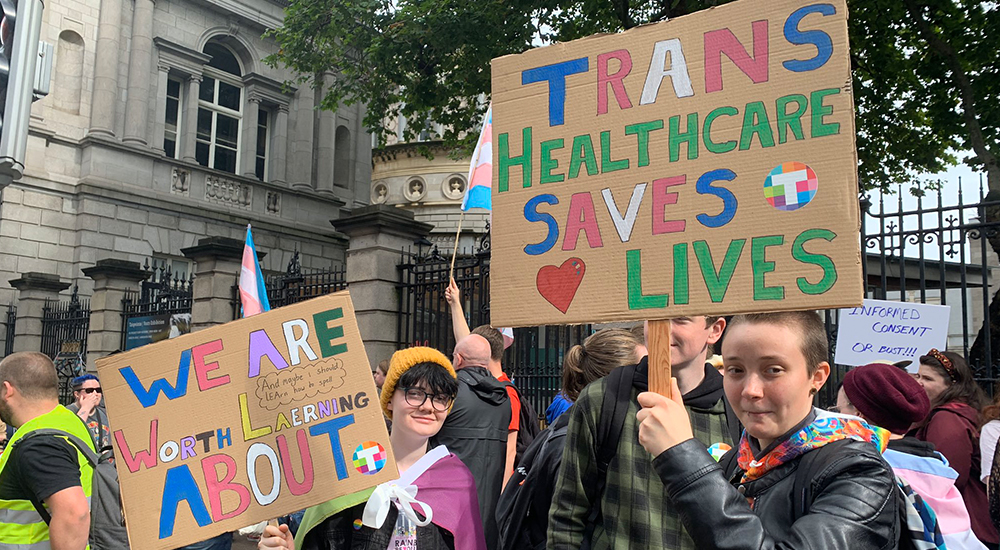
The Irish state presides over the worst trans healthcare system in the European Union, the National Gender Service (NGS):
- There’s no clinic treating under-18s;
- The single clinic that does exist nationwide fights doggedly against any other hormones, the most basic aspect of trans healthcare;
- Hundreds of patients were referred to the wrong clinic, and after years of already waiting were simply placed at the end of the waiting list to continue their wait;
- Speculative estimates at the length of the waiting list point to wait times of roughly a decade, which can only begin after a diagnosis of gender dysphoria, which only a handful of qualified psychiatrists provide.
Even by HSE standards, this system is laughably inadequate. Yet, it clings to its control over our bodies, monitoring hormone levels and treatments, which is something easily done by GPs in other countries, or even in Ireland for any cisgender person undergoing a hormone-related treatment. Interestingly, the NGS gives explicit guidelines to GPs to refuse to monitor patients undergoing treatment outside their purview, going so far as to tell GPs not to administer blood tests for those who are using DIY hormone replacement therapy (HRT).
Struggle for trans healthcare
So, what does the NGS achieve that could not be achieved without them? Create barriers. The core of which is their “assessments”, a three- to six-hour process in which no stone is left unturned whether it be childhood trauma, sexual abuse, every facet of your sexuality or whether you may have any mental illness which could lead them to deem you unfit to make such a decision about your own body, or worse, a misguided fetishist.
The NGS often cites autism and ADHD in particular as markers that someone is not fit to decide what they want and should not be allowed to medically transition, even as fully competent adults, and research shows that these conditions are particularly prevalent in the trans population. Here is the crux of the NGS: it is a way of minimising the existence of trans people: it flies in the face of all available research to soothe their preconceived notion that there should not be this many of us.
Attack on bodily autonomy
The Irish trans healthcare system is a revealing artefact of the way capitalist society has reacted to the self-advocacy of a section of society who desire to live in a way that differs from the traditionally prescribed archetypes of presentation that are considered acceptable to the system. The struggle for bodily autonomy in the face of institutionalised discrimination is, of course, not exclusive to the trans community; however, they are the core target of right-wing political forces seeking to deepen the consequences for deviancy in the current climate.
Following the historic Repeal vote in 2018, the right has had to find a new bastion in the fight against bodily autonomy and a victory in the fight against the trans community will never be more than a stone’s throw away from crackdowns on reproductive health, LGBTQ rights generally, children’s rights and migrant rights. The repression of one group is a testing ground for the repression of all, and we must stand in opposition to every attack the rising tide of fascism wages on people.