
By Harper Cleves
“Someone once said that it is easier to imagine the end of the world than to imagine the end of capitalism” – Fredric Jameson
This quote rings true because capitalism today feels almost omnipotent – it dominates the globe and every aspect of our lives. To imagine any other way for our world to work would require both a powerful idea of an alternative system, and an even more powerful force to bring that system about.
The revolutionary class
Socialists before Karl Marx were able to imagine an alternative to capitalism; one based on common ownership of the wealth and resources in society, and real democratic communities that would organise production for the needs of all. These socialists were ‘utopian’, however, because they believed that superior ideas, including leading by example, would be enough to change the world.
Marx was a revolutionary who understood that like every other social and economic system humans have ever lived under, capitalism was made by humans themselves. Although our rulers would like us to believe so, it was not heaven-sent. Therefore, like every other social and economic system that was superseded by another through revolutionary change, capitalism was no different.
The question was which social force would play the revolutionary role that the bourgeoisie (capitalist class) had played, for example, in the French Revolution that ushered in the capitalist era. Marx found his answer in the proletariat (working class), which was then emerging in the industrial cities and towns of Britain and Europe.
This new class was made up of all those whose only means to get by was to sell their ‘labour power’ to an employer in return for a wage. Today, wage workers number nearly 2 billion, more than half of the total global workforce (a number and rate that’s increasing all the time). The exploitation of this workforce is the source of surplus value, which is the source of capitalist profits, and the heart of the system itself. And this, more than anything else, gives the working class incredible potential power.
Collective struggles
The work of workers is what makes the whole world function. Without it, there would be no industry, energy, logistics, finance, or tech, not to mention healthcare, education, and so on. We saw this starkly during the Covid pandemic: workers kept the world afloat during multiple lockdowns by nursing sick patients, selling essential goods at shops, teaching children online, delivering mail, driving buses – the list goes on.
The pandemic made it even clearer that the working class is essential to the functioning of human society, whereas an increasingly wealthy elite of ‘owners’ is completely superfluous to the running of society (in fact they are a drain on society).
Moreover, the concentration of workers in factories, offices, retail outlets; in towns and cities; as part of national and international networks; all contribute to a collective class consciousness, which is unique to the working class. Its struggles are inherently collective, as their power derives from joining together to fight for their common interests – interests which are opposed to the capitalist class, state, and system.
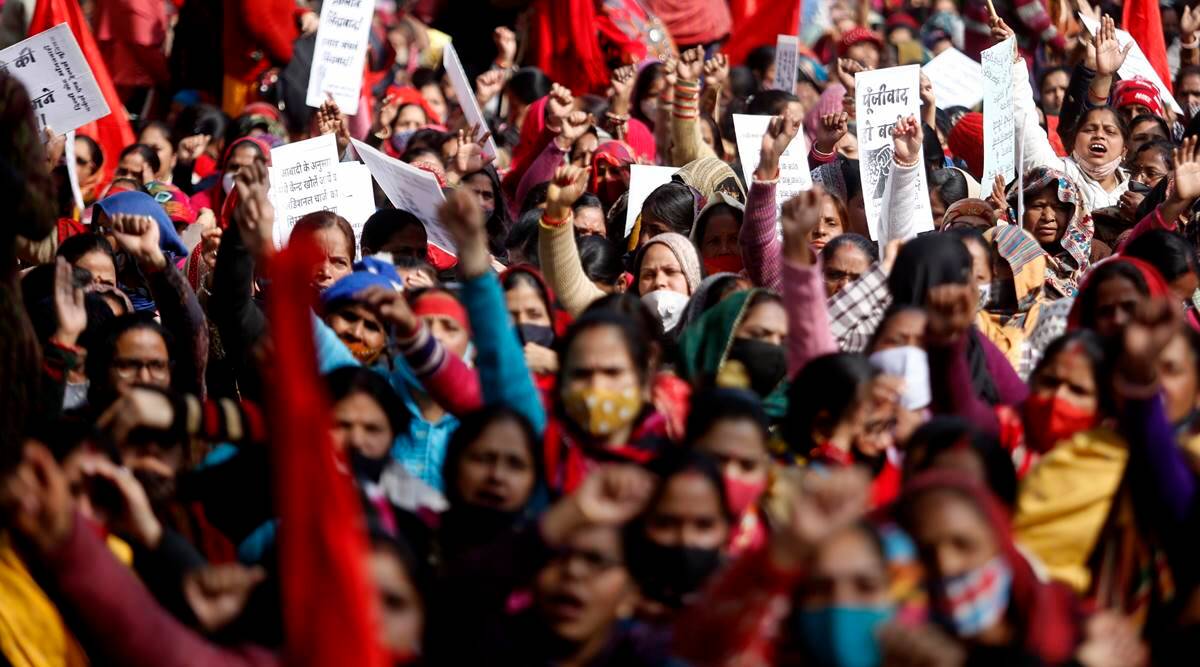
The history of the working class is a history of countless strikes, protests, occupations and social revolts of whole working-class communities.
Still working, still resisting
Yet, it’s often said that the working class of Marx’s time no longer exists, and that whatever revolutionary capacities workers had in the past no longer apply in the modern world. Answering this takes more space than we have, but in short: while the working class has changed dramatically in many ways since Marx’s time, its essential position as the main exploited class in capitalist society remains. As do its fundamental features of collective interests, organisation, and resistance.
Indeed daily hardships experienced by workers because of the exploitative nature of the system will increasingly push people to action out of necessity. And workers, who make the world run, have the power (by refusing to work) to bring it to a standstill, and in doing so demand better conditions, better pay, better services, and a better future for all.
Workers, collectively, already run the world, we just don’t own and control it; the billionaires do. But why shouldn’t we also collectively own and control the economic and natural resources, and the fruits of our labor, and plan how we use them? The answer is obvious: we should.

